

Steve Freihon/Related-Oxford
New York, New York
Global experience.
Regional perspective.
Local impact.
New York, New York
Australia

London, United Kingdom

Diriyah, Riyadh, Saudi Arabia

This week in our continuing series showcasing how engineers and scientists can play a key role in addressing the short- and long-term challenges of climate change, our latest blog takes a page from Sun Tzu's classic military strategy book “The Art of War” in that the challenge posed by climate change is not unlike engaging in combat, with both requiring a united front and collective action. We look at Thornton Tomasetti’s interdisciplinary approach to conducting these assessments, which considers unique and evolving climate risks, historical data and future projections, site-specific vulnerabilities and the interconnectedness of different factors.
Climate risk assessments are an important early step in identifying site-specific climate hazards and how those hazards may change over the lifespan of a building. Solving climate change requires a united front and collective action just like combat. Exploring connections between climate action and the principles outlined in Sun Tzu's "The Art of War" can offer a compelling and intriguing perspective.
Step 0: Why Resilience? – “Win all without fighting.”
Even if we stop greenhouse gas emissions right now, studies have shown global warming is expected to continue throughout the centuries, impacting weather patterns. Resilience addresses the principle of “win all without fighting” by embracing a positive and proactive approach. We anticipate and plan for challenges of extreme weather events and their destructive impact, educate our clients and raise awareness about a changing climate and collaborate with the design team on developing innovative and adaptive solutions with an interdisciplinary approach.
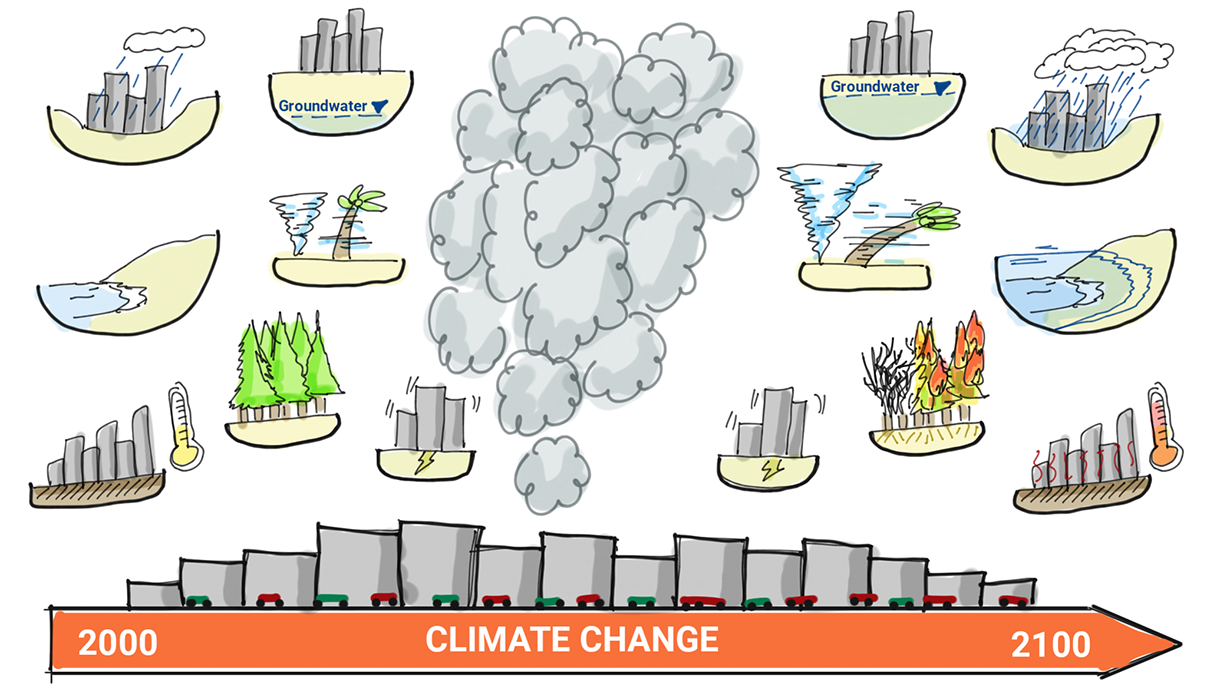
Step 1: What is Climate Risk? – “Know your “enemy/opponent.”
The assessment begins with identifying climate hazards pertinent to the site by analyzing historical occurrences, current codes and projected future changes. Climate risk is typically understood as a function of two main components:
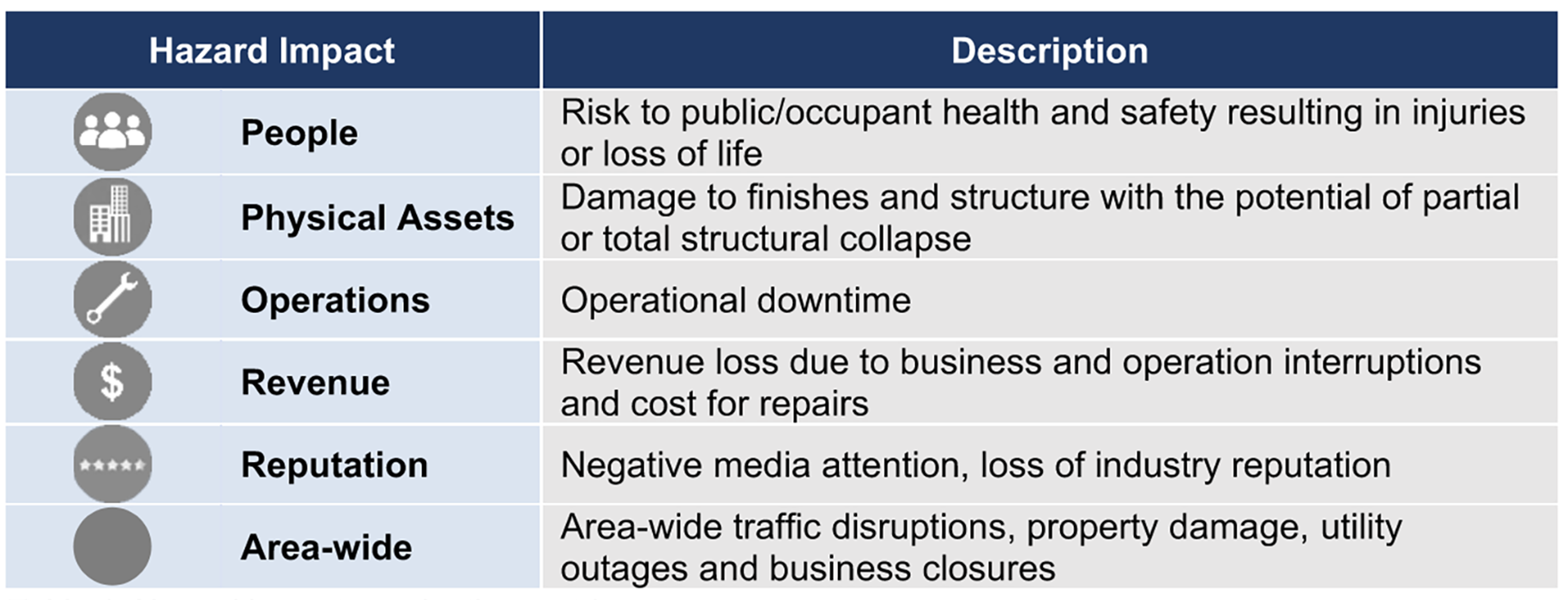
It is critical to consider some unique characteristics of climate risks that will help in identifying and assessing the potential impacts of climate change.
Step 2: Assess the site-specific vulnerabilities - “Know yourself.”
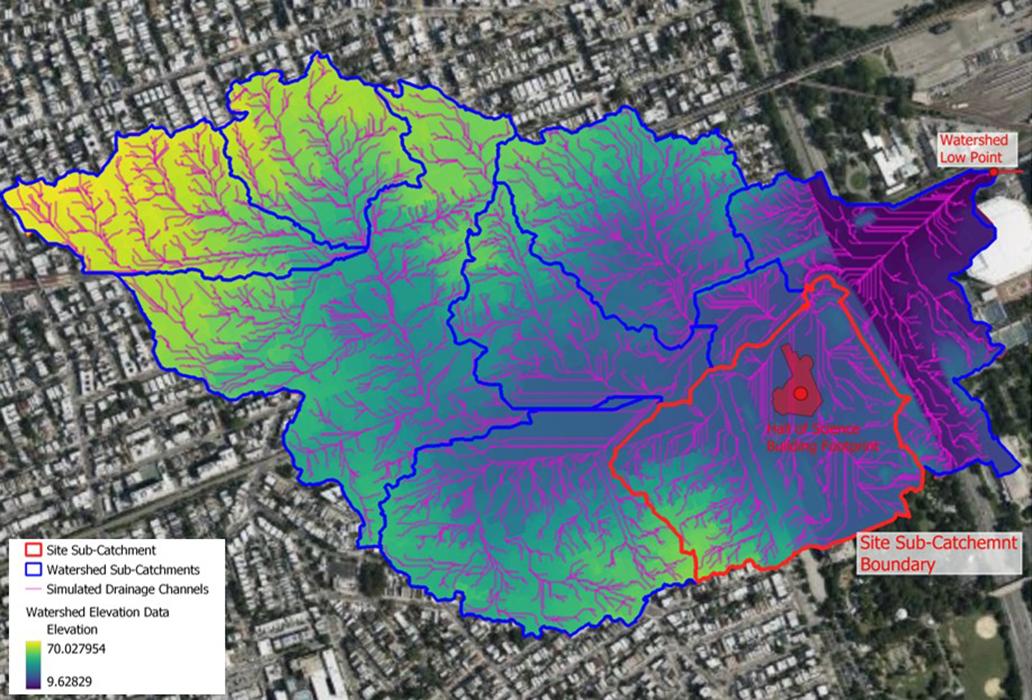
We conduct vulnerability assessments to better understand site exposure to specific hazards. For instance, forensic investigation and stormwater simulation and modeling were used for New York Hall of Science to determine stormwater points of entry during a flood event and to estimate the maximum probable flood depth on the site. This step takes the current and future hazard levels at the site into consideration and incorporates area-wide context to inform the development of appropriate resilience strategies.
Step 3: Prioritization – “Minimize damage and the wasting of resources.”
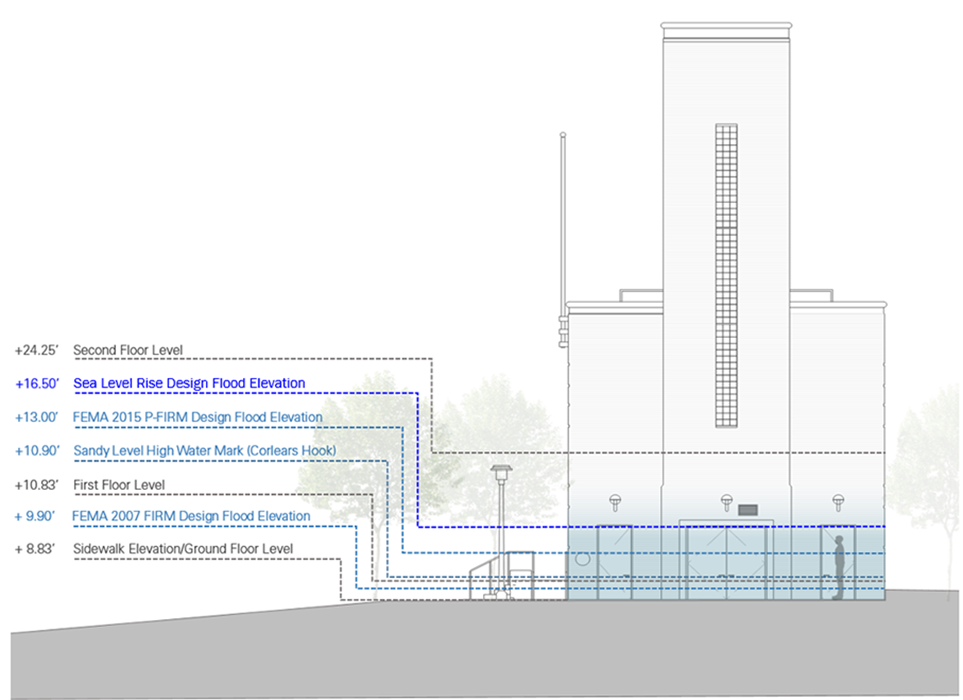
Using a consistent approach to assess risk level allows effective comparison across hazards and aids the process of identifying the most impactful resilience measures for implementation. For instance, if a building is designed to withstand a projected storm surge that includes sea level rise, it is important to also assess the possibility of a rising groundwater table and its effects on foundational elements. Similarly, protecting against a catastrophic flood has little value if the same building is severely damaged by a code-based windstorm or earthquake.
In Conclusion: Urgency and Timeliness – “Opportune timing”
The best time to start thinking about climate risk is 10 years ago or now. Climate risk assessments help our clients and design teams understand the urgency of the accelerating pace of climate change and the associated increasing impacts. Conducting the assessment in early planning stages allows more time and flexibility for the design team to maximize the effectiveness, reduce costs and even improve the aesthetics through integrated design.
In addition, the concept of “opportune timing” encourages continuous evaluation and adjustment of strategies. In a climate risk assessment, this translates to an iterative and ongoing assessment based on evolving risks and advancement in climate science. Monitoring and reassessing risks, coupled with an adaptive approach, is critical for a successful implementation of resilience strategy.
In summary, an interdisciplinary approach to climate risk assessments should be aimed at providing a basis for designers and owners to make risk-informed, future-focused decisions that enhance the long-term resilience of the project.
Climate change is one of the biggest challenges facing our society. And because it affects everyone, it demands our creativity, passion and collaboration to build a better, more enduring world. See how Thornton Tomasetti is one of the only firms with the expertise to help you think holistically about a range of steps to address climate change.