

Steve Freihon/Related-Oxford
New York, New York
Global experience.
Regional perspective.
Local impact.
New York, New York
Australia

London, United Kingdom

Diriyah, Riyadh, Saudi Arabia



Pawel Woelke, Managing Principal, Applied Science Practice Co-Leader and UK & Australia Region Co-Leader, Thornton Tomasetti
Emily Kunkel, Associate Principal, Thornton Tomasetti
Peter DiMaggio, Co-CEO, Thornton Tomasetti
This article appeared in IEEE Energy Sustainability Magazine, January 2026.
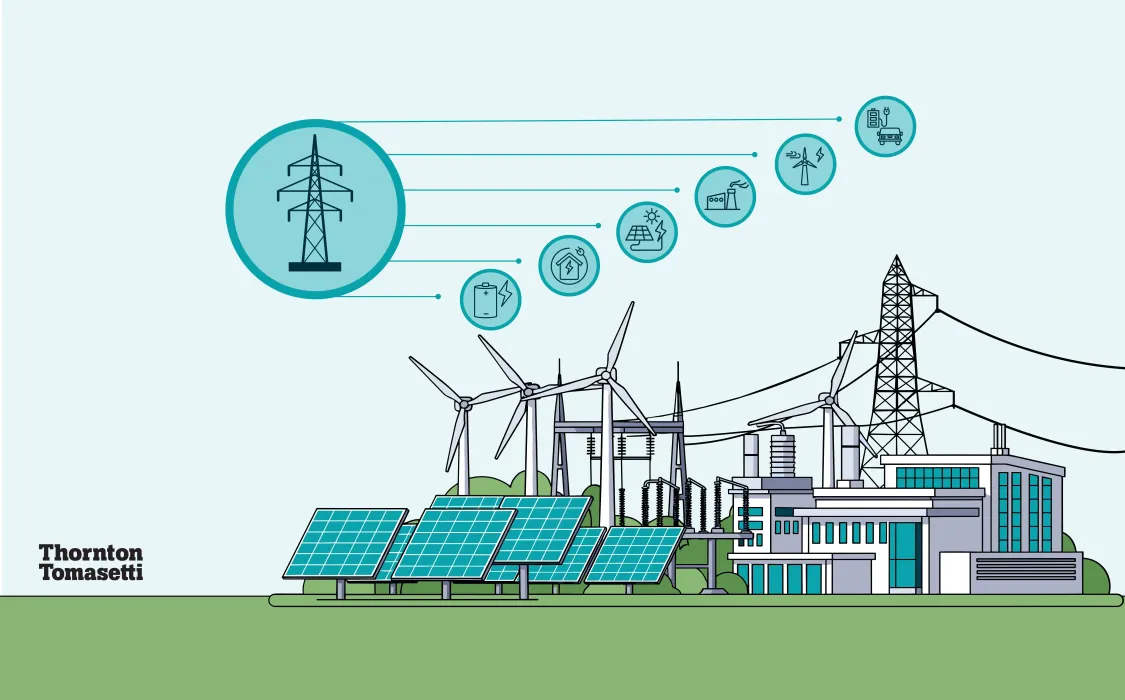
Decarbonization, i.e., the reduction of greenhouse gas (GHG) emissions into the atmosphere, represents a dramatic and irreversible shift in the entire value chain of the global economy. This highlights the need to identify the optimal decarbonization pathways for all market sectors.
In this article, we present a basic analysis of the energy flow, i.e., energy generation and consumption in the United States, that allows the prioritization of actions supporting the energy transition, with a specific focus on electrification. The analysis results show that while the key steps to decarbonize the energy demand sectors (i.e., buildings, industry, and transportation) are relatively easy to identify, the most effective order of taking these steps is not. Given the variations in the efficiency of electricity generation, measured by the amount of energy wasted during the process, vis-à-vis individual efficiencies of the energy demand sectors and their geographic dependencies, the impact of prioritization is significant. For the energy demand sectors that have lower efficiency than electricity generation, electrification should progress regardless of the pace of decarbonization of energy generation. However, for the remaining energy demand sectors, the optimized decarbonization plan is more nuanced and requires detailed consideration of all available and future technologies. In some cases, immediate electrification may result in increasing GHG emissions, at least until decarbonization of energy generation progresses. Thus, careful energy transition planning is required for all sectors of the economy.