Steve Freihon/Related-Oxford
New York, New York
Global experience.
Regional perspective.
Local impact.
New York, New York
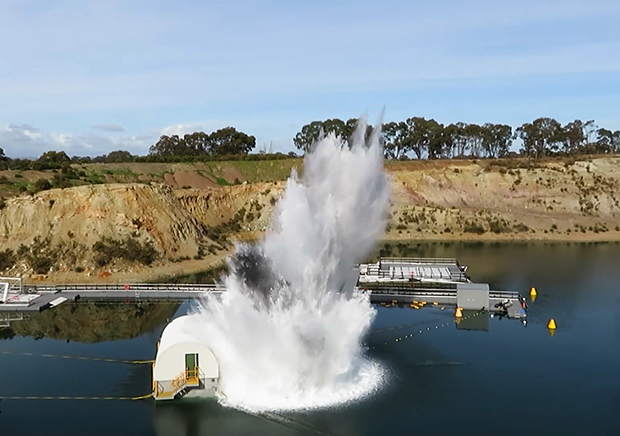
Australia

London, United Kingdom
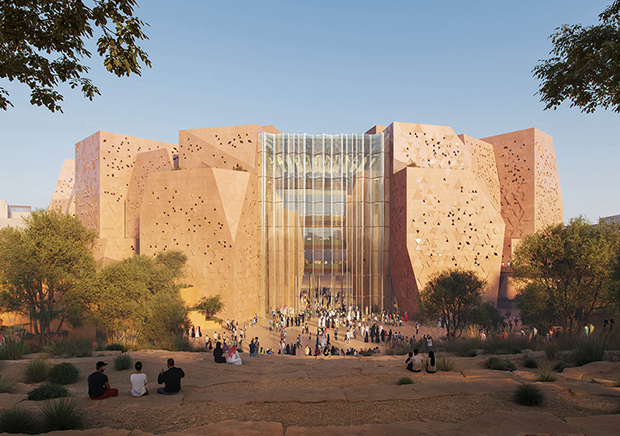
Diriyah, Riyadh, Saudi Arabia
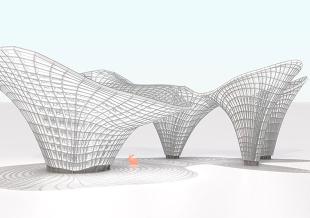 Masaaki Miki and Toby Mitchell CC-BY-ND (2025)

Designing structurally efficient curved architecture such as grid shell roofs, stadiums, atriums and pavilions has traditionally required complex, time-intensive engineering workflows. New research developed in collaboration with the University of Tokyo introduces a new grid shell design method that significantly expands how complex curved shell structures can be generated and evaluated.
Published in ACM Transactions on Graphics (2025), the research presents a computational form-finding method for grid shells that combines the Airy stress function with the Schaefer-Gurtin stress function. This expanded stress formulation enables reliable modeling of force transfer across complex and interacting shell boundaries, allowing architects and engineers to explore geometries that were previously difficult or impractical to design.
The research was conducted by Thornton Tomasetti’s Toby Mitchell in collaboration with Masaaki Miki of the University of Tokyo.
Grid shell and shell structures are widely used in long-span roofs, transportation hubs and civic architecture because of their material efficiency and lightweight construction. However, traditional form-finding methods, most commonly based on the Airy stress function, struggle to accurately model how forces transfer between multiple interacting or disconnected boundaries. As a result, designers have faced limitations when exploring highly irregular or topologically complex geometries.
The new method addresses this challenge directly, allowing designers to work within a broader and more flexible design space while maintaining structural efficiency and performance.
The new grid shell design method combines the traditional Airy stress function with the Schaefer-Gurtin stress function, producing a complete mathematical description of valid stress states within a shell. This expanded formulation captures how forces interact across complex boundary conditions, enabling reliable form-finding for grid shells that were previously difficult or impossible to model.
In testing, the method demonstrated consistent convergence on geometries where earlier approaches failed, confirming its applicability to real-world architectural and engineering challenges.
Unlike methods aimed only at engineers, this approach is designed to be architect-friendly, allowing designers to explore creative and structurally efficient shell designs without specialized engineering knowledge. Architects and computational designers can now iterate on large grid shell models more intuitively, opening new possibilities for innovative architectural forms.
The method automatically aligns surface curvature with principal stress directions and structural grid layouts, enabling the form-finding of complex architectural surfaces made of steel and glass in which all glass panels remain exactly flat.
This produces torsion-free, bending-resistant grid shells that use material efficiently and are easier to fabricate – particularly for metal-and-glass systems commonly used in large public buildings. These characteristics make the approach well suited for projects where constructability, cost control and geometric complexity must be balanced.
Together, these advances provide a practical, flexible framework for designing grid shells and freeform structures with complex geometry and predictable performance. By enabling the design of steel-and-glass surfaces with fully flat panels, the method removes a key fabrication constraint while preserving structural efficiency and buildability. In doing so, it shows how computational approaches can expand architectural possibility without compromising construction realities.
Contact Us to learn more About Our Advanced Computational Modeling Services

Toby Mitchell is a structural engineer at Thornton Tomasetti specializing in complex geometry and long-span structures, including grid shells, stadium roofs, and civic and cultural buildings. His work focuses on integrating architectural intent with structural performance through computational design, optimization and close coordination with architects and project teams.