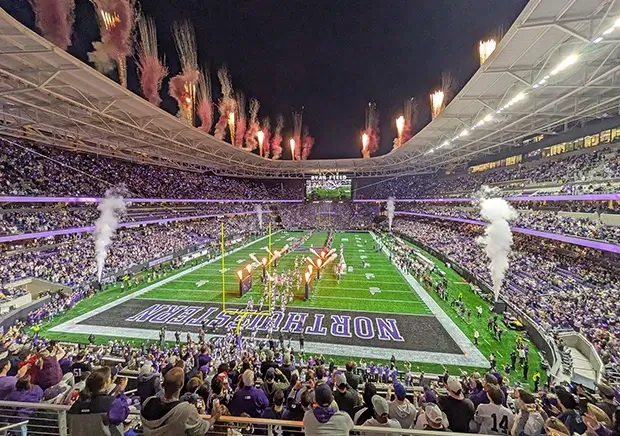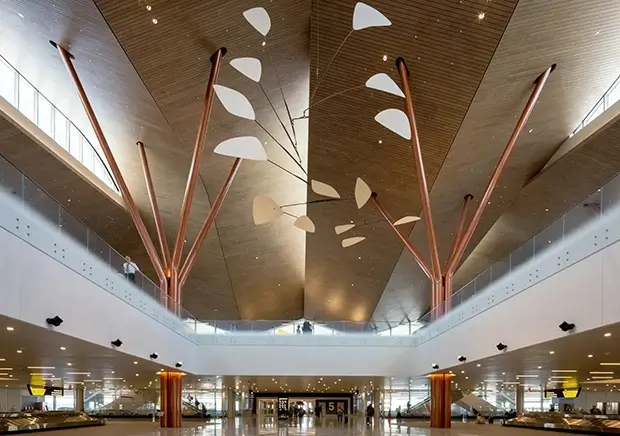

Steve Freihon/Related-Oxford
New York, New York
Global experience.
Regional perspective.
Local impact.
New York, New York
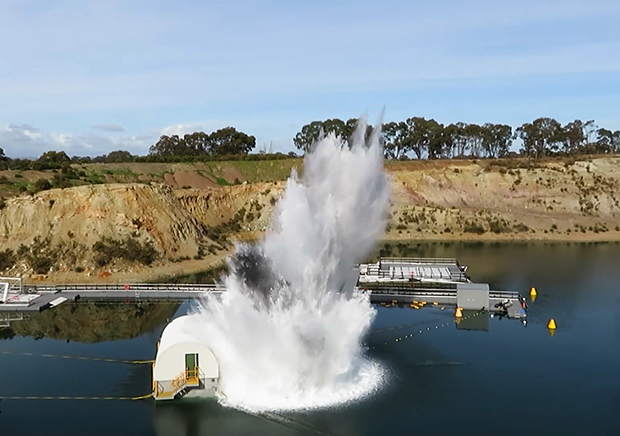
Australia

London, United Kingdom
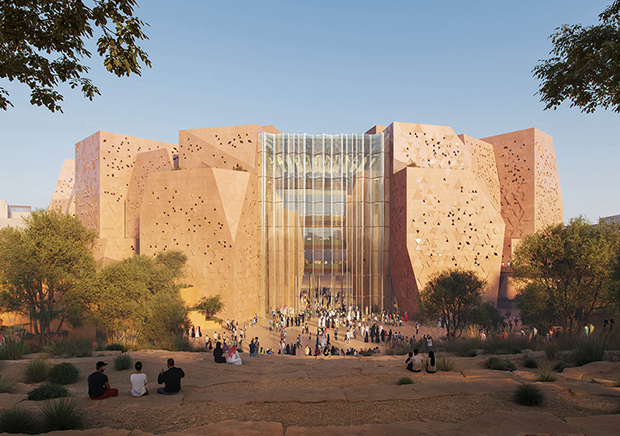
Diriyah, Riyadh, Saudi Arabia


Energy modeling can do more than predict how a building will perform. Used early, it gives owners and project teams a way to test innovative strategies and challenge the assumptions shaping the design before those assumptions become costly to change.
That timing matters because many of the most consequential building decisions—including massing, orientation, glazing, shading, façade performance, passive design, ventilation, and mechanical systems—are made during concept and schematic design. At this stage, the project is still flexible, and teams can virtually test alternatives at a comparatively low cost.
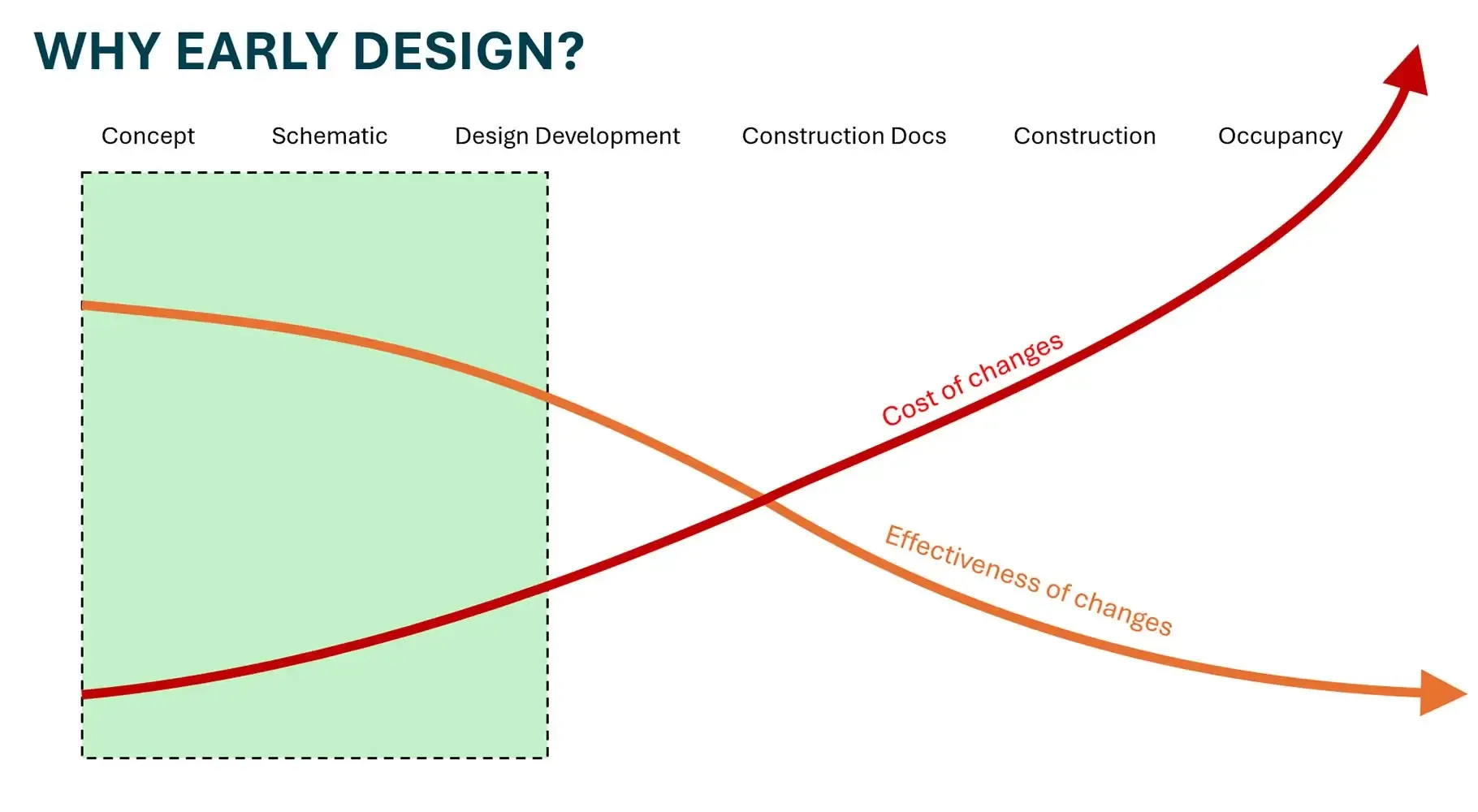
Using project data and documented assumptions, an energy model can compare options before the building is constructed. It can show how different design choices affect energy use, operational carbon emissions, occupant comfort, and long-term operations, helping teams understand both near-term and lifecycle tradeoffs before key decisions are locked in.
For owners, the value is greater decision control. A project can begin with the right ambition and still move forward based on untested assumptions. By the time performance is modeled, major decisions may already be difficult, costly, or unrealistic to change.
Early energy modeling helps close that gap. It gives teams a way to test options while there is still time to act, so performance goals are not simply stated at the beginning of a project but actively designed into it through data-informed collaboration among the owner, architect, engineers, and other project partners.
Key Takeaway: Performance goals are usually set early, but the design decisions that make or break them are often tested too late. Early energy modeling helps owners test smart design decisions and avoid discovering that achieving cost, carbon, comfort, or operational goals may require expensive redesign, added coordination, or late-stage compromise because the design is already locked in.
The timing of an energy model changes its value. During concept and schematic design, teams still have room to shape the decisions that carry long-term performance consequences. Building form, orientation, window-to-wall ratio, façade performance, shading, ventilation, and passive design strategies can all affect energy demand, operational carbon, occupant comfort, and mechanical system sizing.
This is when energy modeling can have the greatest influence. It helps the project team compare options before design momentum, budget pressure, and coordination constraints make change more difficult.
Industry guidance supports this timing. ASHRAE Standard 209 frames building performance simulation as a design-phase process intended to quantify the effects of design decisions while those decisions are being made. The U.S. Department of Energy also notes that major design choices—including orientation, floor plans, and façade elements—are often established early and can significantly affect energy efficiency.
For owners, the benefit is practical. Earlier modeling can help reduce late-stage surprises, avoid unnecessary redesign, right-size systems, and direct capital toward the strategies that will meaningfully improve performance over the life of the asset.
The value of energy modeling is that it makes tradeoffs visible before they become expensive to unwind.
A façade strategy may improve daylight while increasing cooling demand. Shading may reduce solar heat gain while affecting cost or architectural expression. Passive design may reduce mechanical system demand, but only when it is considered early enough to shape the building. An electrification strategy may support operational carbon goals while changing peak electrical demand and infrastructure requirements.
Without modeling, these choices can remain subjective or be evaluated in isolation. With modeling, teams can compare them using consistent assumptions and measurable performance outcomes.
The goal is not simply to identify the option with the lowest modeled energy use. It is to understand how each choice affects energy, carbon, comfort, cost, constructability, and long-term operations so the project team can select the strategy that best supports the owner’s priorities.
Occupancy schedules, plug loads, ventilation rates, equipment use, control sequences, envelope performance, and climate conditions all shape an energy model’s results. If those assumptions are unclear, the model can appear precise while concealing meaningful uncertainty.
The purpose is not simply to produce a number. The purpose is to make the inputs visible enough for the entire project team to test, question, and refine them.
A clearly documented model allows owners to understand operational implications, architects to see how design choices affect performance, MEP engineers to coordinate systems around realistic demand, and contractors to understand the intent behind performance-related decisions.
In this role, the energy modeler does more than conduct technical analysis. The modeler helps facilitate a design conversation, creating a shared basis for collaboration among the owner, architect, engineers, contractor, and other project partners.
The first model should be developed during predesign or concept design, before the building form, envelope and primary systems are fixed.
It can help teams avoid late redesign, evaluate capital and operating-cost tradeoffs, and right-size systems using modeled demand rather than conservative assumptions.
Begin with high-impact variables such as massing, orientation, glazing, shading, envelope performance, ventilation and major HVAC concepts.
No. Compliance is one application, but decision-focused modeling can also support design optimization, electrification, operational carbon reduction, incentives and lifecycle planning.
Update it when major design variables, operating assumptions, systems or performance targets change. Each update should answer a defined project decision.
Energy modeling can support code compliance, incentives, and building certifications. Those applications matter, but they are not the full opportunity.
The larger opportunity is to protect the long-term value of the owner’s sustainability investment before the design hardens.
Early modeling helps show whether a project’s energy and operational carbon goals remain achievable, which choices carry the greatest performance impact, and where capital can be directed while change is still practical. It can also help teams identify which strategies should be protected as budgets are refined and value-engineering decisions are made.
For owners, the value is not simply a better model. It is fewer late-stage surprises, clearer capital decisions, and a stronger likelihood that energy, carbon, and building performance goals remain achievable as the design advances.
A building’s energy use, operational carbon, occupant comfort, and operating costs are shaped before the building is built. Once those outcomes are embedded in the design, the owner may be left with them—or face costly future retrofits.
Early energy modeling keeps those outcomes actionable while the project can still respond. It gives owners and project teams the information needed to test assumptions, compare alternatives, and optimize building performance before the most consequential design decisions are locked in.