
Steve Freihon/Related-Oxford
New York, New York
Global experience.
Regional perspective.
Local impact.
New York, New York
Australia

London, United Kingdom
Diriyah, Riyadh, Saudi Arabia

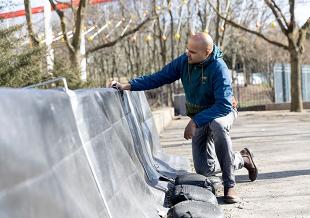
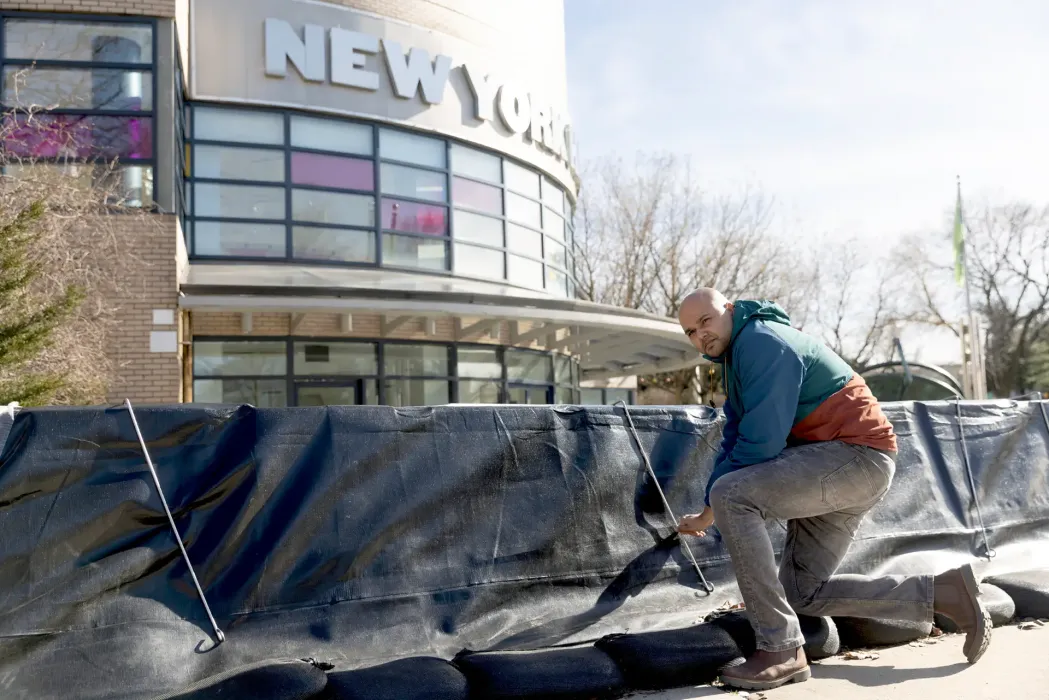
Flooding is no longer a problem limited to coastlines or riverfronts. Extreme rainfall is now overwhelming aging stormwater systems and flooding buildings that were never mapped as high-risk. At the same time, rising sea levels and rapidly intensifying storms are exposing buildings to conditions they weren’t originally designed for.
Flood resilience design focuses on ensuring that buildings can recover quickly after flooding rather than simply preventing water intrusion. By anticipating changing climate risks, eliminating failure points, and protecting critical systems, resilient buildings can return to safe occupancy faster after flood events.
For owners and operators, the most important question is no longer whether water can reach a site. The question is: if a flood event occurs, how quickly can the building be safely reoccupied?
Flood resilience, in practice, is about designing for that rapid recovery.
A building can remain structurally sound after a flood and still be effectively unusable. Loss of power, lack of potable water, and disruptions to elevator service, data systems, or life-safety equipment can shut down operations for long after the water recedes.
Resilience is measured in outcomes – occupancy, continuity, and recovery time – not simply by whether a structure remains standing. The goal is to shorten disruption and enable buildings to return to service as quickly and predictably as possible.
Most building codes are rooted in historical data; they look backward. But buildings are long-lived assets, often expected to perform for 50 to 80 years or more.
Flood protection strategies designed to past benchmarks can become obsolete within a decade as conditions change. And exceedance doesn’t need to be dramatic; sometimes, inches are enough to route water into basements and trigger cascading failures.
Flood resilience requires acknowledging that the baseline is moving higher and designing accordingly.
One of the most effective ways to turn climate risk into project decisions is through a climate hazard risk assessment that looks forward 50-80 years, not just at today’s conditions.
These assessments:
We draw on tools like FEMA's National Risk Index - as well as FEMA Flood Insurance Rate Maps (FIRMs), NOAA sea level rise projections, ASCE 7 flood load standards and IPCC climate projections - along with state and local hazard-mitigation plans. We also begin with the client. Owners understand their buildings better than anyone – where water has entered before, which systems are most vulnerable, and which absolutely cannot fail.
In locations without mapped flood hazard information, such as sites that experience extreme rainfall but are not classified within a traditional flood zone, we develop site-specific hydraulic and hydrologic models to define risk. That modeling creates the equivalent of a FEMA-style flood map, enabling informed design decisions even where no regulatory map exists.
The assessment shifts the conversation from abstract climate risk to tangible questions: Where does water enter? What fails first? What must remain operational?

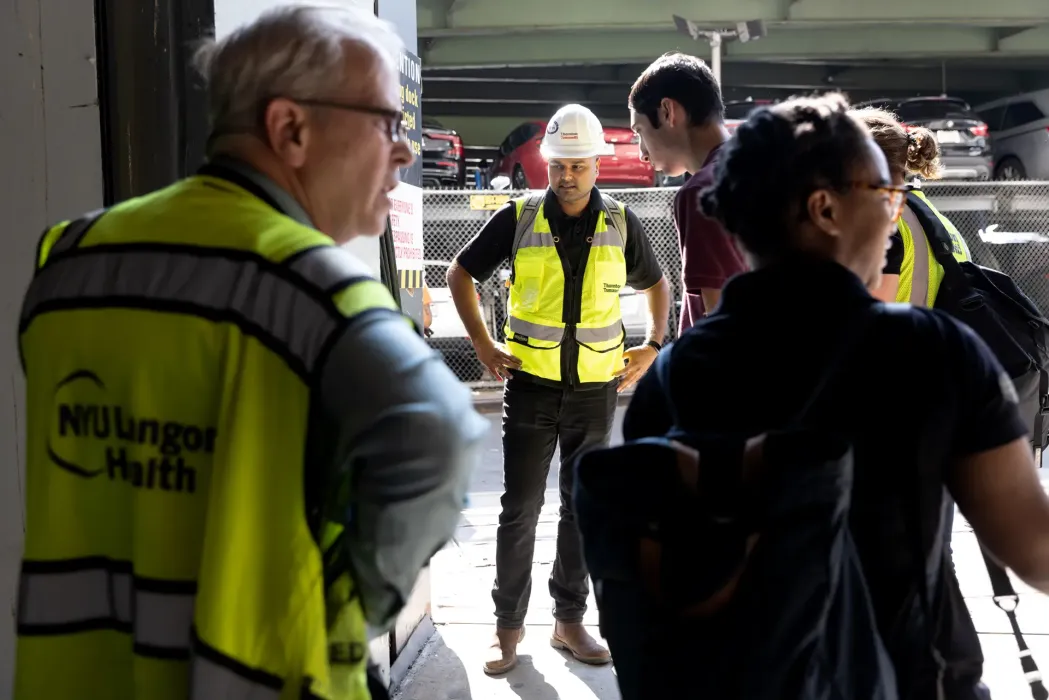
Flood resilience doesn’t begin with a product or a detail. It begins with understanding client priorities.
The most productive early question is simple: What keeps you up at night?
That question quickly leads to specifics – generators in basements, critical tenant operations, healthcare facilities that must shelter in place, data centers, vertical transportation in high-rise buildings.
Those operational priorities are then layered onto current and projected climate risks identified in the hazard assessment. The result is a strategy that is both holistic and targeted – protecting what matters most, not just what is easiest to design for.
When clients want to go beyond minimum standards, uncertainty becomes part of the challenge. Climate projections vary, and overbuilding for worst-case scenarios upfront is rarely practical.
An adaptable approach balances resilience and feasibility:
This frames flood resilience as long-term asset planning rather than as a one-time fix.
Most flood-protection failures happen at interfaces – where barriers meet buildings. These conditions are difficult to fully capture in drawings alone.
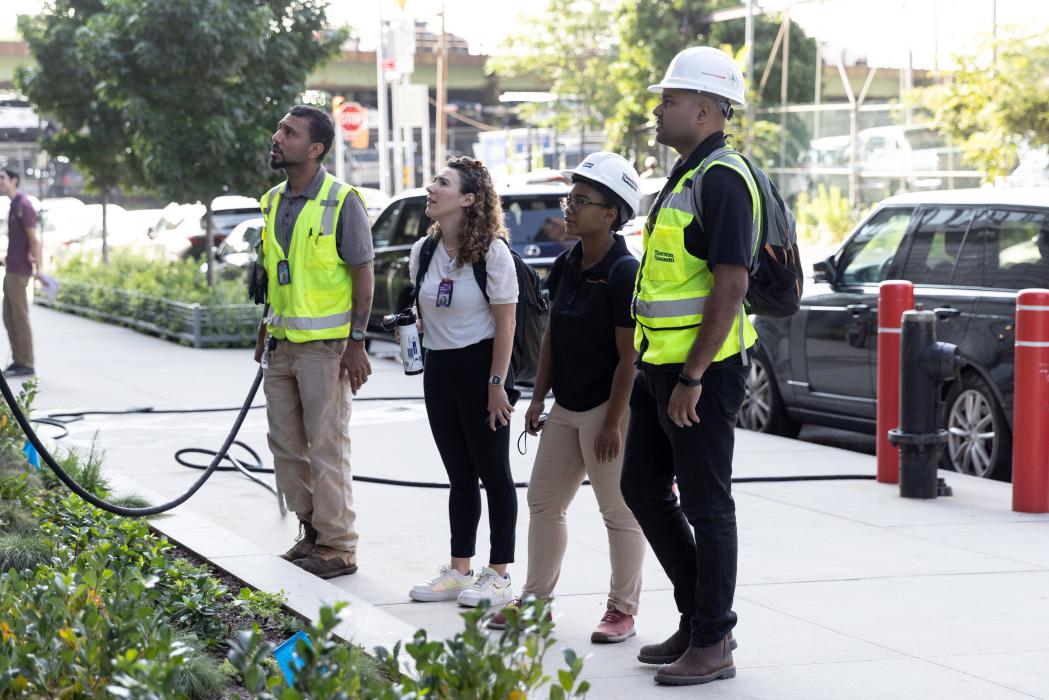
Performance testing exposes real-world vulnerabilities before a flood does. We apply a tiered testing approach to reveal gaps, pressure leaks, and sustained-load failures that would otherwise remain hidden until an event occurs. This approach progresses from visual inspections (like a flashlight test) to pressurized water testing (like a hose test) and realistic load simulations (a bathtub test).
In one case, a flood-related door passed standard inspections, yet during full performance testing, water entered through its keyhole. It was a small detail, but over time, even a minor leak could have flooded a basement. Without advanced testing, the issue would not have been discovered until the next storm.
Testing transforms resilience from theoretical compliance into verified performance.
Many flood-protection strategies depend on people deploying barriers correctly and on time. That dependence introduces risk, especially during overnight events, holidays, or extreme weather. A single missed doorway can negate an otherwise robust strategy.
Where possible, resilience should rely on passive design approaches that reduce the chance of human error. Systems that are permanently in place or automatically deployed are more reliable than those requiring manual installation under pressure.
Operational planning remains essential. Flood emergency action plans equip property managers with clear procedures for preparation, deployment, and post-event recovery. These plans ensure that protective systems are maintained, accessible, and ready to perform.
On the design side, resilience is a system built on the foundation of a vulnerability assessment. Openings are addressed with flood barriers or flood-related assemblies. Structural elements between protection points are verified or reinforced. A continuous line of defense is established, so water cannot exploit the weakest link.
This is where integrated expertise matters most. Flood measures are only as effective as the walls, slabs, and façades that support them. When structural, façade, renewal, and resilience teams work together, the result is a building that not only resists water but returns to service quickly when it matters most.
how quickly can your building recover from a flood? Ask us for a risk assessment.