
Steve Freihon/Related-Oxford
New York, New York
Global experience.
Regional perspective.
Local impact.
New York, New York
Australia

London, United Kingdom
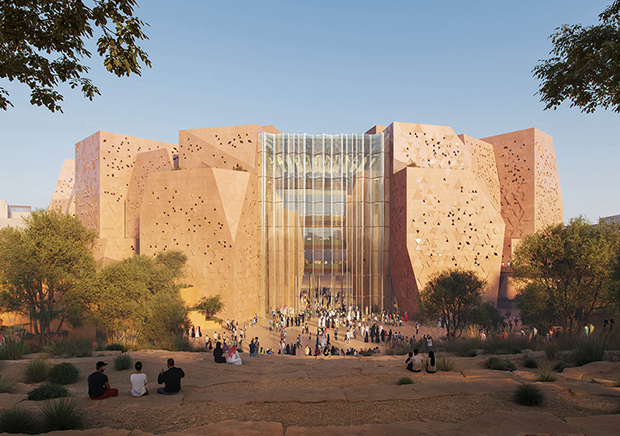
Diriyah, Riyadh, Saudi Arabia
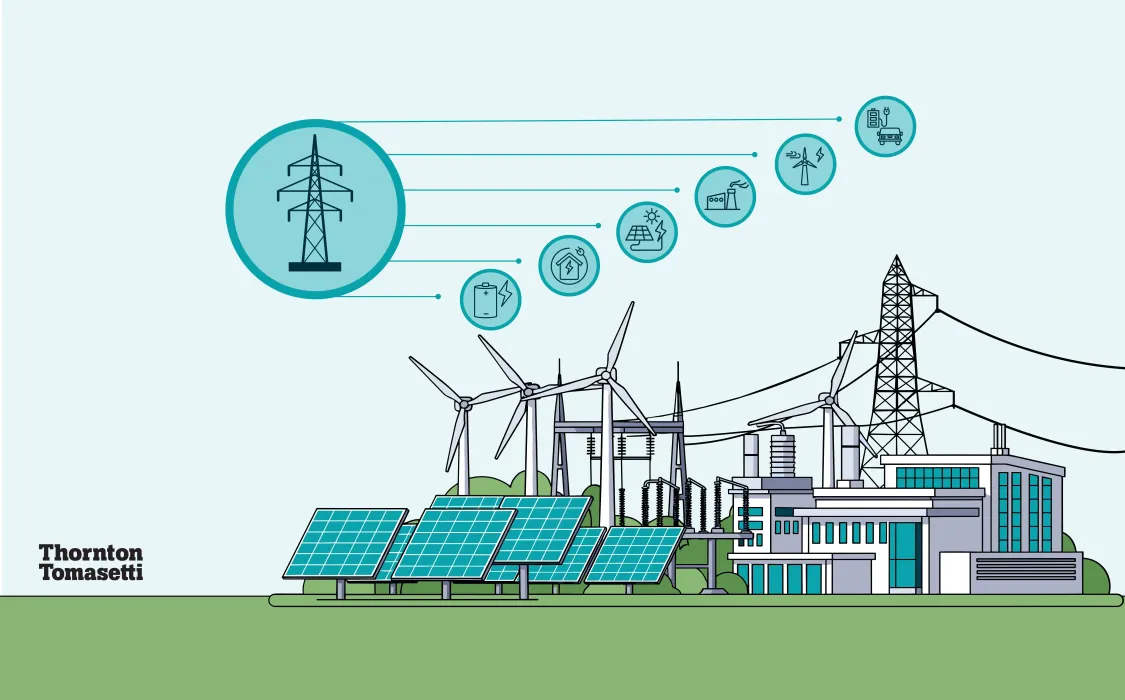
Across the U.S., electric utilities and distribution planners are rethinking how grid capacity is planned and delivered in the face of rising demand and infrastructure constraints. Distributed energy resources are increasingly central to these discussions, offering flexible, localized solutions that complement traditional grid investments.
Across the U.S., utilities are facing a critical challenge: how to expand capacity without overbuilding infrastructure. Traditional planning has long favored upgrading substations or laying down new transmission lines – but that approach is costly, slow, and increasingly unsustainable.
The future demands flexibility, and distributed energy resources (DERs) offer just that.
DERs are small-scale power-generation or storage units – like solar panels, battery systems, or microturbines – that are either grid-connected or capable of operating independently. They can sit behind the meter or be owned by a third party, and they often go underutilized in current planning models.
We focused on understanding the value DERs can bring to distribution networks, not just in energy output, but in flexibility, deferred capital investment, and enhanced resilience.
Here’s a common scenario: A substation is built for 20 megawatts and already serves 19 megawatts of load. A new development comes in that requires 2 megawatts. The utility now faces a shortfall and potentially a multimillion-dollar substation expansion. That’s where DERs come in.
Instead of expanding infrastructure to meet that marginal need, a developer or utility can tap into local DERs’ dispatchable power sources that provide the extra capacity when needed. This avoids the financial and environmental costs of overbuilding.
An optimization framework was developed to quantify the value of DERs to both utilities and end users. The model weighs DER performance, availability, cost, and location to determine how they can offset traditional infrastructure upgrades. It also accounts for real-world complexity, like intermittence and maintenance, so utilities can plan with confidence, not guesswork.
The results were clear: DERs aren’t just a backup – they’re a strategic asset. When deployed intelligently, they offer a lower-cost, lower-risk path to capacity expansion.
DERs aren’t just a backup – they’re a strategic asset.
One of the most exciting future applications is the use of real options contracts between utilities and DER owners. This financial structure, borrowed from the world of stock options, lets utilities “reserve” access to DER power for a fee, without needing to own or operate the asset full-time.
For example, a commercial building with a 5 MW battery could enter into a five-year contract that gives the utility dispatch rights when needed. The building receives a fixed fee, plus compensation when the power is used. The utility avoids unnecessary capital expenses. Everyone wins.
This contract model enables a more resilient, responsive, and decentralized grid, while still giving utilities control when demand spikes.
As climate uncertainty, electrification, and population growth converge, the grid must evolve. Centralized infrastructure alone won’t be able to meet peak loads or maintain resilience during disruptions.
Instead, we need to design smart, decentralized systems that can scale and adapt dynamically, especially at the distribution level. DERs enable exactly that. In the long term, a grid where local generation, storage, and demand response are deeply integrated into planning and operations is possible – a place where communities produce and manage their own power and utilities to orchestrate a network of flexible assets rather than fixed plants.
Despite the promise, there are still hurdles. Many utilities are hesitant to rely on DERs due to regulatory constraints, perceived risks, or legacy business models. But that’s changing. As technology matures, performance improves, and the benefits become undeniable, there could be a fundamental shift in how utilities plan, procure, and operate. This research contributes to that shift and helps bridge the gap between innovative modeling and real-world implementation.
Our energy future won’t be solved by simply building more. It will be solved by building smarter. DERs are not a silver bullet, but they are an essential part of the solution. When we start to value their flexibility, optimize their integration, and create pathways for utilities to confidently rely on them, we move closer to a grid that is affordable, resilient, and ready for what’s next.