

Steve Freihon/Related-Oxford
New York, New York
Global experience.
Regional perspective.
Local impact.
New York, New York
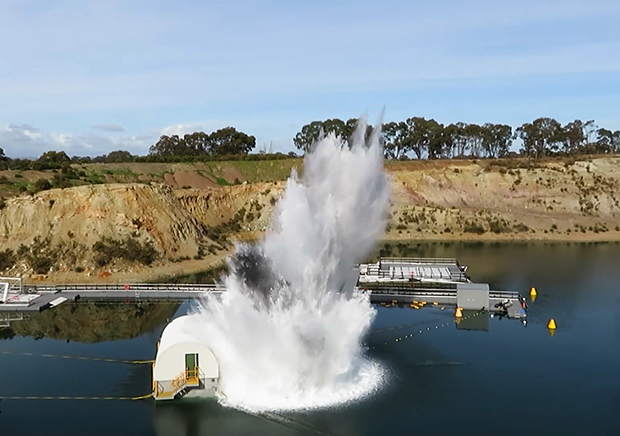
Australia

London, United Kingdom

Diriyah, Riyadh, Saudi Arabia

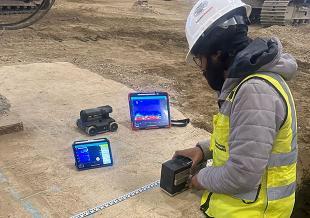
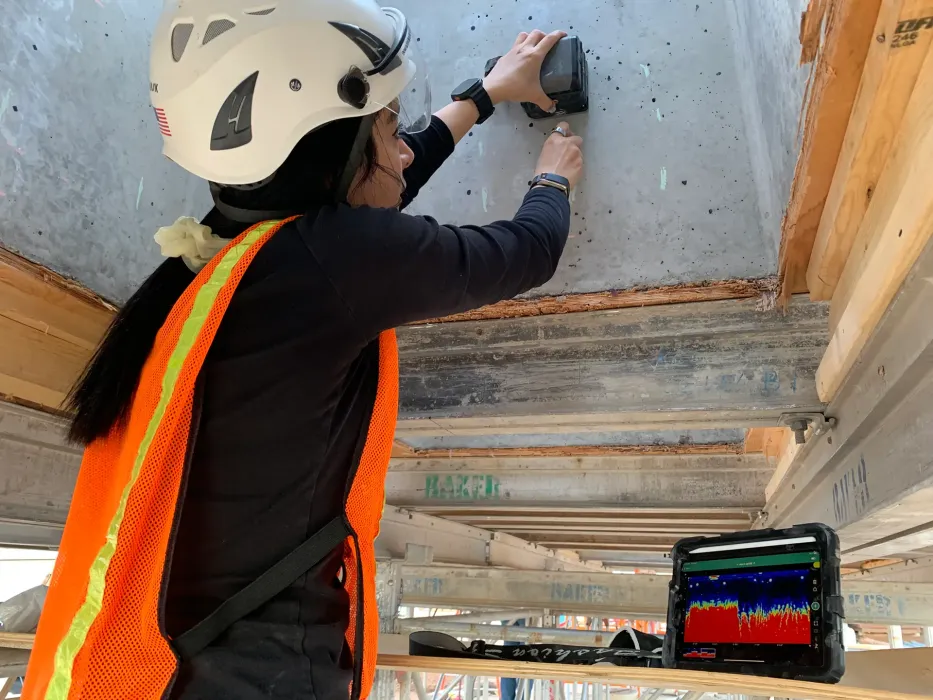
As bridges, buildings, industrial facilities, and other infrastructure age under environmental stress and operational loading, many of the most serious issues begin as hidden defects within the material or at internal interfaces. Corrosion in reinforcing steel, hidden cracking, poor consolidation, and internal voids develop out of sight while everything still appears “normal” from the outside.
Nondestructive testing (NDT) has become indispensable for investigating these hidden conditions. It allows us to evaluate materials and structural components without cutting, coring, or taking them out of service. Yet in practice, traditional NDT is often applied in a narrow way – typically as one method, one dataset, and one attempt at interpretation.
Our forensic work focuses on a different question: What happens if we treat NDT as an integrated methodology instead of a single tool choice? How much better can we understand real conditions when we deliberately combine methods like ground-penetrating radar (GPR) and ultrasonic testing (UT) and interpret the results together rather than in isolation?
What Is Integrated Nondestructive Testing?
Integrated nondestructive testing (NDT) is an approach that deliberately combines multiple testing methods—such as ground-penetrating radar (GPR) and ultrasonic testing (UT)—and interprets their results together. Unlike single-method testing, integrated NDT improves reliability by leveraging complementary physics, reducing false positives, and increasing confidence in structural condition assessments for aging infrastructure.
Practicing engineers have seen both sides of NDT. When it works well, it reveals reinforcement patterns, voids, delaminations, and thickness variations with impressive clarity. When it doesn’t, it yields ambiguous images, noisy data or reassuring results that later prove incomplete.
A common pattern underlies many of the disappointing cases: a single NDT method is relied on to answer every question about a complex structure.
Each technique is governed by physics that gives it specific strengths and limitations:
In that context, the problem is not that NDT is “unreliable” but that we often deploy it without fully accounting for how each method sees, or doesn’t see, the internal conditions we are trying to analyze.
The integrated methodology we use centers on combining two widely available techniques: GPR and UT.
GPR uses electromagnetic pulses to probe the subsurface. Differences in dielectric properties produce reflections that can be assembled into images. GPR is excellent for mapping reinforcement, detecting layer interfaces and capturing thickness changes. It can cover large areas quickly and does not require physical coupling to the surface.
UT uses mechanical waves that propagate through the material. Changes in stiffness, density, or continuity (cracks, voids, loss of bond) affect how those waves travel and reflect. UT excels at detecting internal flaws and measuring thickness with high accuracy, particularly when the geometry is well understood and access is reasonable.
These techniques “see” the material in very different ways. GPR responds strongly to changes in electromagnetic properties and is heavily influenced by steel. UT responds to changes in mechanical properties and can penetrate through steel where radar reflections become complex.
In an integrated methodology, the goal is not to choose between GPR and UT but to leverage their complementary capabilities: use GPR for rapid, relatively wide-area mapping of reinforcement, thickness, and obvious anomalies, and UT for targeted, depth-sensitive exploration of regions where GPR is ambiguous or where critical internal defects are suspected. The resulting data should then be interpreted as a combined dataset rather than as separate, method-specific results.
To test this approach, I examined four representative case studies from actual structural applications. Each one highlights a limitation of single-method testing and shows how combining methods changes the picture.
In composite floor systems with corrugated metal decks, the geometry itself can make interpretation challenging. GPR was used first to map the flutes of the deck, the reinforcement, and the slab thickness.
On its own, the GPR data was dense: reflections from the deck profile, reinforcement, and interfaces overlapped. Within the integrated framework, GPR became a structural map rather than a complete answer. It highlighted where the geometry or congestion would likely confuse other methods and where additional testing would be valuable.
The lesson: Even where GPR is the primary tool, treating it as one piece of a methodology – not a “scan and conclude” exercise – produces better decisions.
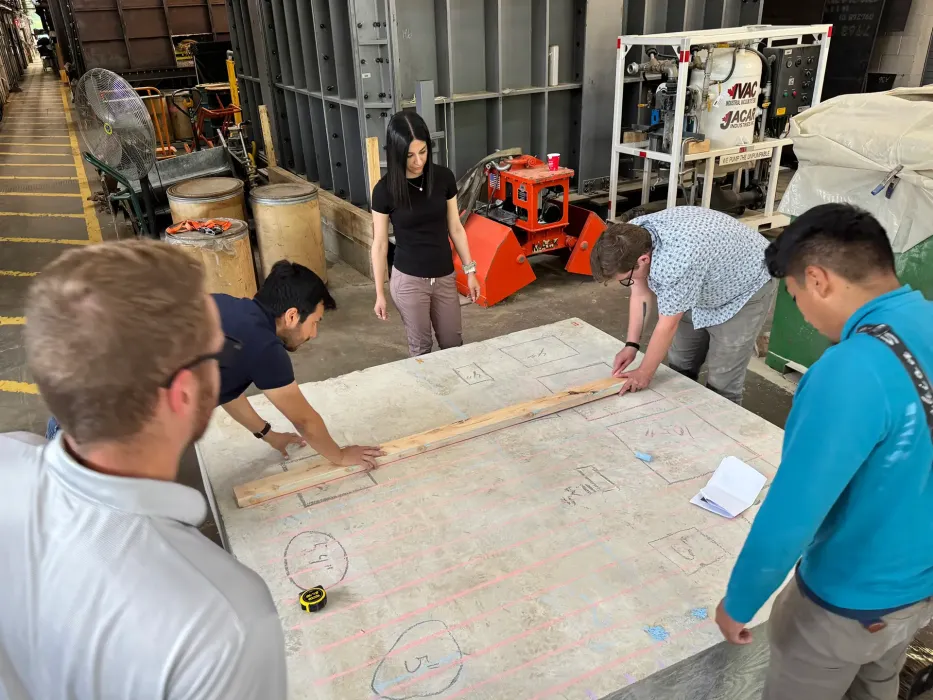
A reinforced concrete slab was suspected to contain internal voids. GPR scans clearly identified the reinforcement layout and some near-surface anomalies. However, deeper voids located close to and behind the reinforcement were not obvious in the radargrams. The presence of steel overshadowed the subtle reflections from the defects.
UT was introduced as a second step. Ultrasonic measurements revealed distinct reductions in wave velocity and abnormal reflections precisely where GPR looked relatively benign. With limited physical verification, it became clear that GPR provided excellent coverage and mapping.
UT provided the sensitivity needed to detect deeper, steel-adjacent voids that radar alone had nearly missed.
Without the second method, it would have been easy to conclude that the slab was in better condition than it really was.
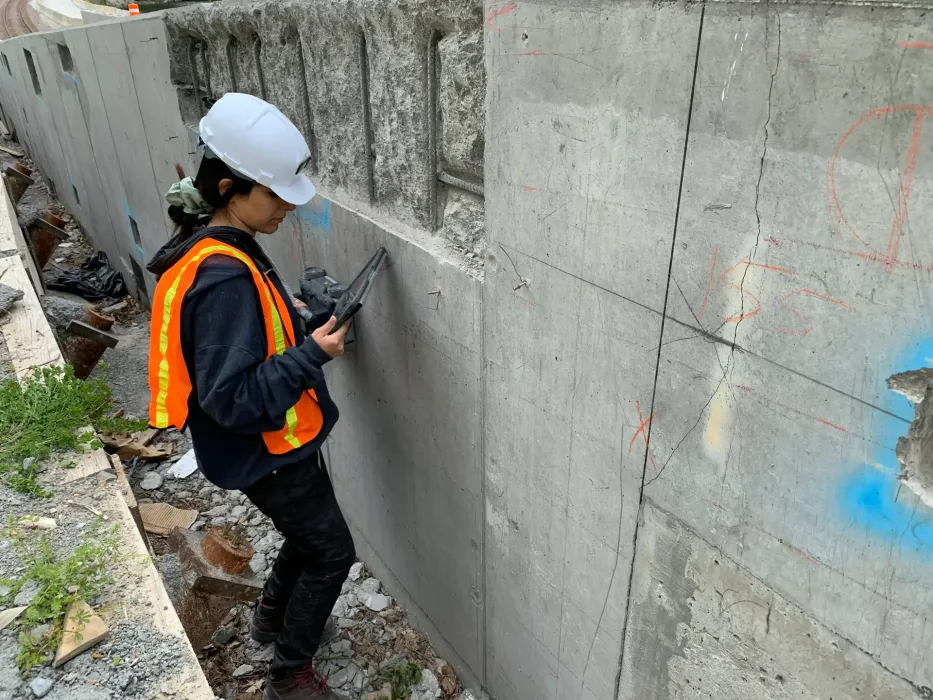
In another case, GPR was used on concrete masonry unit (CMU) walls. In principle, radar can identify vertical reinforcement and grouted cells. In practice, CMU is tricky: the contrast between solid and empty cells produces strong reflections, and variations in moisture content complicate the signal.
Raw GPR data initially suggested a pattern that could have been interpreted as continuous reinforcement. Understanding the construction details and radar physics in masonry made a different reading more plausible: strong reflections from air gaps in empty cells, not steel.
Here, integration was less about adding a second device and more about combining the data with construction knowledge and skepticism. The “second method” was a more rigorous interpretive framework that prevented an overly optimistic conclusion about reinforcement continuity.
The most comprehensive case involved a concrete wall with uncertain internal detailing and suspected defects. The sequence was:
The outcome was a much more precise understanding of the wall’s condition and repair needs than any single method could provide.
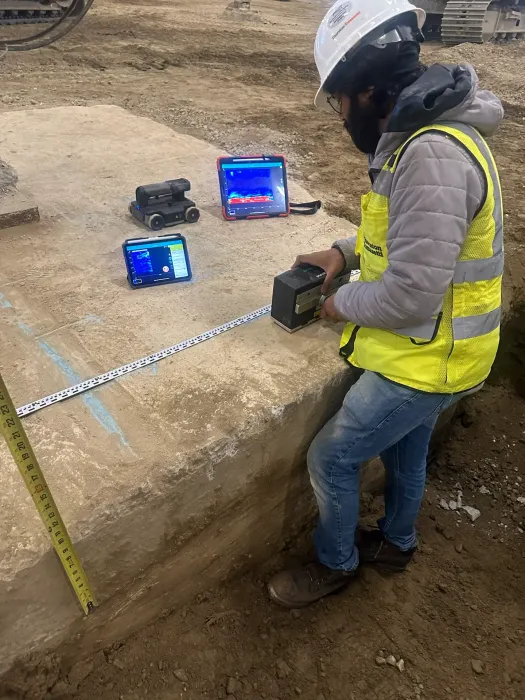
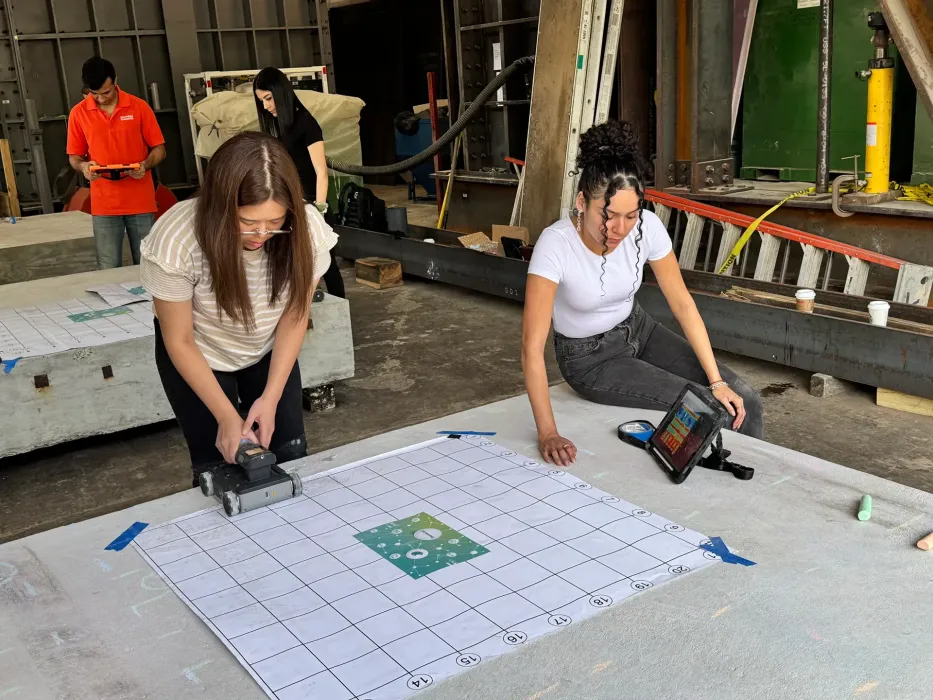
These case studies highlight another critical point: integrated NDT is not simply a question of owning more equipment. It is fundamentally about how human expertise is applied.
A combined GPR–UT methodology still requires someone to:
Without that interpretive layer, integrating methods can magnify confusion: more images, more waveforms, and more opportunities to overinterpret noise. With it, integration yields coherent, cross-validated picture of structural conditions that are measurably more reliable.
Nondestructive testing has already changed how we assess infrastructure. But many structures now approaching the end of their design lives will demand a higher standard of diagnostic reliability than traditional single-method approaches can offer.
An integrated methodology, one that combines GPR, UT, and other techniques under a coherent framework of engineering judgment, is one way to meet that demand. This represents an evolution from basic flaw detection toward comprehensive condition assessment for aging infrastructure systems. The combination of complementary testing techniques, supported by forensic engineering expertise, provides the comprehensive structural intelligence necessary for informed asset management decisions. As infrastructure systems continue aging and assessment demands increase, this methodology offers a proven approach for enhancing operational efficiency, extending asset life cycles, and ensuring structural integrity through precise, reliable condition evaluation.