

Steve Freihon/Related-Oxford
New York, New York
Global experience.
Regional perspective.
Local impact.
New York, New York
Australia

London, United Kingdom

Diriyah, Riyadh, Saudi Arabia
Our comprehensive expertise lets us customize NDT solutions for specific materials, structural components and assemblies, and inspection requirements.


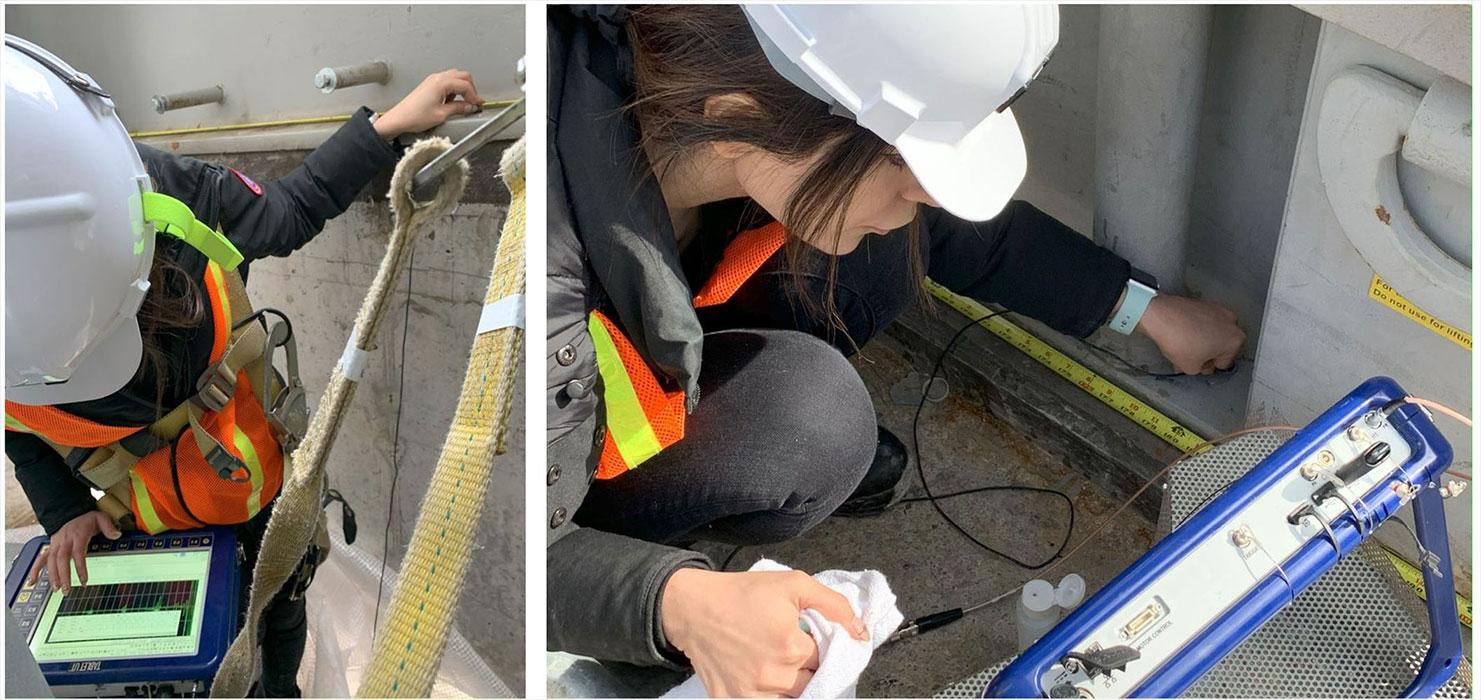
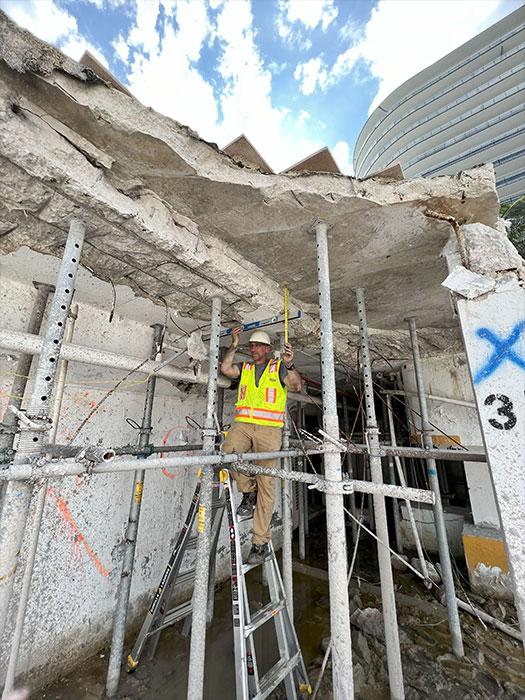
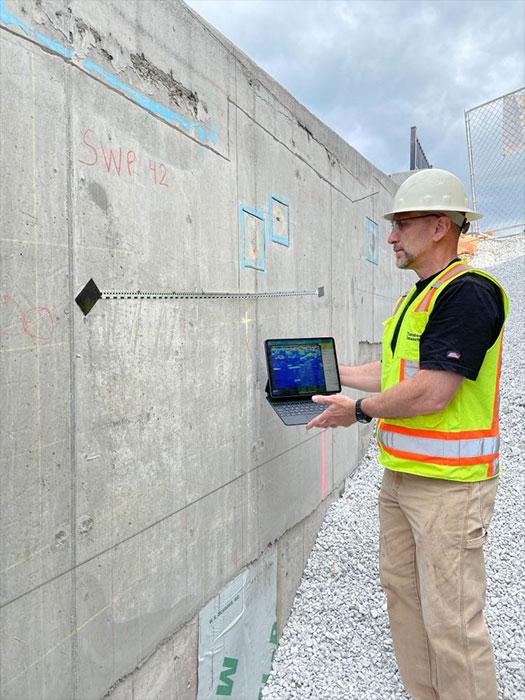
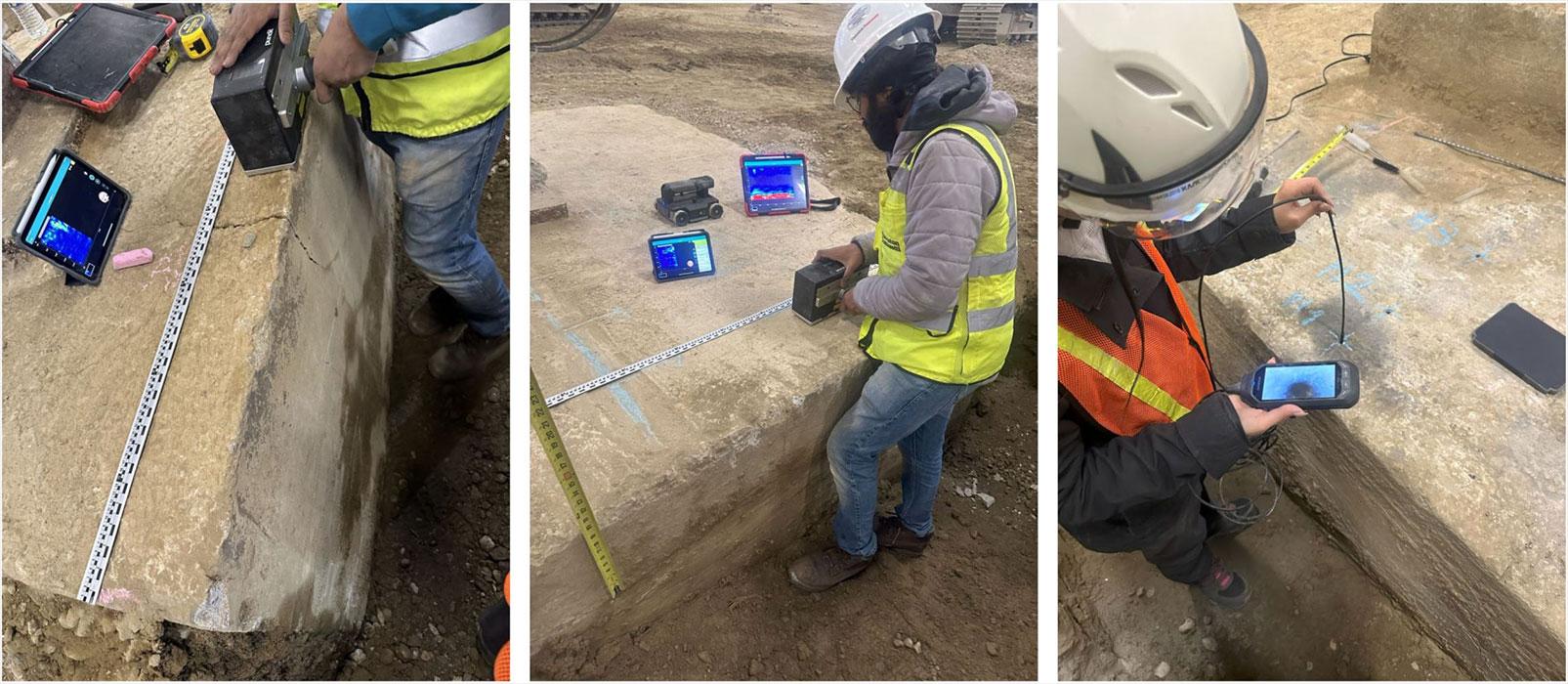
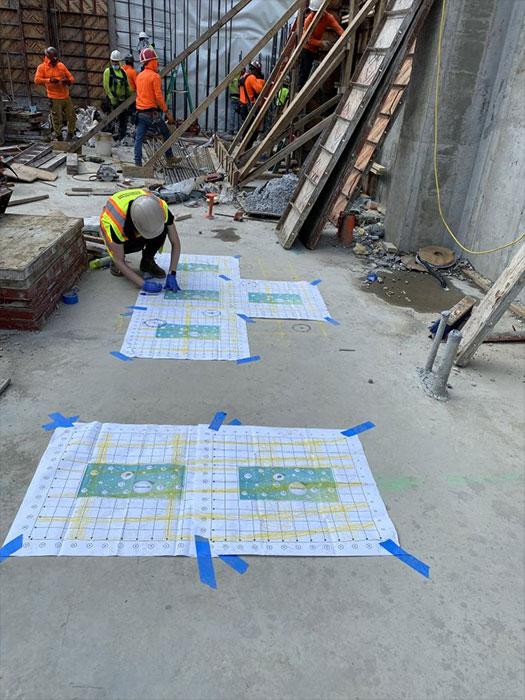
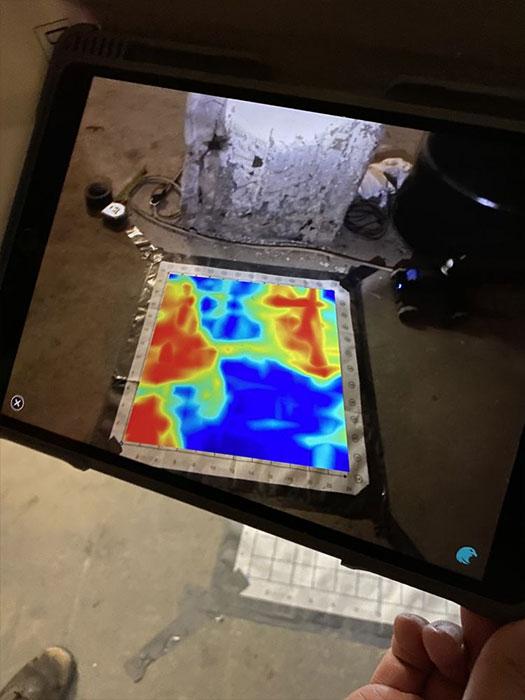
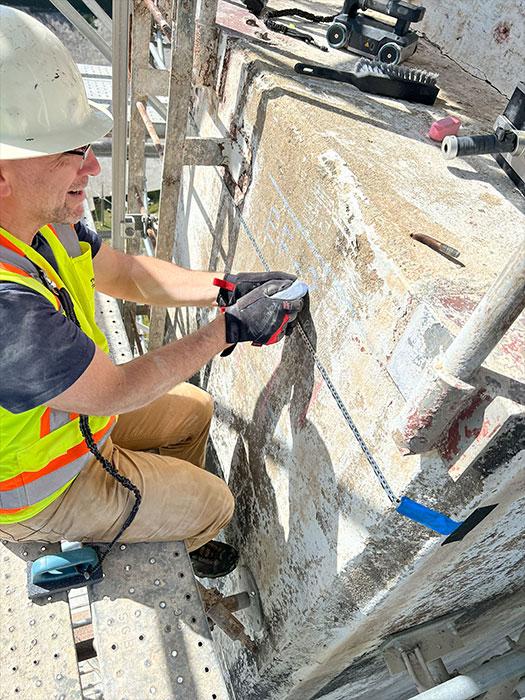
NDT enables us to detect and quantify anomalies and discontinuities within materials and structures without altering or damaging them. Because it can be tailored to meet an enormous variety of needs, it's useful not only in AEC but in a wide range of industries in which the integrity and safety of materials and structures are critical.
WHAT IS NDT?
Evaluating the strength, durability and performance of materials, structural components and systems is essential for engineering the built environment to ensure proper functioning and prevent structural, mechanical or material failures. Traditionally, this has been done by exposing part of the structure and inserting probes, drilling cores or extracting samples – a method known as destructive testing (DT).
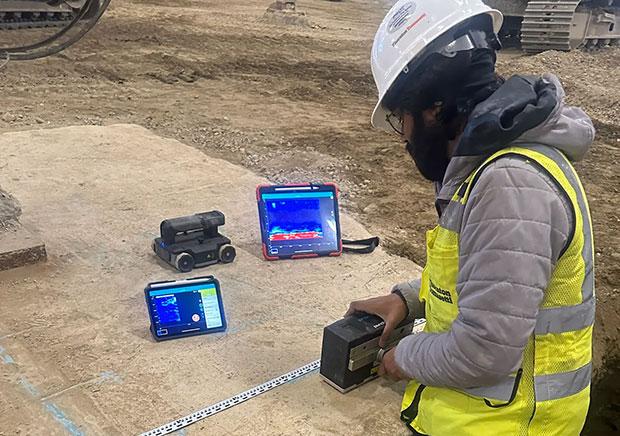
In contrast, nondestructive testing employs wave technologies like ground-penetrating radar and ultrasound to create visualizations of the insides of structures and materials, enabling us to examine them without causing damage and to evaluate their properties without removing any materials.
HOW IS IT USED?
In the AEC industry, we often use NDT to support new construction, renovations and forensic investigations. It’s an effective tool for verifying rebar placement, detecting weld deficiencies, estimating in-situ concrete strength and assessing the bond strength of repairs and overlays. It can also help detect voids in concrete, measure vibration frequencies and damping, and evaluate the corrosion of steel bars in concrete.
But its usefulness doesn’t stop there. NDT can be implemented in a variety of industries, to perform a wide range of tasks:
NDT METHODS
Our forensics professionals apply industry-leading experience and ingenuity to identify flaws, irregularities, and discontinuities in different types of materials and structural systems. Our expertise covers material science, chemical engineering and fracture mechanics, along with advanced knowledge of techniques for identifying defects in structures and components, including:
We also perform service-life analyses and fitness-for-service assessments to evaluate the remaining life of systems and components, based on defects and damage identified by NDT.
WHY USE NDT?
When properly applied, NDT can yield a host of benefits:
WHY CHOOSE THORNTON TOMASETTI?
With expertise rivaling that of any firm in the industry, our team goes out of its way to bring you the best NDT service available anywhere.




Insight
Integrated Nondestructive Testing for Aging Infrastructure