
Mobile Navigation

Our Operations: 2024 Corporate Progress Report

October 01, 2025
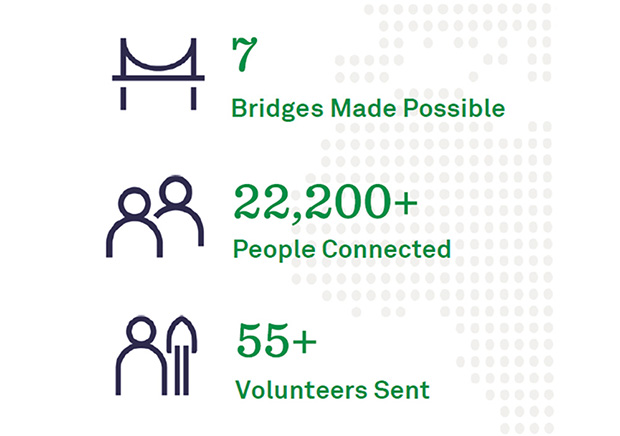
Thornton Tomasetti routinely partners with Bridges to Prosperity.
Thornton Tomasetti routinely partners with Bridges to Prosperity. Thornton Tomasetti
Thornton Tomasetti routinely contributes to Canstruction events across North America.
Thornton Tomasetti routinely contributes to Canstruction events across North America. Thornton Tomasetti
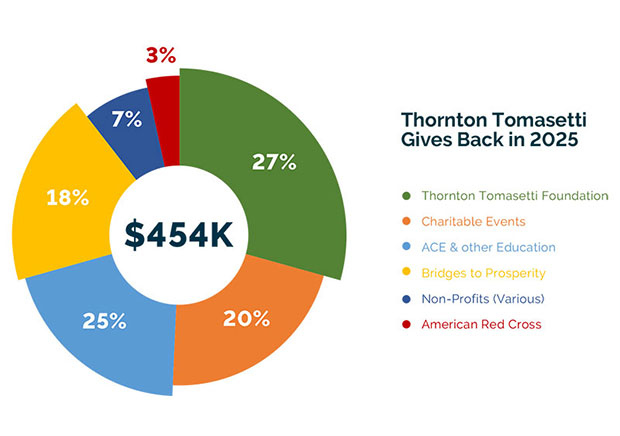
Thornton Tomasetti Gives Back, our community-service initiative, nurtures our people’s passion for volunteerism, encourages personal growth, promotes collaboration and cultivates lasting relationships.
Thornton Tomasetti Gives Back, our community-service initiative, nurtures our people’s passion for volunteerism, encourages personal growth, promotes collaboration and cultivates lasting relationships. Thornton Tomasetti

Each year, we track several indicators that show progress toward achieving our sustainable-operations goals. The trends revealed by this data show us where we need to stay the course and where we need to make changes.

25% Reduction in Total Carbon Footprint

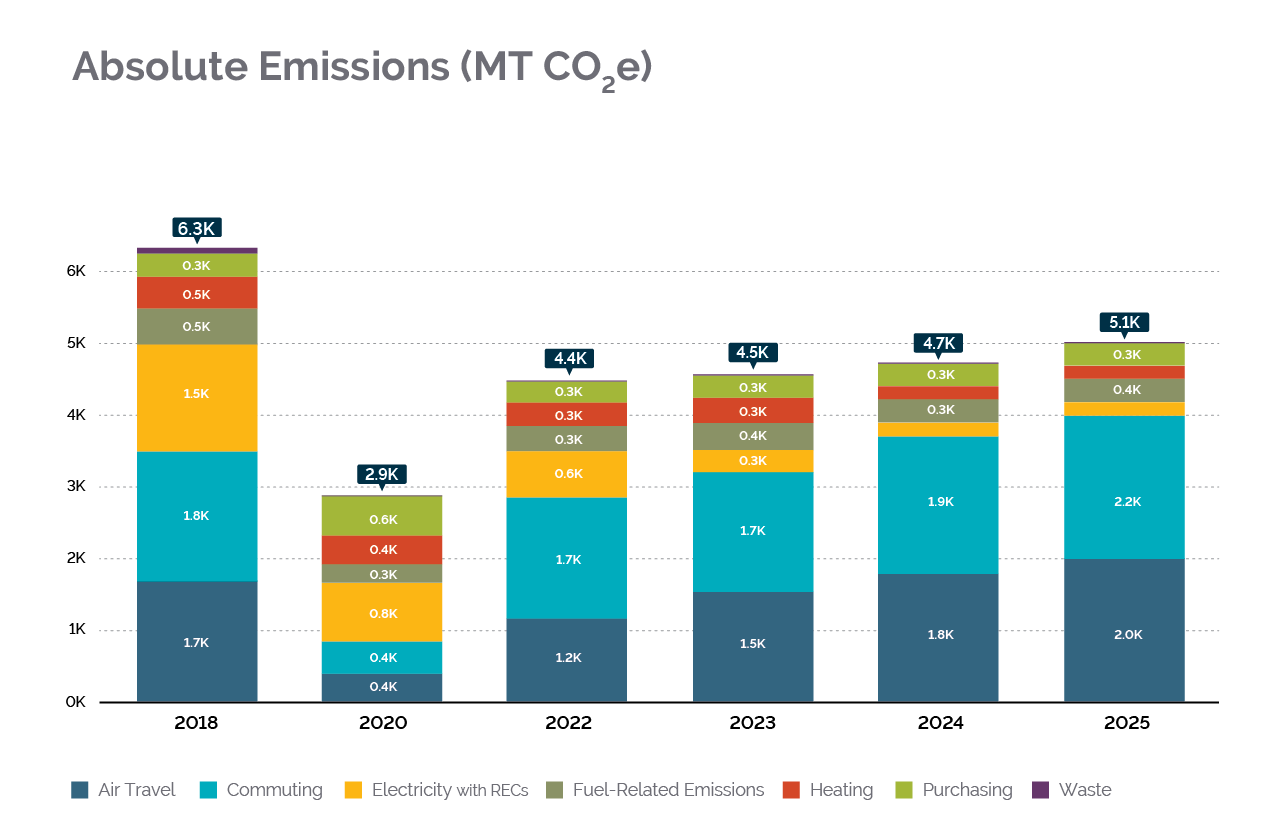
We reduced total emissions by 25% from our 2018 baseline. Factors in the reduction of our carbon footprint include the overall greening of the electrical grid, corporate renewable-energy purchases and moving to greener office spaces. While we purchase offsets to cover 100% of our air-travel emissions, we report our emissions without offsets, in line with global reporting standards. Before 2022, we conducted biennial emissions inventories; in 2023, we shifted to annual analysis. The scope of our inventory includes all except for a small number of offices with fewer than 10 employees.

43% Reduction in Average Annual Carbon Footprint per Employee

We reduced per capita emissions by 43% from our 2018 baseline. This greater reduction compared to our absolute emissions is attributable to the firm’s continuous workforce growth of around 10% each year.

13% Increase in Total Employee Commuting Emissions

Employee commuting emissions have steadily increased from 2020 levels as more employees return to the office post-pandemic, and the firm continues to grow. While overall miles traveled will continue to rise with this growth, we encourage employees to take advantage of more sustainable modes of transportation such as public transit and bicycling. This year saw more electric vehicle usage among our employees than ever. To bring the firm more in line with Greenhouse Gas Protocol standards, this year our calculations reflect well-to-wheel emissions, which take into consideration fuel extraction and transportation to the vehicle in addition to emissions from each vehicle’s use.

19% Increase in Total Air-Travel Emissions

Employee air-travel emissions have also increased from 2020 levels as more employees travel for project-related work – but emissions have not increased as fast as employee count. While many of our professional services require site visits and in-person meetings, our travel policy instructs employees to choose more direct and efficient routes and consider virtual meetings when possible. Recognizing that air travel is often business-critical, we purchase carbon offsets for all our air-travel emissions. This year, to be more in line with Greenhouse Gas Protocol standards, we calculated our air-travel emissions to reflect well-to-wheel emissions, which take into consideration fuel extraction and transportation to the airplane in addition to emissions from the air travel itself.

37% Reduction of CO2e Emissions from Purchasing Offsets & RECs

We further reduce our emissions by offsetting our annual flight emissions and purchasing renewable energy to cover some of our electricity use. In 2024, we achieved our greatest carbon-emissions reductions through the purchase of Renewable Energy Certificates (RECs) for our U.S. and U.K offices’ electricity use. Because air travel has increased since 2020, purchased offsets in 2024 have covered a larger amount of carbon emissions compared to previous years.

1% Increase in Total Electricity Consumption

Since 2018, we’ve reduced electricity consumption in our leased offices by 23%. We reduced our electricity use due to scaled-back office operations during the 2020 pandemic and have only gradually increased our kWh usage since. This is largely due to our high-performance offices with energy-efficient appliances and LED lighting, and to sustainable office fit-outs that have achieved LEED certification or were designed using our sustainable best-practices. Only data from offices included in our annual emissions inventory is included in this analysis.

42% Reduction in Total Heating Consumption

Since 2018, we’ve reduced fuel consumption in our leased offices by 64%. Our offices in warm climates don’t use heating fuel, and others are becoming fully electric. This year, the Chicago office, our second largest by population, moved to an all-electric space. As more of our offices run on electricity alone and our electric grids become greener, we reduce overall building emissions. Only data from offices included in our annual emissions inventory is gathered for this analysis. See our full 2024 emissions report.

Capabilities