

Steve Freihon/Related-Oxford
New York, New York
Global experience.
Regional perspective.
Local impact.
New York, New York
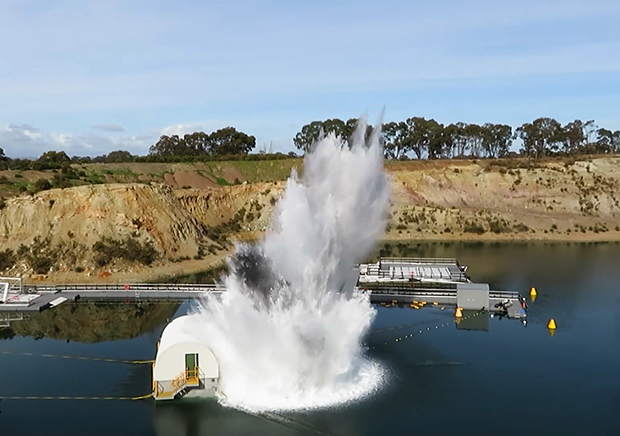
Australia

London, United Kingdom

Diriyah, Riyadh, Saudi Arabia

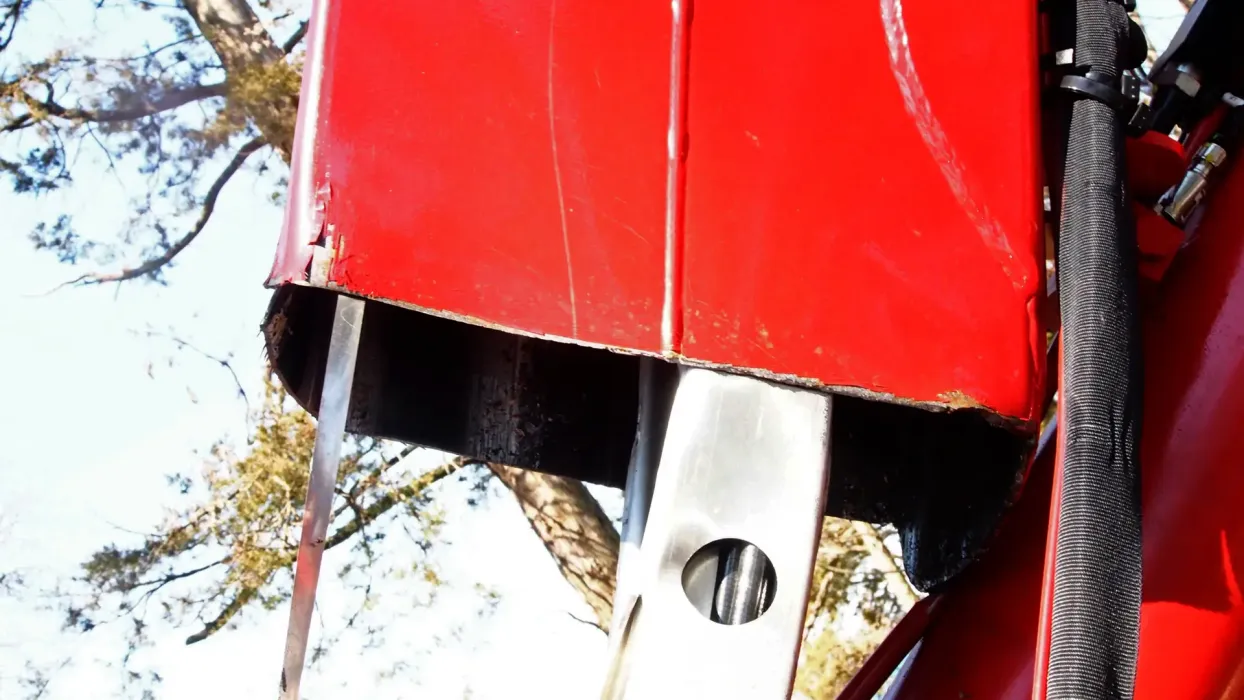
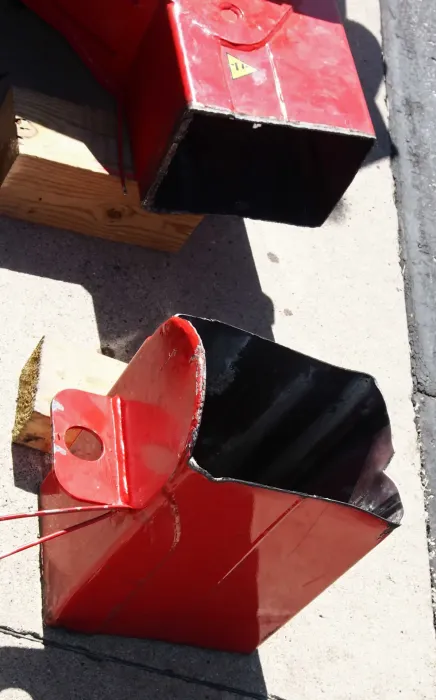
Weld fatigue analysis evaluates how repeated loading causes crack initiation and growth at welded joints, where geometric discontinuities and residual stresses concentrate damage. Accurate fatigue life prediction for welded structures requires identifying both the most likely failure location and the number of load cycles the weld can withstand under real-world, multiaxial loading conditions.
Welding is a reliable, time-honored method for joining structural components. But welds introduce geometric discontinuities and microscopic flaws where the weld meets the base material. Over time, these features can become weak points as a structure is repeatedly loaded and unloaded. That’s why fatigue cracks tend to show up at or near welds – and why fatigue analysis is so important when evaluating welded structures.
Predicting fatigue life – the number of stress or strain cycles a material or component can withstand before it fails – is sometimes treated as a straightforward task, as if the failure location were already known, and in controlled laboratory tests with simple specimens, this assumption may hold true. But real-world structures are rarely simple. As structural geometry and loading conditions become more complex, accurately predicting where fatigue failure will occur becomes far more challenging.
Performing a reliable fatigue evaluation is essential to good structural design. If fatigue behavior is misunderstood – or analyzed incorrectly – the consequences can include unexpected quality issues, premature failures or, in severe cases, significant damage or personal injury. This makes fatigue assessment especially important in forensic investigations, for which identifying the actual failure location and estimating fatigue life are key steps in determining the root causes of failures.
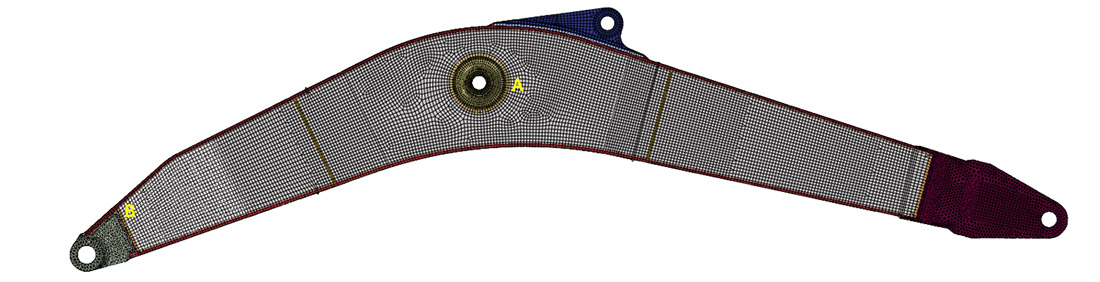
A good example of this challenge is an excavator’s arm and boom – welded components that experience a wide range of loads during digging, lifting, and material handling. Because of their complex shapes and constantly changing loads, the welds are subjected to stresses from multiple directions simultaneously. In the example shown, we used a finite element model of an excavator boom to predict fatigue behavior and then compared the predictions with experimental test results.
| Failure Location | Fatigue Life (Cycles) | ||
|---|---|---|---|
| Experiment | A | 310K–370K | |
| Prediction | Conventional | B (incorrect) | 512K (Mean) |
| Our Assessment | A | 312K (Mean) | |
Conventional weld fatigue methods often assume a dominant stress direction and predefined failure location, which can lead to inaccurate predictions in complex, multiaxial loading scenarios.
Using a conventional fatigue method – one that didn’t fully account for stresses acting in multiple directions – the analysis predicted failure at a weld corner near the foot pin housing (location B). However, that’s not where the test showed the failure occurred.
When a more advanced fatigue evaluation approach was used – one that considered the full multiaxial stress state – the predicted failure location changed to the weld along the center boss (A), aligning closely with the test results. The calculated fatigue life also lined up well with the experimental data.
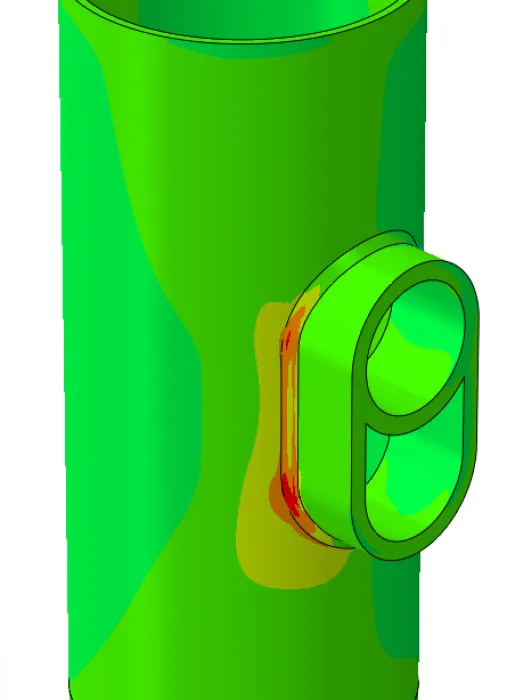
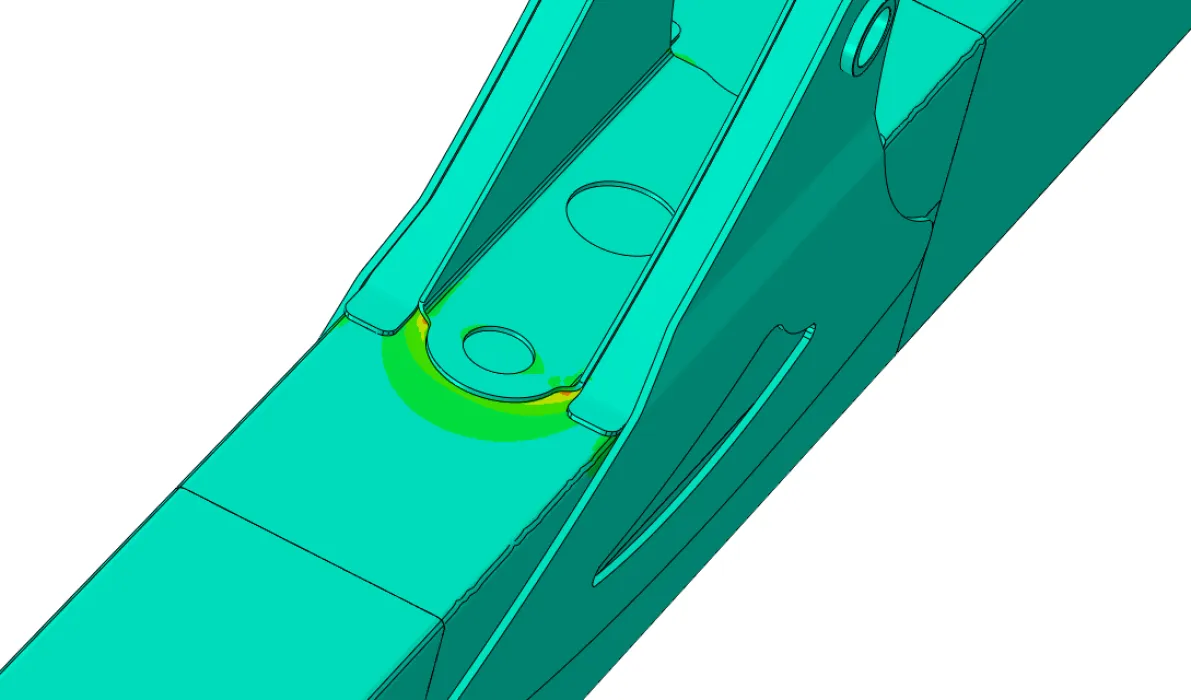
We achieved this improved accuracy by using an advanced equivalent structural stress method that combines normal and in-plane shear stresses into a single, effective value. This approach builds on well-established structural stress concepts, including the effects of stress concentration at the weld, plate thickness to be failed, and loading mode. It applies fracture mechanics and the structural stress–based Master S–N curve approach as defined in the widely accepted industry standards ASME BPVC VIII-2 and API 579-1/ASME FFS-1.
Drawing on our decades of experience in fatigue design, evaluation, forensic investigation and root cause analysis, we apply these advanced methods to a wide range of welded structures under varying load conditions. Our comprehensive weld fatigue and fracture expertise integrates finite element modeling, experimental data and code-based assessments.
Our solutions don’t just help explain why a failure happened – they also help improve future fatigue performance by incorporating design recommendations and proactive fatigue strategies to support long-term durability in both fixed and movable structures.
Advanced fatigue analysis is key to accurately predicting where failures will occur and how long welded structures will last in real-world conditions. By using methods that reflect the true complexity of loading and stress, engineers can improve safety, reliability and performance, with approaches that are just as important for designing new structures as they are for forensic investigations of weld failures.