
R&D and technology play an essential role in our firm. We invest in constant learning, testing and innovation. That uniquely positions us to solve our clients’ most difficult problems.
Innovation EngineOur CORE groups manage our research and development efforts, from incremental efficiency improvements to solving some of the most challenging engineering problems of our time.Learn More
Innovation OutputWe believe collaboration amplifies our innovation potential and creates connections that lead to better, more imaginative solutions for our clients.Learn More
A new UK standard is redefining what “net zero carbon building” actually means—shifting the focus from design intent to verified, in-use performance. Here’s what it is, why it matters, and how to apply it.
In a Fast Company article, Managing Principal and Protective Design and Security Practice Leader Peggy Phillips talks about how building owners, designers and tenants can take a proactive approach for creating workspaces that are both welcoming and safe.
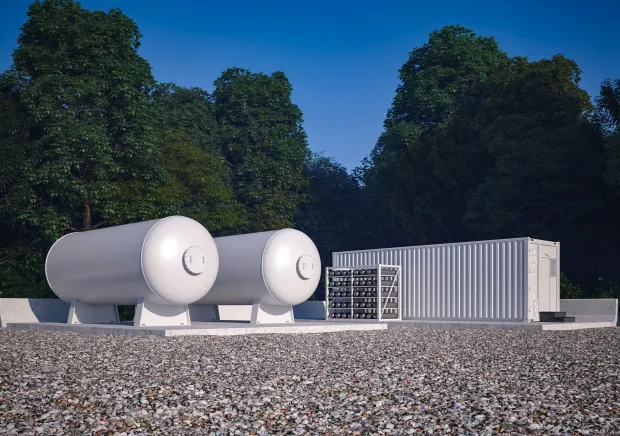
In a Parking Today Media article, Pawel Woelke, Peter Johnson and Juan G. Londono explore the science behind thermal runaway, the limitations of fire suppression strategies and the engineering challenges behind the rapidly evolving technology of lithium-ion batteries.
A modernization program will connect passengers directly and provide a more comfortable arrival and departure process. The project includes renovations to existing airside concourses to seamlessly connect them to the new terminal.
In a FacilitiesNet/NFMT article, Principal Elisa Paone and Senior Project Director Barbara Gao share practical strategies for assessing risk and developing a framework for building operational resilience.
Vice President Melissa Hertel has been named a Top Women in Maritime Award winner. She is one of 20 honorees selected by Marine Log magazine for their achievements and contributions in shaping the future of the maritime industry.
The record-breaking 2005 hurricane season, with 27 named storms, highlighted the need for forensic analysis, and Katrina’s lessons continue to shape resilient design and coastal defenses, preparing communities for future climate-driven storms.
For projects of unconventional size, shape, structural system or function that are in high-seismic areas, meeting standard building codes alone may not always make sense. Performance-based seismic design (PBSD) can provide a better approach.