

Steve Freihon/Related-Oxford
New York, New York
Global experience.
Regional perspective.
Local impact.
New York, New York
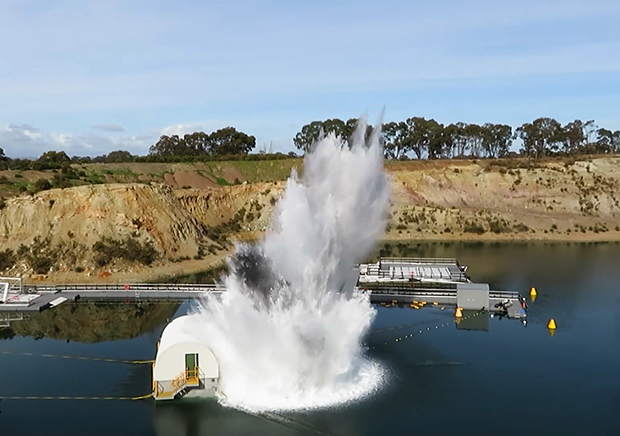
Australia

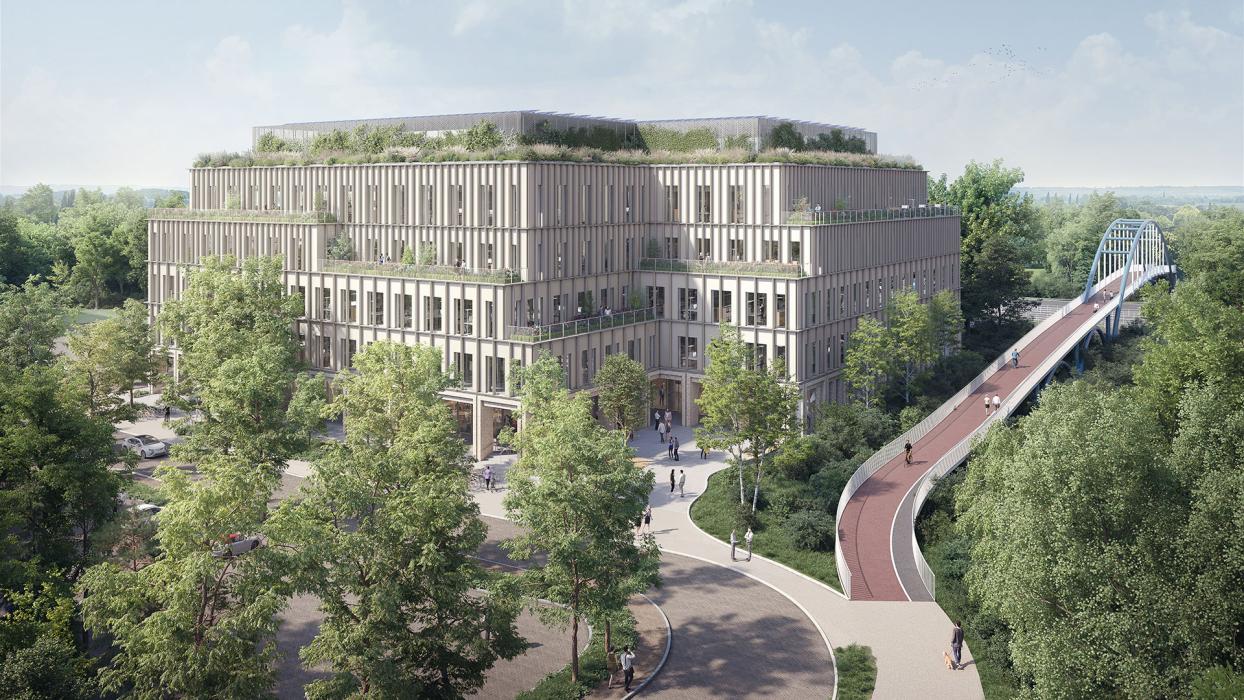
London, United Kingdom
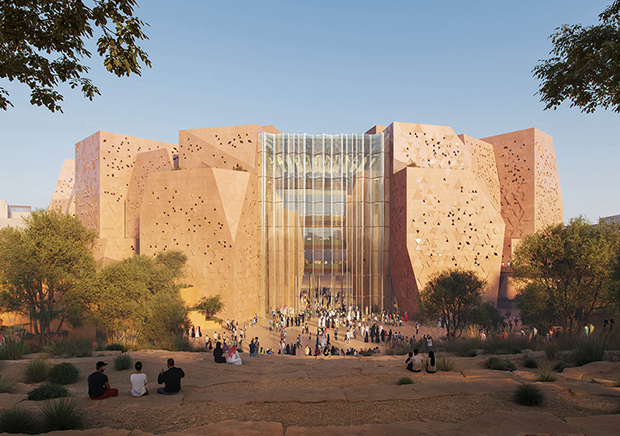
Diriyah, Riyadh, Saudi Arabia

 Courtesy Henning Larsen
For nearly 25 years in the United Kingdom, the term ‘net zero carbon building’ could be interpreted in dozens of ways, depending on who was doing the talking. The UK Net Zero Carbon Buildings Standard (UKNZCBS), a cross-industry framework that establishes a single, agreed-upon definition of what constitutes a net zero carbon building in the UK, aims to significantly reduce that ambiguity. This new standard builds on existing industry approaches to compose a more unified methodology.
The standard first appeared in 2024, and its March 2026 update marks a significant step closer to broader adoption. It provides a consistent and credible structure for projects to demonstrate compliance rather than relying on interpretation.
The UKNZCBS focuses on measurable performance, establishing targets across several key areas, including energy use intensity (EUI), operational carbon (emissions generated by a building’s operational energy use), and embodied carbon (emissions tied to materials, construction, and the building’s full life cycle). It also requires projects to meet newly defined energy-efficiency benchmarks.
The standard is especially noteworthy for its emphasis on actual, in-use performance rather than projections made during design, helping close the gap between how buildings are expected to perform and how they actually do perform when occupied. It applies broadly across the built environment, including new construction, existing buildings, and retrofits, making it relevant for both future developments and the massive stock of buildings already in use.
Without a shared definition, ‘net zero’ has often functioned more as a marketing label than a technical reality. The new standard aims to eliminate that ambiguity by setting consistent carbon limits and requiring verifiable proof.
It also plays a role in curbing greenwashing, giving developers, designers and investors a common benchmark to work against. Just as importantly, it aligns the built environment with the UK’s commitment to reaching net zero emissions by 2050, ensuring that buildings contribute meaningfully to reaching that target.
Buildings account for roughly a quarter of the UK’s total carbon emissions, making them a critical piece of the broader climate strategy. The UKNZCBS is designed to work alongside existing and emerging policy tools, such as national carbon budgets and evolving sustainability reporting standards that are being introduced through 2026 and beyond. By standardising how building performance is measured and reported, the framework helps translate high-level climate goals into practical, project-level requirements.
As of 2026, the standard is voluntary. However, its influence is expected to grow quickly, and it may, in time, help shape planning policies and regulations. Even in its current form, the standard is already setting expectations across the industry. Developers who align with it early may find themselves ahead of the curve as regulatory requirements tighten.
The change the UKNZCBS introduces is straightforward but significant. Previously, ‘net zero’ was often an aspirational or loosely defined claim. Now, it’s becoming a measurable, verified outcome grounded in real performance data.
Development of the UKNZCBS has been a collaborative effort across the industry, with contributions from leading practitioners, including Thornton Tomasetti’s UK Head of Sustainability and Resilience, Duncan Cox, who served on the standard’s task force.
As the standard moves into implementation, navigating its requirements can be challenging. If your firm or project team is looking to understand or adopt the standard, we can help interpret and apply it and integrate its requirements into new and existing projects.
The industry group behind the standard is seeking participants interested in developing 'pioneer projects' – real buildings through which owners and developers test the standard in practice. If your firm is interested, we can guide you through the process, reduce uncertainty, and help position your project to meet the standard’s criteria.
Ready to move from net zero ambition to verified performance? We'll help you get started.