Steve Freihon/Related-Oxford
New York, New York
Global experience.
Regional perspective.
Local impact.
New York, New York
Australia

London, United Kingdom
Diriyah, Riyadh, Saudi Arabia
A study of the 2020 Beirut Port explosion put Thornton Tomasetti’s advanced blast modeling to the test, revealing how urban geometry influences blast damage and how analysis tools can protect buildings and people.

Institute of Explosives Engineers, Highly Commendable Paper Award 2023, “Beirut Port Explosion Blast Loading Analysis and Building Damage Comparison,” Presented at the 14th International Conference on Shock & Impact Loads on Structures, Singapore
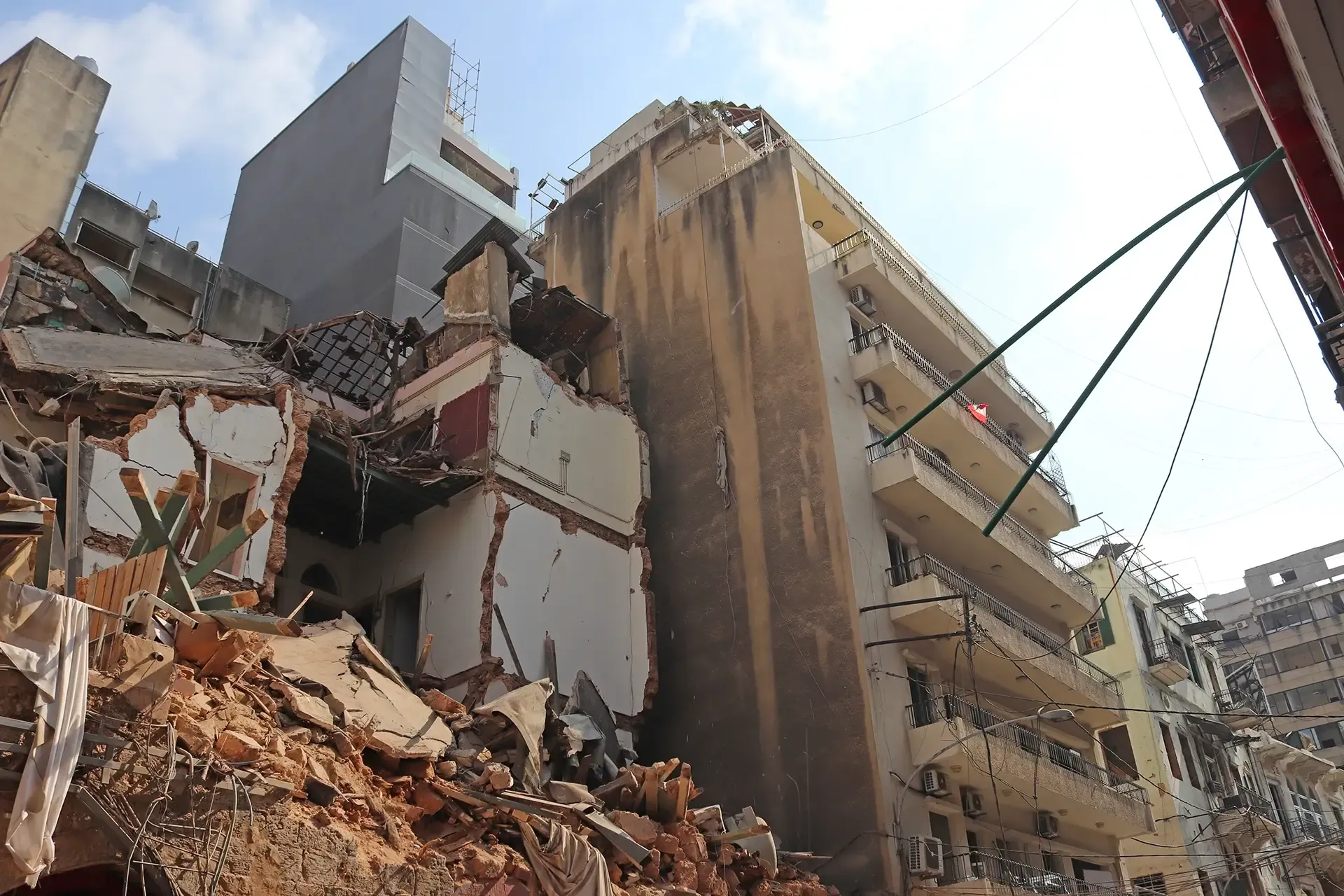
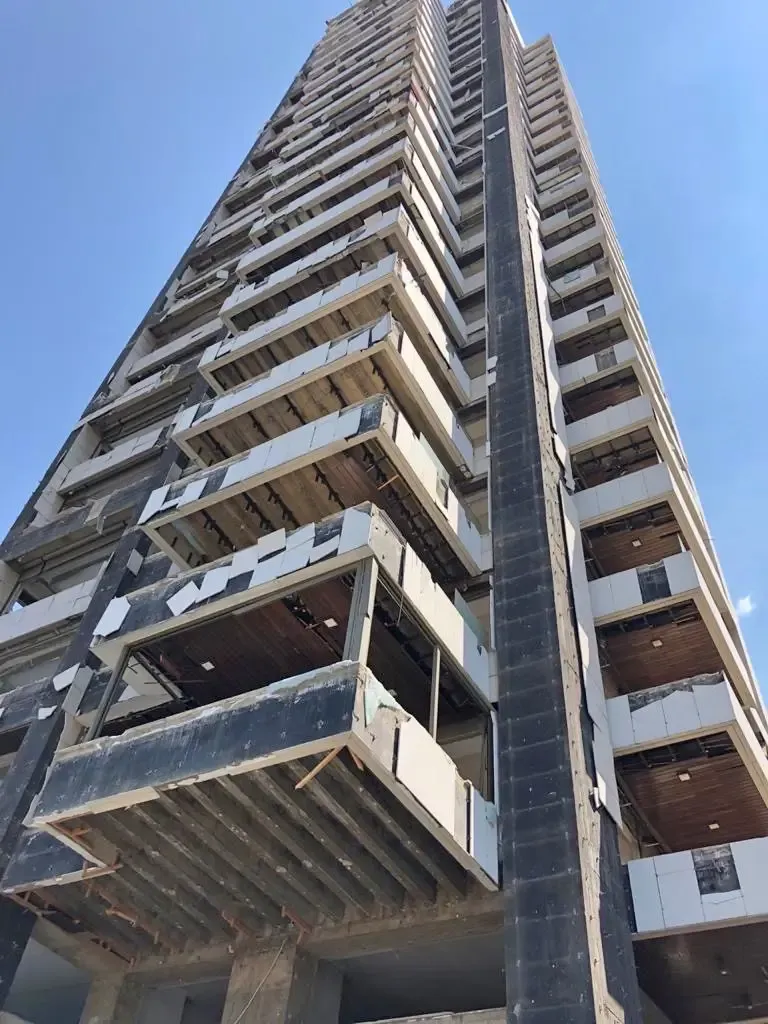
Thornton Tomasetti partnered with the American University of Beirut (AUB) to study the effects of the 2020 Beirut Port explosion, comparing blast modeling predictions with observed building damage. The research examined how surrounding buildings and terrain influenced blast loading and assessed the capabilities and limitations of conventional and advanced modeling methods.
On August 4, 2020, a fire at the Port of Beirut triggered a massive explosion in Hangar 12, where a large stockpile of ammonium nitrate and other hazardous materials was stored. The blast destroyed the hangar, opened a crater that filled with seawater, and severely damaged adjacent grain silos. Its effects extended throughout the city, shattering windows, stripping building façades, and damaging structures up to 20 kilometers away.
More than 200 people died, over 6,000 were injured, and 300,000 were left homeless. Property damage was estimated at $10 to $15 billion.
Shortly after the disaster, AUB launched an emergency response effort to assess building damage and help residents determine whether it was safe to return to their homes. Recognizing the value of the data AUB would collect, Thornton Tomasetti’s Chicago-based Protective Design and Security team saw an opportunity to investigate the explosion using the university’s findings.
With international travel restricted by the COVID-19 pandemic and conditions in Lebanon hampering external response efforts, AUB faculty and engineering students established a hotline for residents to request building assessments. The team surveyed approximately 150 buildings, documenting their locations and classifying the extent of damage.
Combining AUB’s field data with Thornton Tomasetti’s blast analysis capabilities gave the team an opportunity to examine how well existing methods could simulate the damage observed in Beirut.
The goals of the study – a research initiative, not a compensated project – were to compare computational predictions with the effects of an actual, full-scale explosion, identify limitations in existing methods, and improve tools for assessing blast hazards. The work led to several conference presentations and technical publications, including a paper in the Journal of Structural Engineering.
The team initially used established Kingery-Bulmash equations to estimate the explosion’s equivalent TNT yield and calculate the pressure and impulse exerted on individual buildings. These widely used equations help engineers estimate blast effects based on explosive weight and distance.
But the Beirut explosion presented a more complicated challenge: Traditional methods generally assume relatively unobstructed blast propagation and don't fully account for pressure waves interacting with buildings, terrain, and other obstacles. In dense urban environments, these interactions can substantially change the forces acting on individual structures.
To address this limitation, our applied science team turned to WALAIR++, Thornton Tomasetti’s proprietary computational fluid dynamics (CFD) software. Rather than relying on simplified equations, the software simulates how an explosion's pressure wave travels through space, rebounding off buildings, moving around obstacles, and changing direction as it encounters gaps and barriers. The team developed a 3D model covering approximately 2.5 by 5.5 kilometers around the port, including buildings and terrain, to examine how local conditions influenced the blast's effects.
Comparison of the model with AUB's field assessments yielded several important findings: First, the surrounding environment substantially influenced blast loading. The grain silos, for example, partially shielded buildings to their west, reducing the pressure they experienced. Elsewhere, rebounds from neighboring structures increased pressure, sometimes causing greater damage to a building's rear façade than to the side facing the explosion.
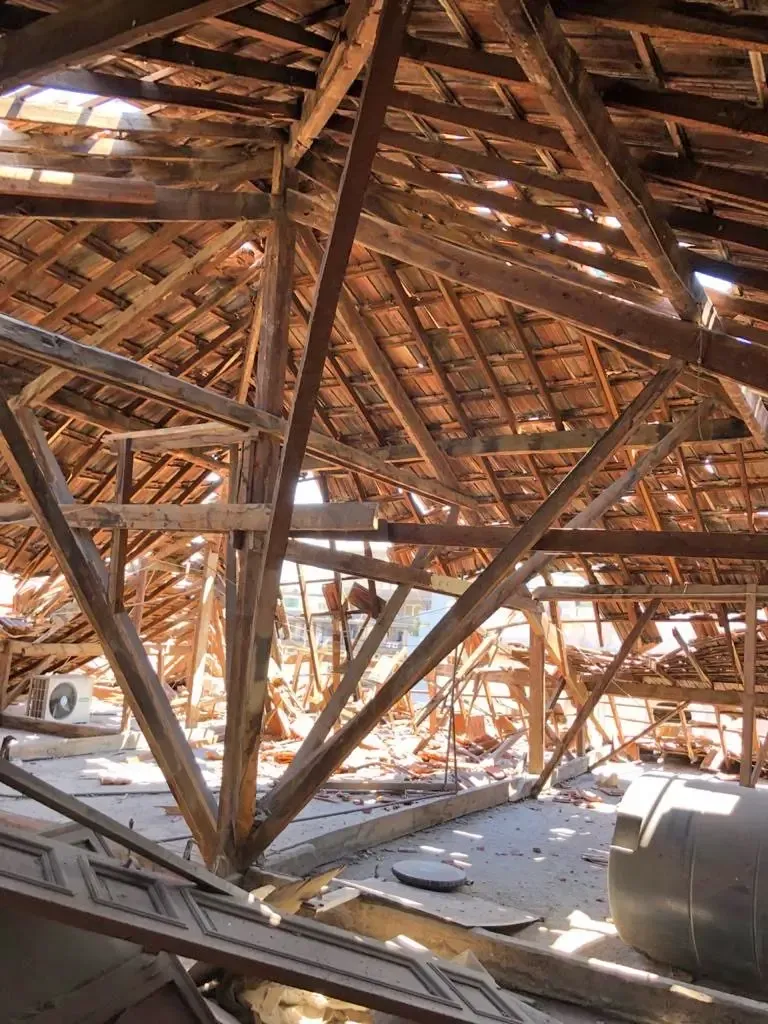
The study also revealed differences in building performance. Older structures, many built with unreinforced masonry and timber roof framing before Lebanon enacted modern seismic codes, were particularly vulnerable. Some collapsed entirely. Newer buildings largely retained their primary structural systems, even when their glazing and other façade components sustained extensive damage.
Façade failure was far more widespread than structural collapse. Many surveyed buildings lost substantial portions of their glazing and exterior cladding, even when their principal structural members remained intact.
The findings demonstrate the value of high-fidelity modeling for understanding complex blast events. While simplified methods provided useful initial estimates, WALAIR++ captured local variations in pressure and impulse that those methods couldn't account for. The results also compared favorably with established experimental benchmarks, demonstrating the software’s ability to model complicated blast environments efficiently.
Comparing simulations with actual damage allowed the team to examine the assumptions behind existing analysis methods. Conventional approaches tend to be more conservative, particularly when close to an explosion. The Beirut study helped clarify how those predictions compare with real-world structural performance.
This research has practical applications beyond investigating past disasters. Engineers can use advanced blast modeling to evaluate potential threats near occupied buildings, critical infrastructure, and other sensitive facilities, including sites where explosive materials are stored or vehicle-borne threats may exist. Understanding how pressure waves move through urban environments can help identify vulnerable structures and inform protective-design decisions.
The Beirut Port explosion was a devastating, preventable tragedy, but lessons learned from this study could help ensure that it wasn't in vain. Its findings can help engineers better understand risk, refine analytical tools, and make buildings and communities safer and more resilient in the face of future threats.