

Steve Freihon/Related-Oxford
New York, New York
Global experience.
Regional perspective.
Local impact.
New York, New York
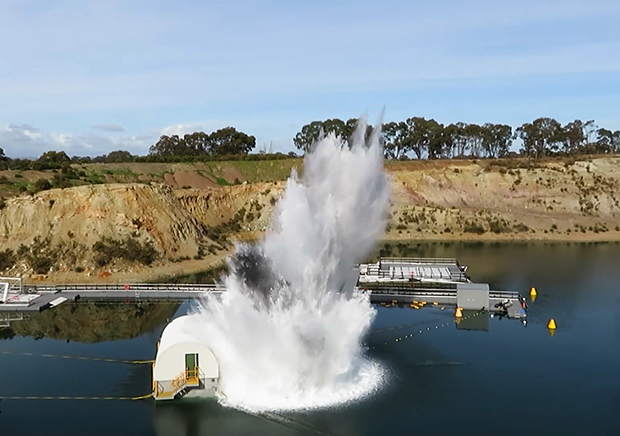
Australia

London, United Kingdom

Diriyah, Riyadh, Saudi Arabia

The global transition from internal-combustion engines and fossil fuels to electrification and battery storage is changing what we store in buildings, on campuses, in depots and on industrial sites. At Thornton Tomasetti, we understand how to design for familiar hazards such as liquid fuels and natural gas. But with the advent of electric vehicles (EVs) and alternative fuels, more buildings are housing battery energy storage systems (BESSs) and hydrogen fuel. These high-density energy storage systems can behave very differently when something goes wrong. The challenge is not that these hazards are unknowable; it’s that they appear in places where codes and standards have not caught up with real-world conditions.
With lithium-ion batteries, the risk most people focus on is thermal runaway, where a failure can quickly become an uncontrollable, self-sustaining reaction that generates flammable gas. In an enclosed environment like a garage, this can create the conditions for a vapour cloud explosion. That changes the design conversation. With modern energy systems, typical buildings need to take explosion pressures into account.
Hydrogen is increasingly being considered as an alternative to hydrocarbon fuels, especially for aviation and heavy-duty transit. In many ways, the hazards of on-site production and storage of hydrogen are similar to methane or natural gas. A release can lead to pressurised jet fires, and accumulation can lead to vapour cloud explosions.
The difference is severity. Hydrogen burns very quickly, so the same amount of gas produces a much more violent explosion. That makes it especially important to carefully consider storage quantity and leak prevention strategies.
The risk picture is often shaped less by the technology and more by the details of the project. There is a direct proportion between the amount of energy stored and the hazards produced. One electric vehicle presents a very different level of risk than a stationary BESS meant to replace a diesel generator on a campus, for example. How big, how many and how close together are critical questions in determining risk and designing appropriate mitigation.
The interplay of these issues creates conditions where a standard approach can fall short and a more rigorous, project-specific assessment becomes essential. That’s where performance-based design comes in.
The performance-based risk-management process is straightforward and proven: identify the hazards, assess their likelihood and consequences, then design controls that are fit for purpose for the specific site and building.
The output is practical design guidance. It can include fire-resistance requirements, structural strengthening, and – where explosion is credible – strategies for pressure relief and ventilation that reflect how gases behave in real spaces.
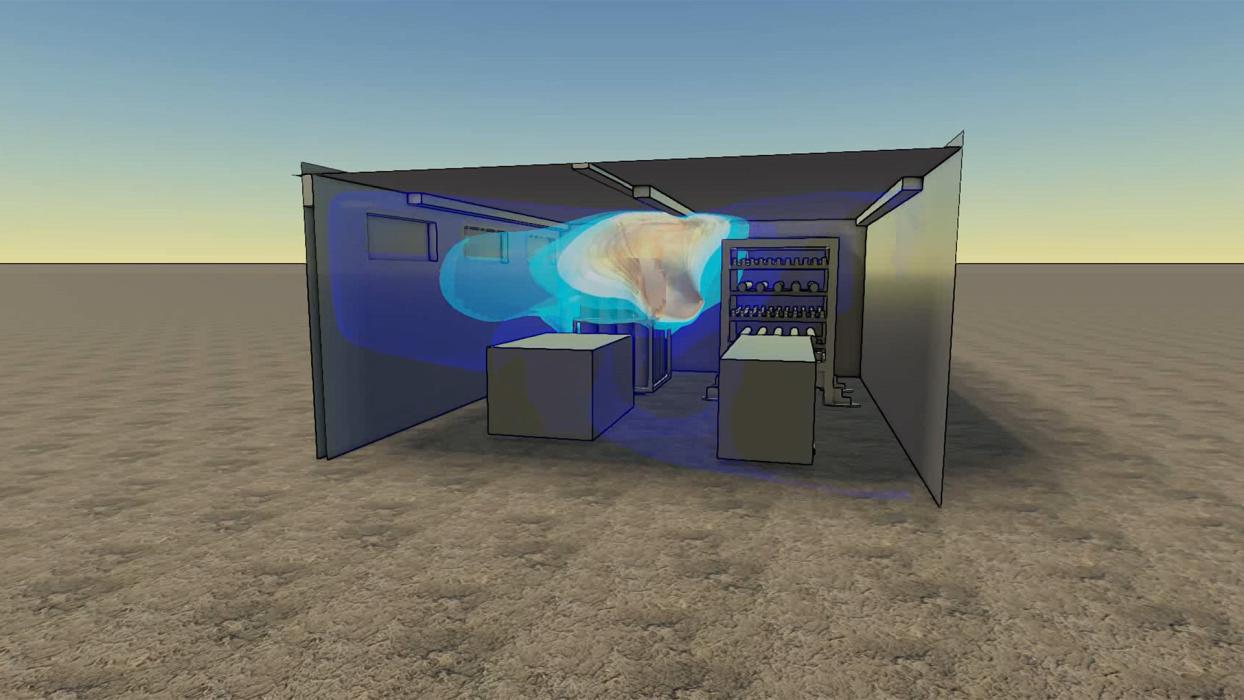
A lot of concern right now is driven by what people have seen online or heard anecdotally. Quantitative risk assessment (QRA) helps separate perceived risk from actual risk by systematically calculating both the likelihood and consequences of a hazard. It also helps decision-making by showing which assumptions matter most and which controls reduce risk in meaningful ways.
With a QRA, you can test questions such as whether separation distance materially reduces consequences, how layout affects exposure, and which control measures provide the greatest benefit for the effort and cost.
The risks associated with hydrogen and BESS are solvable engineering problems. Applying rigorous scientific analysis to the physics of accidental energy release allows us to quantify the risks and design for credible worst cases. Many of the tools have been used for decades in high-hazard industries. The shift now is toward applying that approach to the wider built environment while keeping projects moving at the pace the market demands.
If you are deploying hydrogen systems, integrating EV infrastructure, or scaling BESS on constrained sites, the right move is not to guess. It is to apply proven risk methods, then engineer controls that match the reality of your project.
Contact us to help explore safer energy storage design for your project