Steve Freihon/Related-Oxford
New York, New York
Global experience.
Regional perspective.
Local impact.
New York, New York

Australia

London, United Kingdom
Diriyah, Riyadh, Saudi Arabia
A net-zero, Passive House-targeted student housing project using exposed CLT, glulam, and low-carbon wood assemblies.

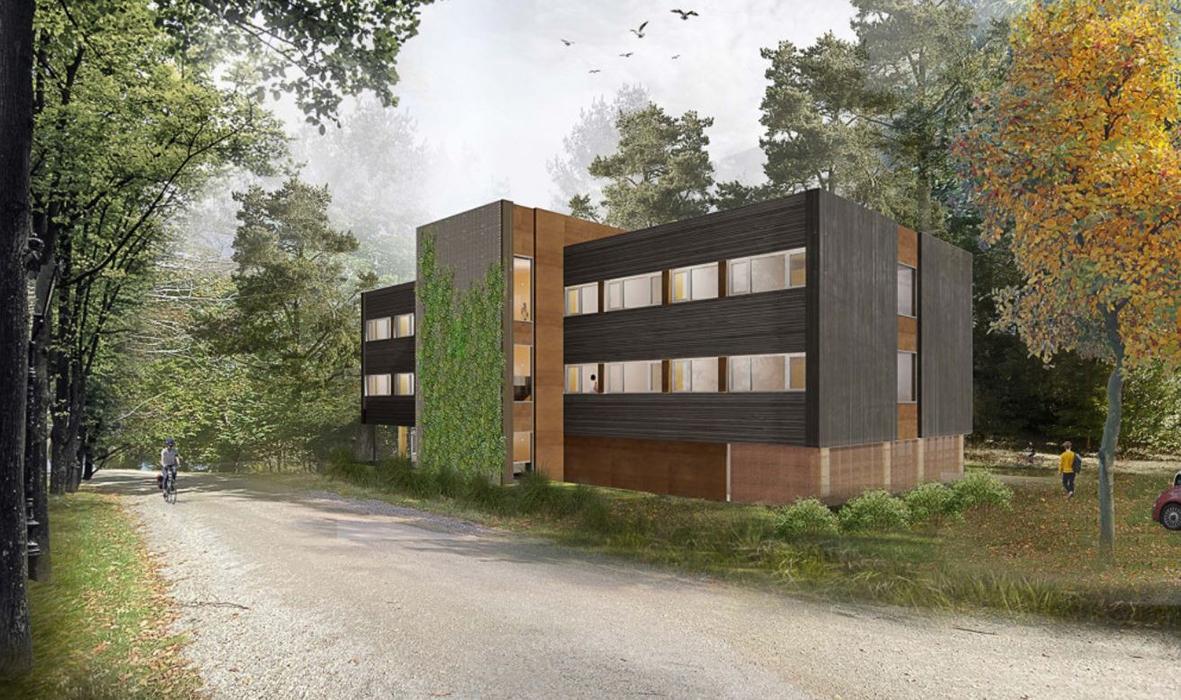
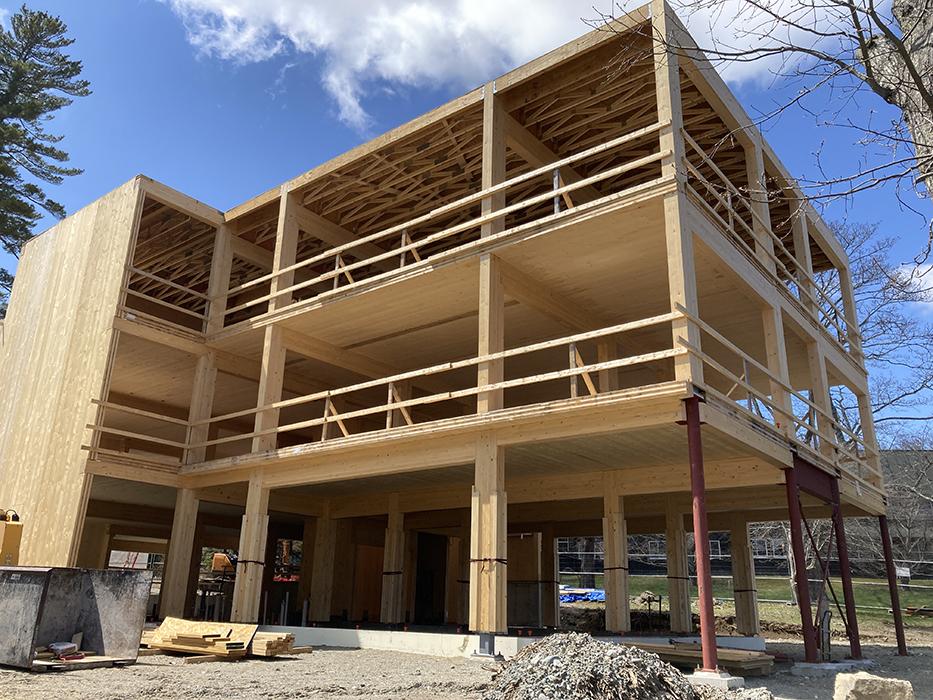
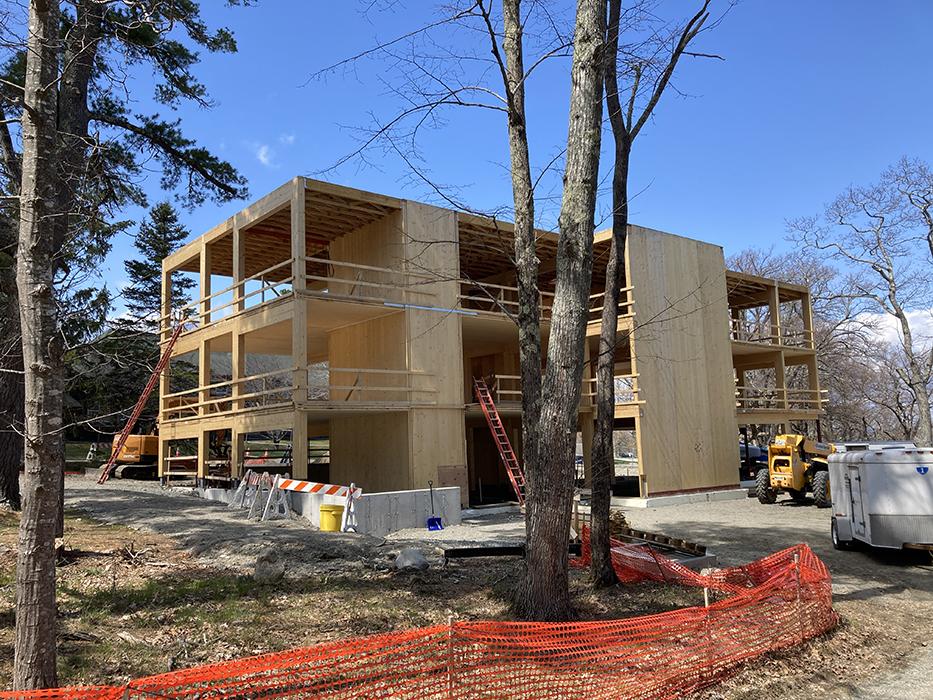
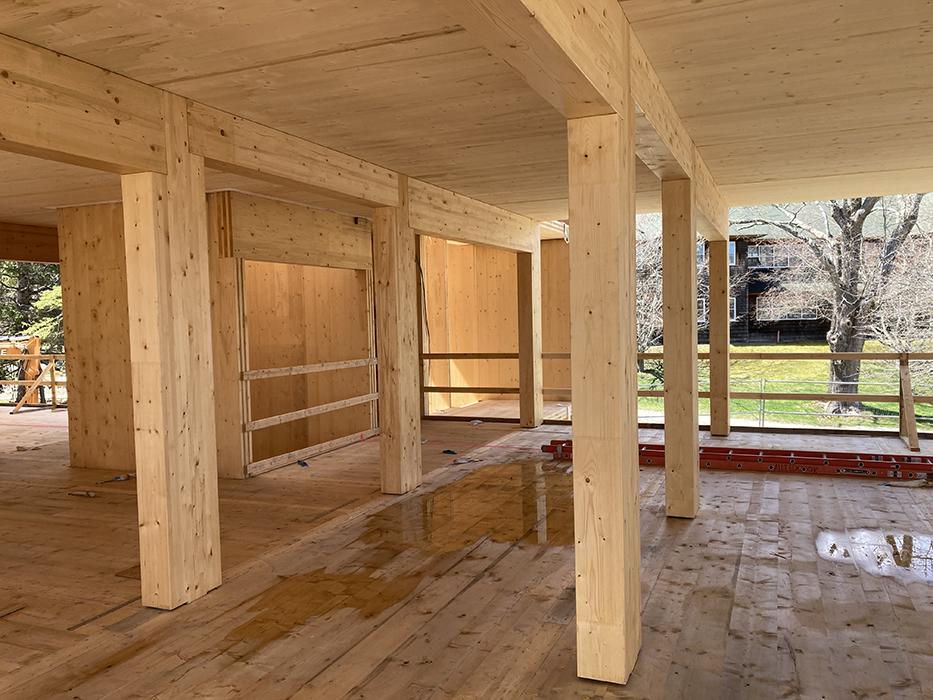
College of the Atlantic expanded student housing on its Bar Harbor, Maine campus with a three-story mass timber residence hall designed to accommodate 50 students. The approximately 12,000-square-foot building responds to the college’s need for additional housing while supporting its long-standing commitment to sustainability, low-carbon construction, and community-centered campus life.
Working with OPAL Architecture, we provided structural design services for the residence hall, which was designed for net-zero energy use and Passive House-level performance. The project uses an all-wood structural strategy, including exposed cross-laminated timber floor panels, glued laminated timber framing, CLT shear walls, wood infill walls, and wood-based insulation assemblies that reduce embodied carbon while supporting a high-performance building envelope.
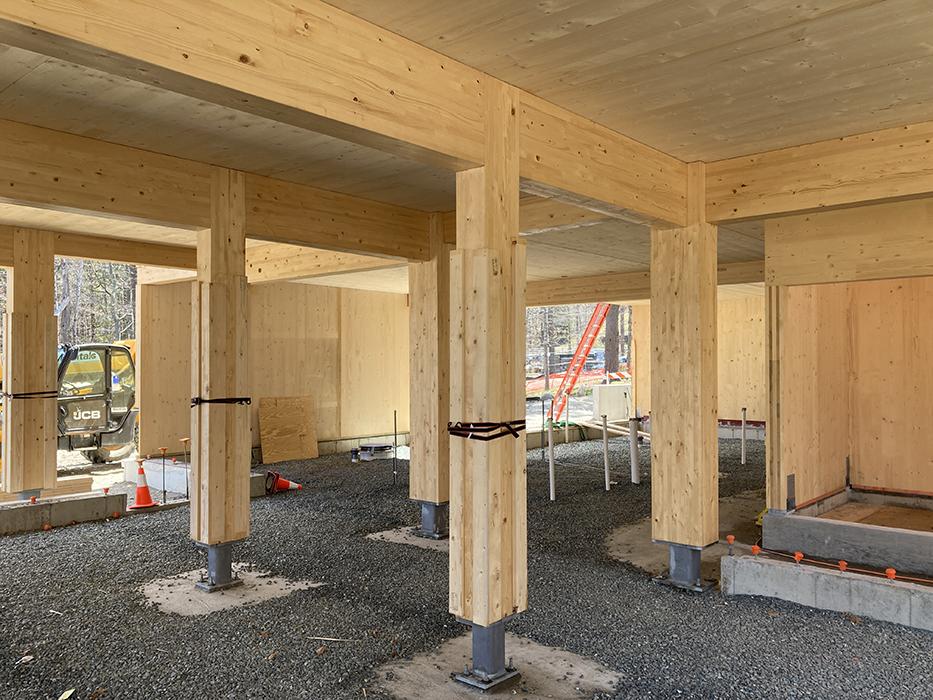
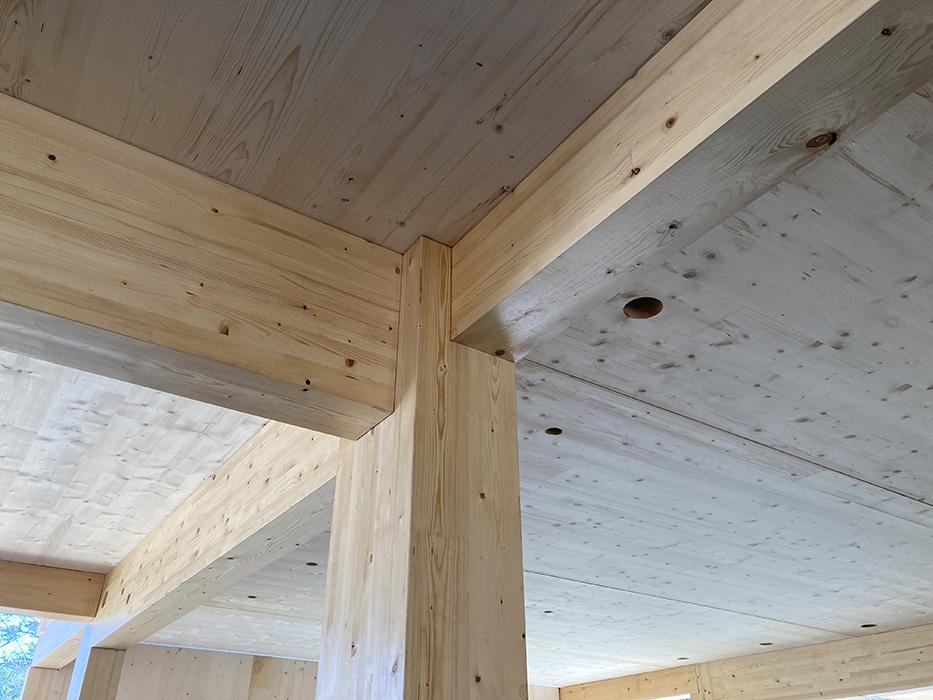
The residence hall was designed around a mass timber structural system that supports efficient construction, durable performance, and a warm exposed-wood interior environment. CLT floor panels, glulam beams, and glulam columns form the primary gravity system, while exposed timber elements are integrated throughout both public and private spaces.
To preserve the architectural intent, the structural connections were carefully detailed to remain concealed and fire protected where required. Reinforced seated beam-to-column bearing connections were used to reduce connection hardware costs and simplify erection while maintaining a refined exposed timber expression. Proprietary connection hardware was limited to select locations where it provided the greatest value.
The building was designed to support ambitious energy and decarbonization goals, pairing mass timber structure with wood-based wall and insulation strategies. This approach reduces reliance on carbon-intensive materials while supporting Passive House-level energy performance and the project’s net-zero energy target.
The building is located on a previously developed portion of campus, limiting impact on the surrounding ecosystem. Bird-safe glazing and low-carbon material strategies further align the residence hall with College of the Atlantic’s environmental mission and the coastal habitat of Bar Harbor.
The residence hall includes a mix of single- and double-occupancy rooms, along with shared kitchens, meeting areas, storage, and community spaces. The first-floor kitchen and gathering areas are designed to support both small and large groups, reinforcing the college’s emphasis on shared living, collaboration, and student connection.
Exposed CLT and glulam surfaces continue into the sleeping rooms and communal spaces, allowing the structure to become part of the student experience. The result is a residence hall that combines high-performance engineering with a simple, durable, and highly legible architectural expression.