Steve Freihon/Related-Oxford
New York, New York
Global experience.
Regional perspective.
Local impact.
New York, New York
Australia
London, United Kingdom

Diriyah, Riyadh, Saudi Arabia
 Thornton Tomasetti
Hailstorms pose a significant threat to buildings, causing billions of dollars' worth of property damage annually across the U.S., with roofing systems often suffering the most severe impacts.
At Thornton Tomasetti, our hailstorm damage forensics team investigates hail damage, assesses structural and envelope integrity and delivers resilient solutions for property owners, insurers and facility managers. By analyzing how hail affects various roofing materials – from asphalt shingles to solar panels – we help clients mitigate risks, ensure compliance and plan cost-effective repairs.
This post explores the unique vulnerabilities of common roofing types, drawing on our forensic investigations to offer actionable insights for protecting your assets.
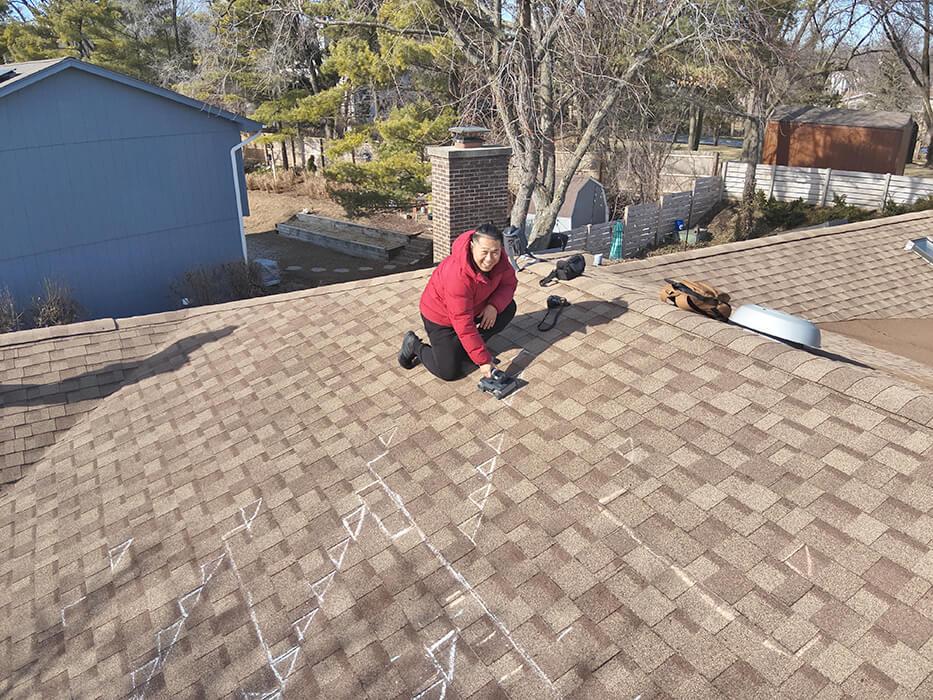
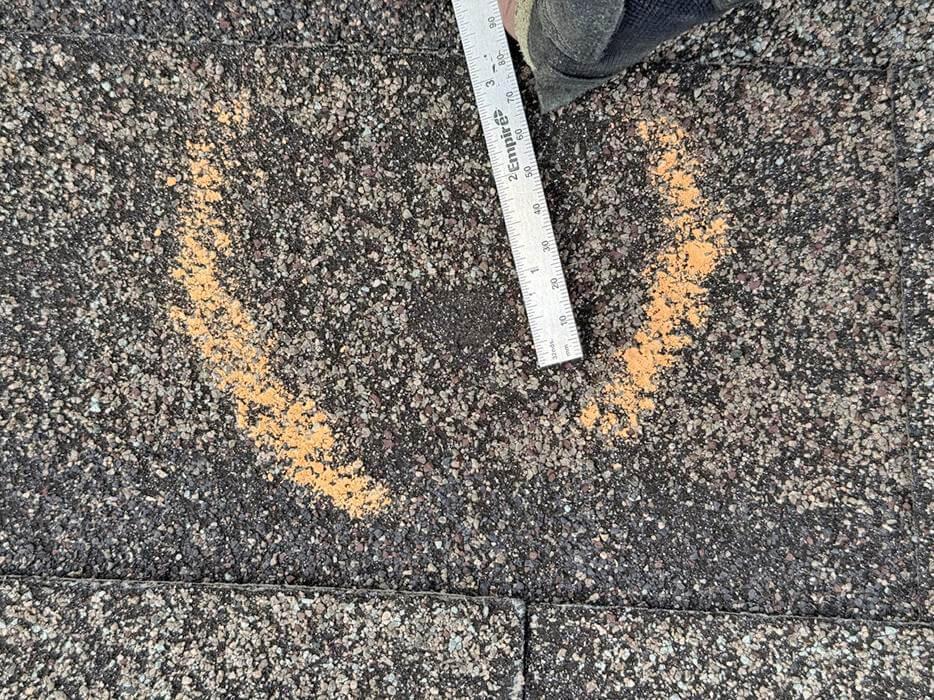
Asphalt shingles, a staple in residential and low-rise commercial buildings due to their cost-effectiveness and versatility, are highly susceptible to hail damage. Hailstones, ranging from pea-sized to golf ball-sized, can cause granule loss, cracking or bruising, which compromises the shingles’ waterproofing layer and accelerates deterioration. Hail-induced fractures in asphalt shingles can lead to water infiltration, threatening interior systems. Granule loss also exposes the underlying asphalt to UV degradation, reducing the roof's lifespan.
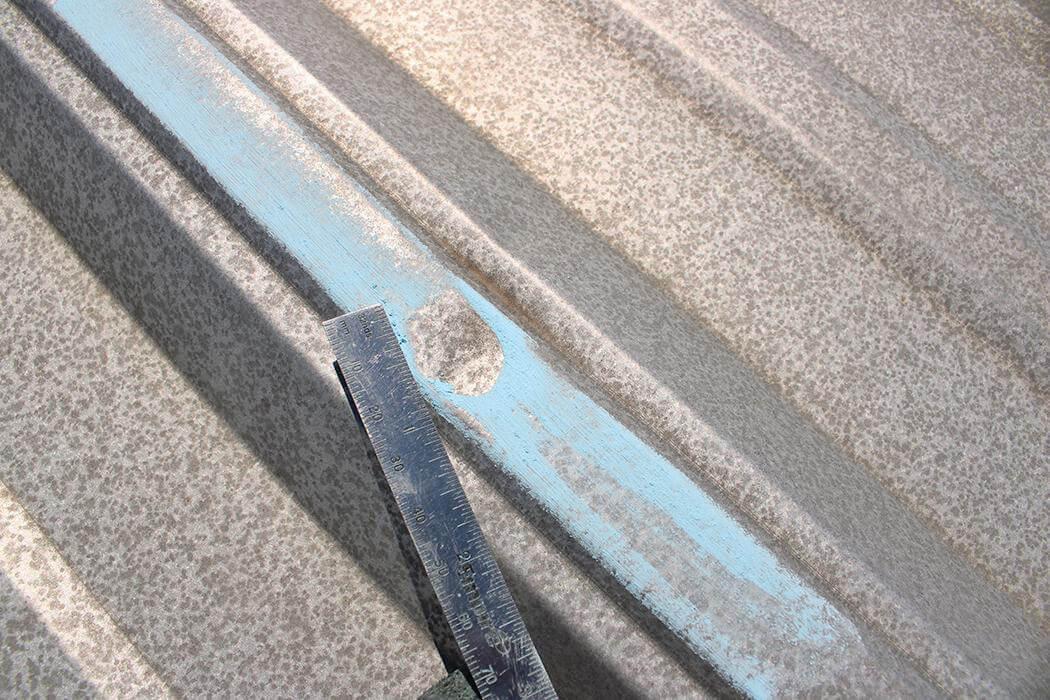
Metal roofing, including aluminum, steel or copper, is prized for its durability and longevity, often lasting 40 to 70 years. However, hail can dent panels, scratch protective coatings or loosen seams, potentially leading to corrosion or leaks. For example, golf ball-sized hail could cause cosmetic dents on a standing-seam metal roof, but forensic analysis might confirm no structural compromise. Severe impacts, however, can deform seams, requiring targeted repairs to maintain weatherproofing.
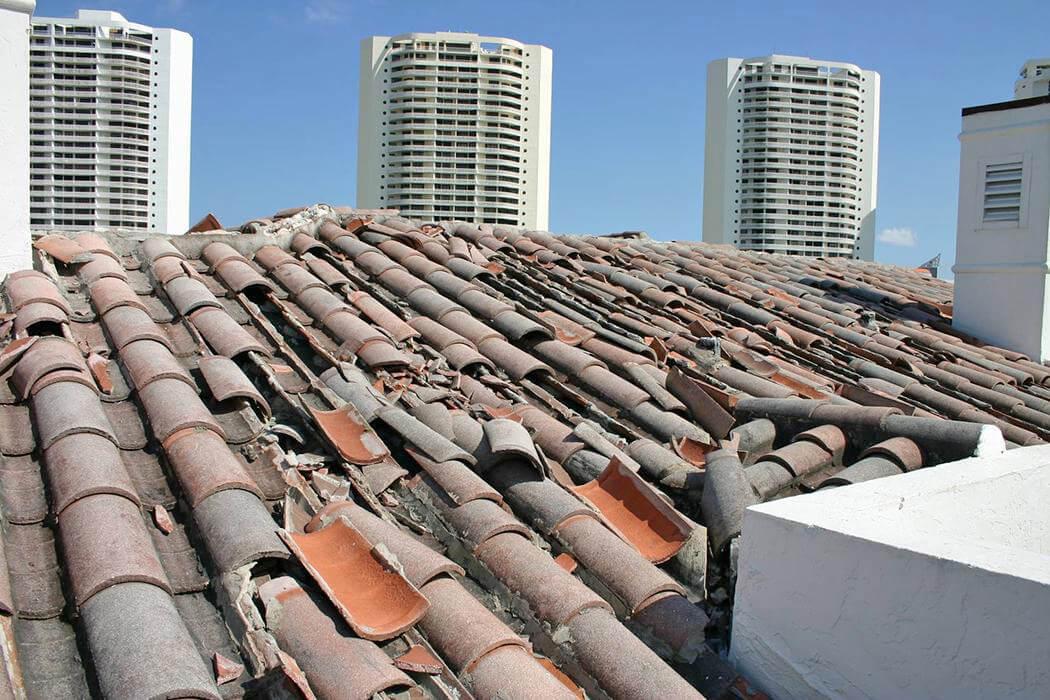
Clay and concrete tiles, common in historic or high-end buildings, offer aesthetic appeal but are brittle under hail impact. Hailstones can crack, chip or shatter tiles, compromising the roof’s waterproofing and requiring meticulous repairs to preserve heritage. Hail-induced tile fractures can necessitate material matching to maintain architectural integrity.
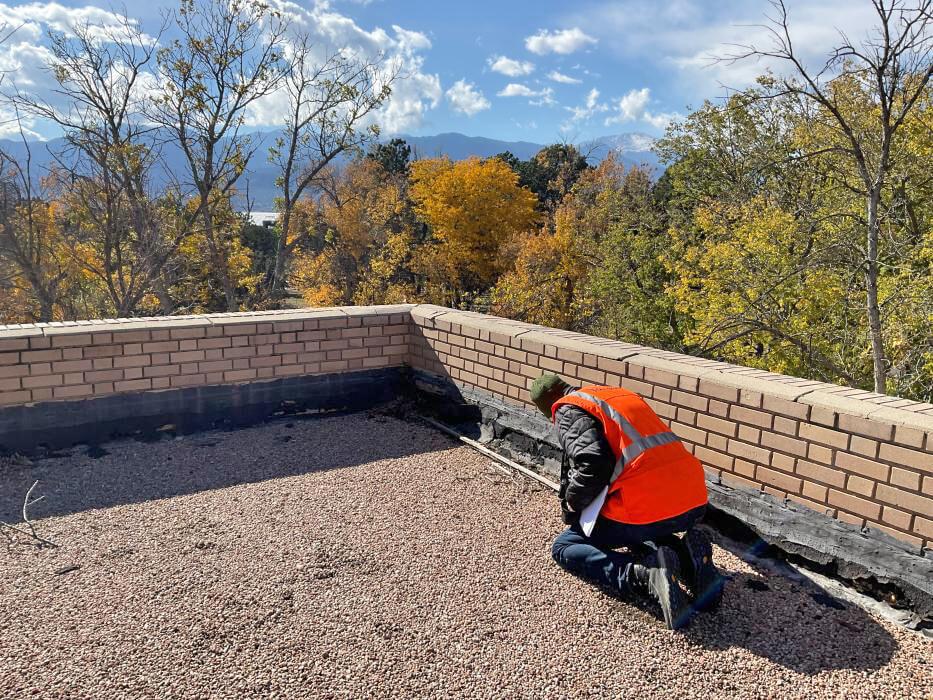
Flat roofing systems, such as TPO, EPDM or built-up roofing, are prevalent in commercial and industrial buildings but face unique hail vulnerabilities. Hail can puncture membranes, crush insulation or cause delamination, leading to leaks or reduced thermal performance. For example, hail punctures in a TPO roof can compromise insulation and cause water pooling. Such damage, if undetected, can lead to structural deterioration.
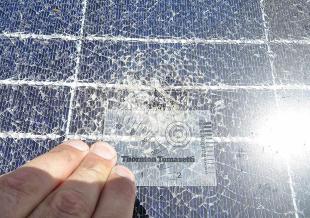
As solar adoption grows, hail damage to photovoltaic panels is an emerging concern. Hail can crack glass surfaces, reduce panel efficiency or damage mounting systems. This necessitates analyzing cracked cells and compromised mounts, followed by repairs to restore both energy output and structural safety.
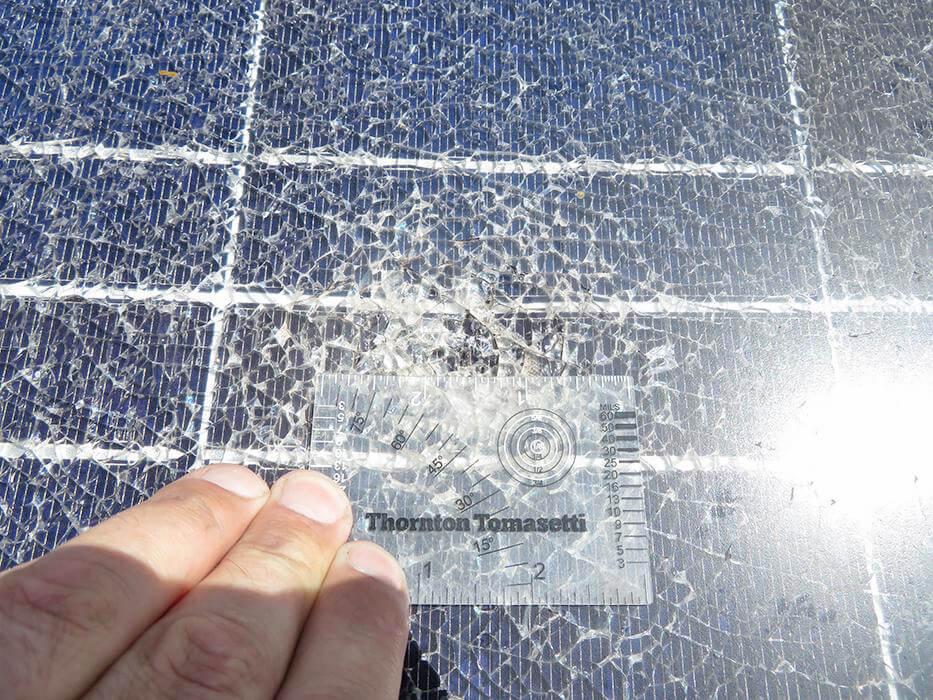
Hail damage extends beyond surface issues, potentially compromising structural integrity, leading to leaks or triggering costly insurance claims. Our hail forensics team, which performs more than 100 investigations annually, uses advanced tools like 3D impact modeling, drone surveys and material testing to uncover hidden damage and recommend resilient solutions. By addressing both immediate repairs and long-term resilience, we align with Thornton Tomasetti’s commitment to solving real problems through collaboration.
Hailstorms present significant challenges to various roofing systems, each of which exhibits distinct vulnerabilities. Asphalt shingles suffer from granule loss and cracking, which can lead to water infiltration and reduced lifespans. Metal roofing, while durable, is prone to dents and seam damage that may cause corrosion if untreated. Tile roofing, valued for its aesthetic, is susceptible to cracking and chipping, requiring careful repairs to maintain integrity. Flat roofing systems, common in commercial settings, face risks of punctures and insulation damage, potentially leading to leaks and structural issues. Solar panels, an increasingly popular roofing addition, can experience cracked glass and reduced efficiency from hail impacts.
Understanding these vulnerabilities, executing timely inspections and forensic assessments, and employing resilient materials can help property owners mitigate damage and extend the lifespans of their roofing systems. Our passion for innovation and multidisciplinary collaboration – spanning structural, envelope and forensic expertise – ensures tailored solutions that withstand the toughest storms. Whether you manage a historic landmark, commercial complex or solar-equipped facility, our team is ready to help.
Contact our hailstorm forensics specialists for a comprehensive damage assessment