
Steve Freihon/Related-Oxford
New York, New York
Global experience.
Regional perspective.
Local impact.
New York, New York
Australia

London, United Kingdom

Diriyah, Riyadh, Saudi Arabia

For companies entering classified or sensitive government work, the initial focus is often on technology, facilities, and compliance.
How do we secure our systems? What accreditations do we need? Does our facility meet the required standard?
These are important questions. But they are rarely the issues that cause the greatest challenges. The biggest barriers to delivery are not technical; they are organisational.
Yet many businesses do not fully consider the workforce, governance, and operational implications of classified work until after a contract has been awarded or a programme is underway. By then, options are more limited, timelines are tighter, and changes become significantly more expensive.
The companies that succeed tend to recognise one thing early: personnel security is not a compliance activity that happens at the end of the process. It is a business capability that should inform planning from the very beginning.
While every company’s circumstances are different, five factors consistently determine whether it is prepared to operate in a classified environment:
Many companies assume the greatest challenge will be securing technology, facilities, or accreditation. More often, the greatest challenge is people.
Companies pursuing classified government work frequently underestimate the time and complexity involved in building a suitably cleared workforce. Security vetting, workforce eligibility requirements, and recruitment constraints can all affect programme delivery.
The assumption is often that clearances can be sponsored once work has been won. In reality, clearance timelines, residency requirements, nationality considerations, and candidate availability can significantly reduce the available talent pool.
The result is that companies can find themselves with contracts, facilities, and delivery plans in place, but without enough appropriately cleared personnel to execute the work.
Many companies approach sensitive or classified government work assuming they can continue operating in much the same way they always have. They quickly discover that security requirements influence far more than compliance processes.
Depending on the nature of the work, organisations may need to rethink how teams collaborate, where information can be accessed, how sensitive material is stored, and who is permitted to work on specific programmes.
Operating models built around unrestricted collaboration, hybrid working, or broad access to information may need to be adapted to support secure delivery.
The most successful organisations account for these realities early. Rather than treating security as a constraint, they incorporate personnel security, information handling, and operational security into programme planning from the outset.
Many companies focus on facilities, technology, and compliance requirements first. In practice, workforce readiness, governance, operating models, and personnel security often become the critical constraints to delivery.
Timelines vary depending on the level of clearance, eligibility requirements, and programme requirements. Companies should account for vetting timelines early in workforce planning rather than assuming clearances can be obtained after contract award.
Yes. Even when facilities and systems are ready, a lack of appropriately cleared personnel can delay mobilisation and impact programme timelines.
Organisations should evaluate workforce readiness, personnel security, governance structures, facility requirements, and operational security implications before pursuing sensitive or classified work.
No. Vetting is one component of a broader personnel security programme that may also include insider risk management, workforce, planning, access management, security culture, and employee wellbeing.
One of the most common mistakes companies make is assuming facility requirements can be addressed later. In reality, secure environments work best when they are designed intentionally from the beginning.
This extends beyond access control systems and physical security measures. Companies must also consider how people move through spaces, where sensitive activities take place, how information is handled, and how secure operations will function day to day.
For companies supporting sensitive or classified work, decisions about workforce access, security zoning, secure storage, and operational workflows can influence facility requirements far earlier than many realise.
Retrofitting those considerations later often results in additional cost, programme delays, and operational disruption.
Security by design is not simply about protecting a building. It is about creating an environment that enables secure and efficient operations.
Another common misconception is that security can be achieved through documentation.
Policies are important, but governance is what makes them effective. As organisations move into more sensitive environments, responsibilities become more complex. Security ownership, decision-making authority, assurance processes, and accountability structures all need to be clearly defined.
Without that foundation, organisations often find themselves relying on individual effort rather than repeatable processes.
This creates a gap between compliance on paper and security in practice.
The organisations that manage security most effectively are those that embed it into leadership, governance, and operational decision-making rather than treating it as a standalone compliance function.
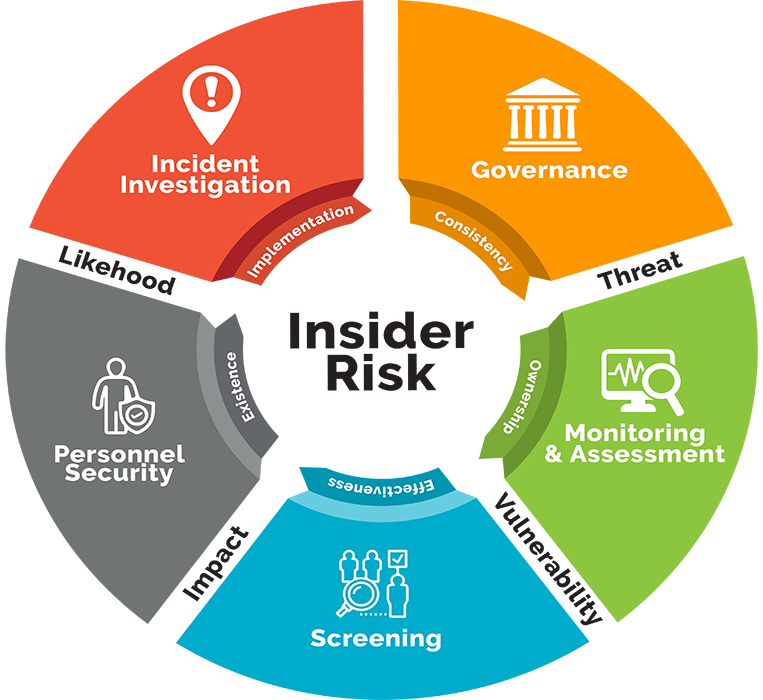
Perhaps the most important lesson companies learn is that personnel security extends far beyond vetting.
Vetting is one component of a broader personnel security programme. Equally important are recruitment strategies, access management, insider risk controls, workforce wellbeing, retention, and security culture.
This becomes particularly significant when companies are operating within government supply chains, critical infrastructure environments, or programmes involving sensitive information. Personnel security should not be viewed as an administrative requirement that sits alongside delivery. It directly influences a company’s ability to attract talent, retain expertise, and operate safely at scale.
Companies preparing for classified government work do not need to solve every challenge on day one. They do, however, need to understand where risks and constraints are likely to emerge.
A readiness assessment can help companies:
Identifying these considerations early can reduce delays, avoid costly redesigns, and help organisations make informed decisions before security requirements become programme constraints.
Preparing for classified government work? Contact us to discuss a readiness assessment