Steve Freihon/Related-Oxford
New York, New York
Global experience.
Regional perspective.
Local impact.
New York, New York

Australia
London, United Kingdom
Diriyah, Riyadh, Saudi Arabia
Our work, a forward-thinking hybrid timber structural design and detailed carbon analysis, came together in a modern, student-focused dorm that showcases community and climate awareness.

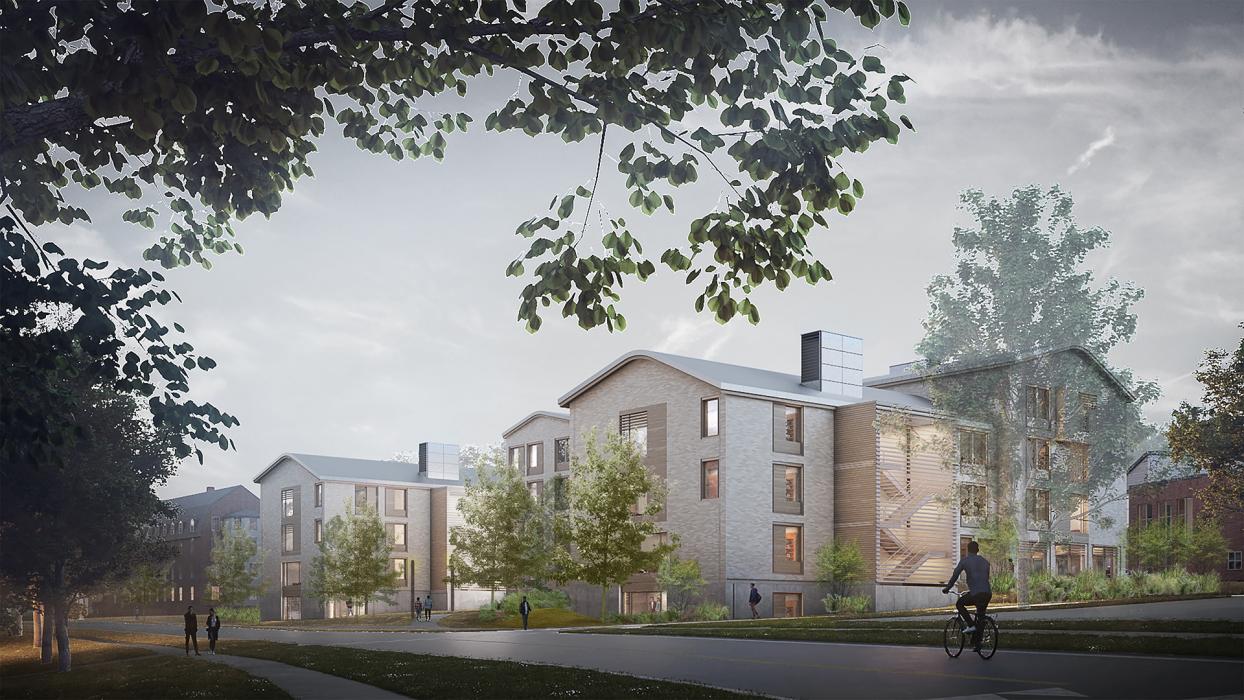
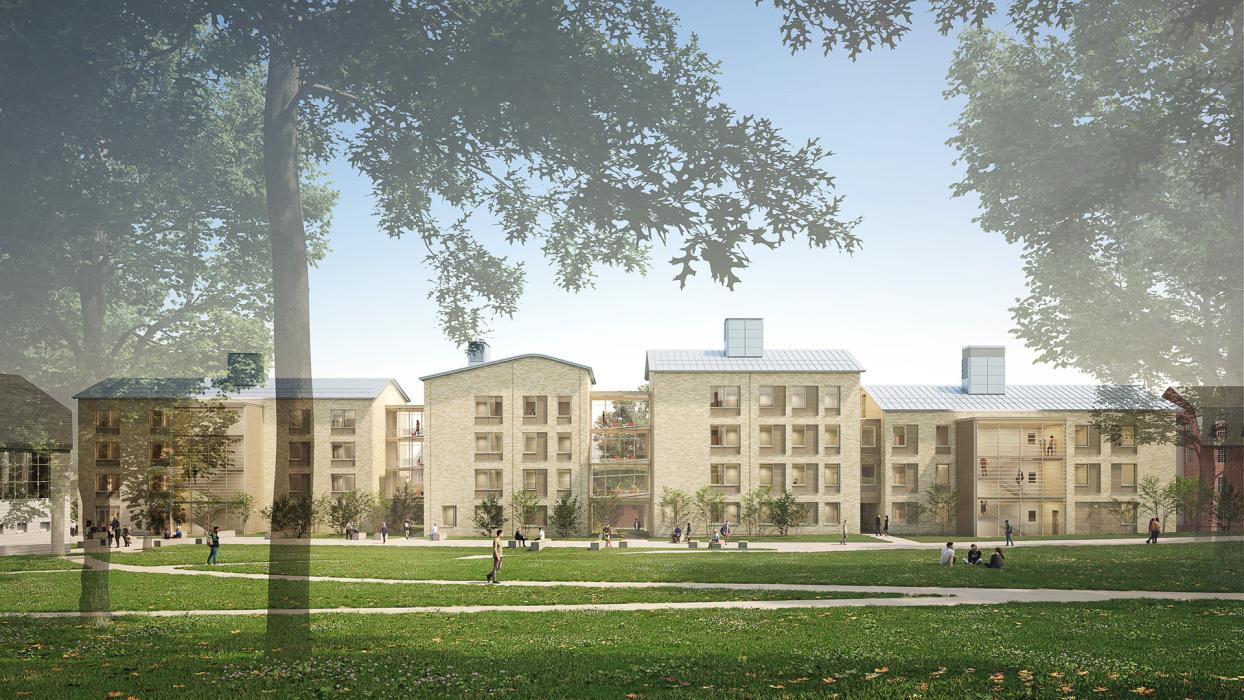
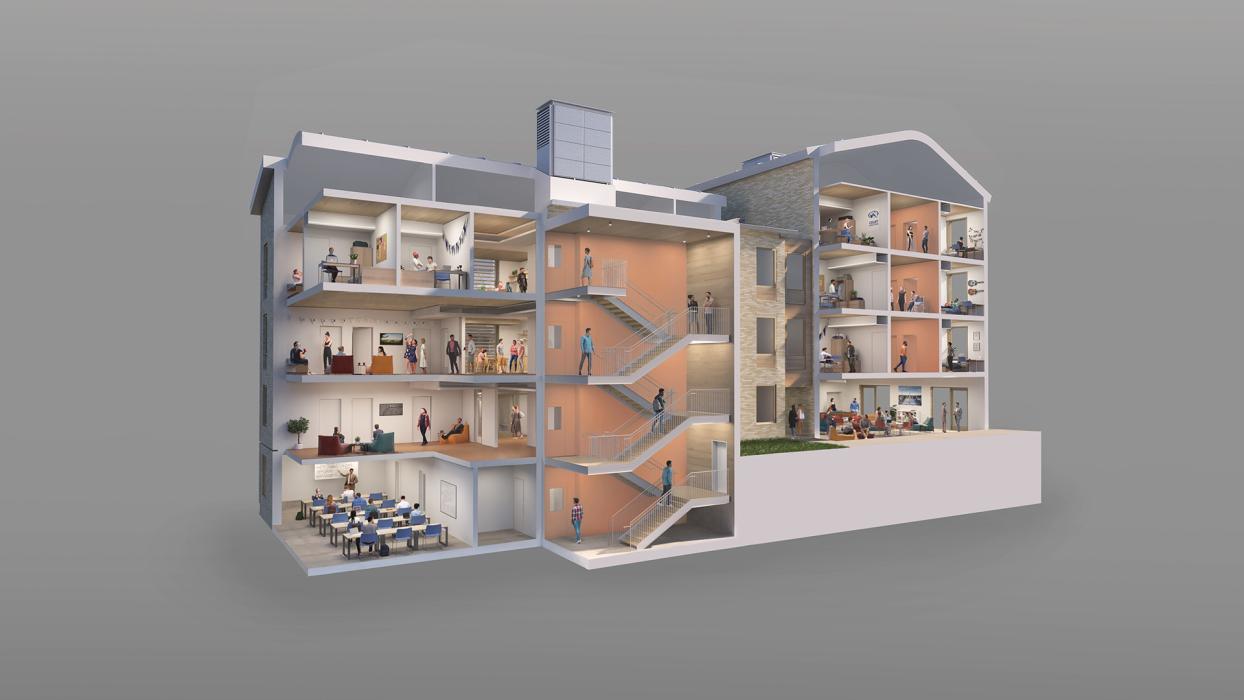
Colby College’s new Mayflower Hill Residence Hall is more than just a place where students can sleep, socialize, and study. Designed to house 200 juniors and seniors, the four-story, 110,000-square-foot building augments campus residential life while underscoring the college’s commitment to sustainability.
Architect Bruner/Cott selected Thornton Tomasetti for the project because of our reputation as a leader in addressing the unique challenges and intricacies of timber design. Our team started with one primary goal: to minimize the environmental footprint while maintaining a high level of student comfort. Our Structural Engineering and Sustainability and Resilience practices worked closely with the design team to bring that vision to life. The result? A residence hall that pairs modern living spaces with a structural system that reduces carbon and makes more efficient use of materials.
At the heart of the project is a hybrid structural system of mass timber, light-frame wood, steel, and concrete. Cross-laminated timber (CLT) floor panels span between light-framed timber bearing walls, replacing the steel and concrete systems that would normally provide support for this type of dormitory.
This approach significantly reduced the amount of steel and concrete in the structure. Above the foundation level, about 90% of the building is timber. Steel appears only where loads become too high for practical timber columns.
At the basement level, where code requirements mandate noncombustible construction, the building includes a concrete and steel podium. But above that base, the design shifts decisively toward wood. Exposed CLT floors create warm spaces that connect residents to natural materials. In the hybrid system, partitions serve as bearing walls to support the CLT floors and roofs. This economical decision saves timber volume compared to traditional mass timber post-and-beam systems.
To support the college’s carbon-reduction goals, our sustainability specialists are providing embodied-carbon consulting, energy modeling, and certification guidance as the building pursues LEED Silver certification.
The team conducted a whole-building life-cycle assessment to ensure meaningful carbon reductions, initially targeting a 10% embodied-carbon reduction compared to a baseline building. But through a series of strategic design decisions, the project was able to achieve a whopping 23% reduction.
One strategy for embodied-carbon savings was the development of concrete mix designs that incorporated supplementary cementitious materials (fly ash and slag) for the building’s foundations.
Our sustainability team performed energy modeling during schematic design to identify efficient mechanical, electrical, and plumbing systems. We also reviewed materials, steering the team toward healthier product selections suitable for a residence hall.
Our handprint measures how our work creates lasting value for our people, our planet, and the communities we serve.
One of the project’s primary challenges involved coordinating the innovative structure with the architectural design, especially for four prominent stair shafts that required careful structural integration.
The most complex issue involved fire protection: the building combines mass timber and light-frame wood, two systems that are treated differently in building codes. Mass-timber members are naturally fire resistant and are designed using calculations of char rates during a fire. Light-frame wall systems rely on protection from other noncombustible materials to achieve tested fire-rated assemblies.
The system’s isolated steel columns introduced another complication. In some locations outside rated wall assemblies, exposed connection points required fire-resistant coatings. These unusual details required close coordination with the contractor.
This experience drove home an important lesson: when combining structural systems, consider fire-protection strategies early and carry them through the entire design process.
Beyond its structural innovations, Mayflower Hill Residence Hall rethinks how student housing works. Instead of narrow dormitory corridors, the building organizes rooms into “neighborhoods” of singles, with shared kitchenettes and gathering spaces. Corridors widen into informal social areas, encouraging students to linger and interact.
Most structural spans range from about 14 to 18 feet, large enough to create flexible rooms while maintaining the efficiency of a bearing-wall system. The result is a residence hall that feels less like a traditional dorm and more like a collection of small communities under one roof.
When the Mayflower Hill Residence Hall opens, it will likely stand out along its stretch of campus, not just because of its design but because of what it represents. For the students who live there, the building offers more than rooms and study spaces. It subtly demonstrates how thoughtful design can help shape a more sustainable future.



Insight
Mass Timber for Simpler Low-Rise Residential