Steve Freihon/Related-Oxford
New York, New York
Global experience.
Regional perspective.
Local impact.
New York, New York
Australia

London, United Kingdom
Diriyah, Riyadh, Saudi Arabia
Our applied science, sustainability and resilience teams helped tackle the complex layers of this multifaceted challenge for the campus of a top U.S. boarding school.

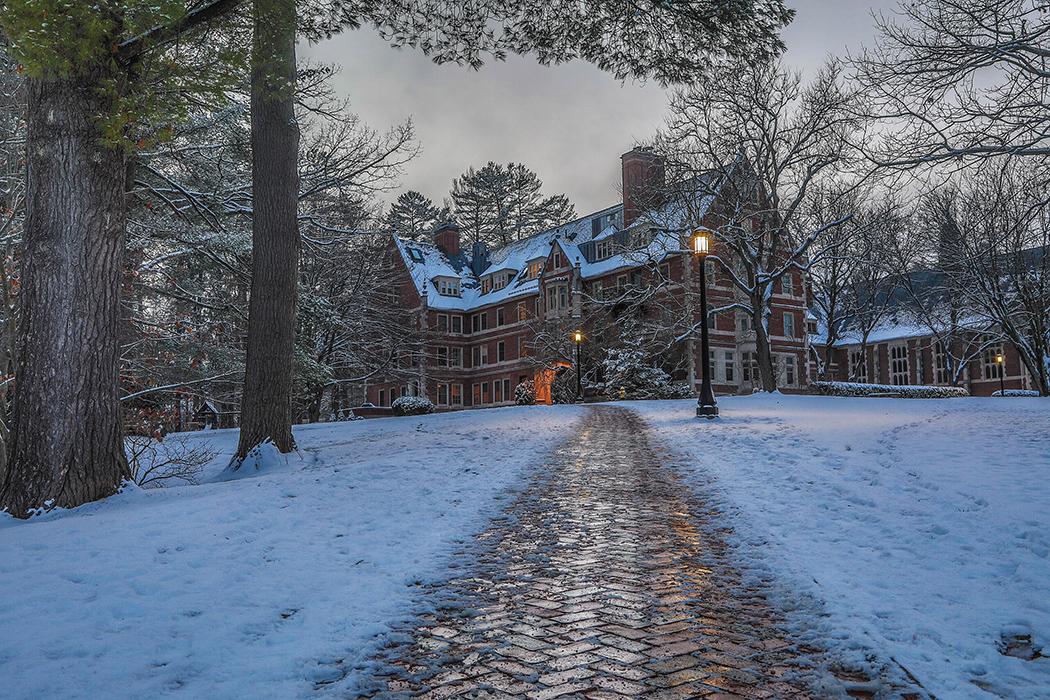
St. Paul’s School, founded in 1856, consistently ranks among the top boarding schools in the U.S. It was among the first all-boys boarding schools in the country to welcome girls. And though it serves grades 9 through 12, the sprawling 2,000-acre campus, with its verdant woodland setting and fusion of Gothic, Georgian, Tudor and modern architecture, is more reminiscent of a prestigious university than a high school – in both aesthetics and academics. In 2020, the venerable institution launched an update of its comprehensive campus plan to chart a vision for its future.
When SPS hired Kieran Timberlake to lead the effort, the architect engaged Thornton Tomasetti to perform sustainability consulting for the project. But it soon became evident that what the school administration really wanted was a decarbonization plan. So we quickly shifted gears, pooling the resources of our applied science, sustainability, and resilience teams to tackle the complex layers of this multifaceted challenge.
We started by creating a map of the site, identifying buildings of different ages, typologies, and locations, and integrating those data into a climate-resilience vulnerability assessment to help categorize potential actions. We then analyzed the campus’ energy infrastructure to determine the sources of energy, the energy intensity of each building, and which buildings were slated for renovation. Next, we layered the utilities – steam, natural gas, electricity, and propane – onto each other to learn which systems were providing the most energy. This provided a baseline emissions footprint for the campus.
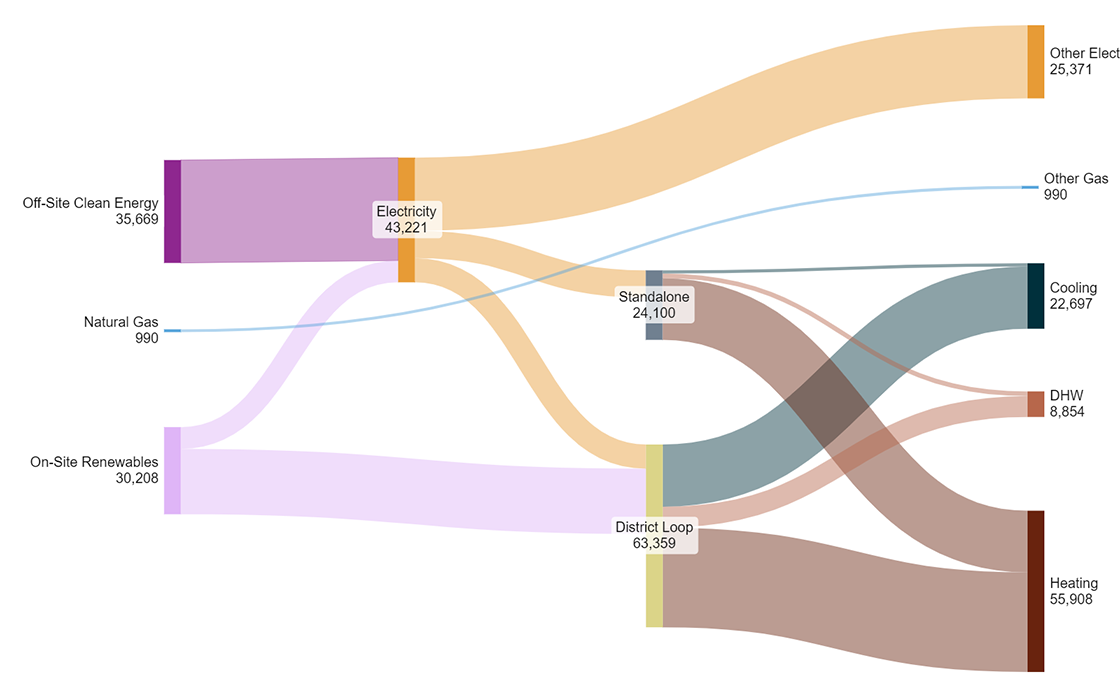
The unpredictability of funding through benefactor donations meant that our decarbonization framework had to be flexible and easily understood, allowing the school administration to make adjustments as the overall campus plan evolved and funds became available. We presented SPS with a research-based set of recommendations that allowed for potential variations in budget and timing, along with estimates of the carbon reduction associated with each step.
After evaluating their relative efficacy, we prioritized emissions-reduction measures like solar and geothermal energy and upgrades to more efficient mechanical systems. We then proposed a suite of adaptable solutions that could be executed in the short, medium and long terms, including some that can be implemented now, allowing significant emissions reductions to begin immediately – and at a relatively low cost.
Our handprint measures how our work creates lasting value for our people, our planet, and the communities we serve.
Heat for most of the school’s 100+ buildings is currently provided by a central heating plant (CHP) that produces steam, using natural gas for 70% of its fuel. To reduce emissions as quickly as possible, one recommended approach is transitioning to burning an increasing amount (possibly up to 100%) of Truburn, a carbon-neutral fuel derived from used cooking oil. This, combined with a potential upgrade to green electricity (rather than a grid blend partially generated using fossil fuels), could yield up to a 70% emissions reduction in the first year. The school is also exploring additional proactive solutions.
While the CHP operates efficiently, it’s expected to be phased out as the campus electrifies, and SPS is investigating alternatives for its replacement. One promising option is to install a system of ground-source heat pumps that extract or reject heat from subterranean wells to generate hot or cool water, which would then be circulated to campus buildings for space conditioning. This would require the excavation of some 400 wells, which would be concealed under sports fields.
These and other proposed enhancements, including improvements to building insulation, air sealing, and windows, would markedly enhance the energy performance of historic buildings throughout the campus. Combined with the possible future adoption of solar photovoltaics and batteries to increase on-site energy generation and storage, the campus could improve the security and reliability of its energy supply and reduce dependence on fossil fuels and the grid. The goal? To reduce risk and take meaningful, pragmatic actions toward a resilient, secure and energy-independent future.