Steve Freihon/Related-Oxford
New York, New York
Global experience.
Regional perspective.
Local impact.
New York, New York
Australia

London, United Kingdom
Diriyah, Riyadh, Saudi Arabia
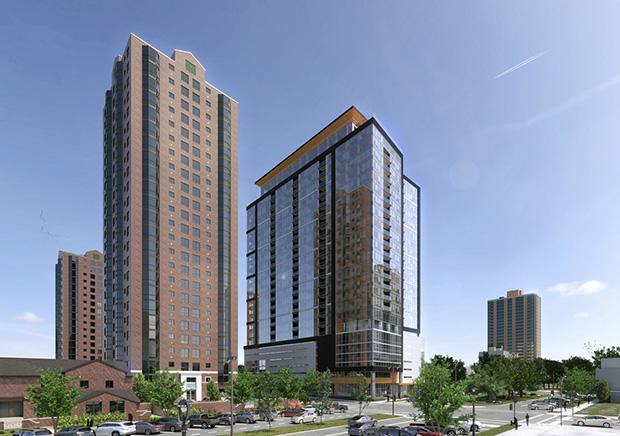
Pushing the limits of what’s possible to engineer a 25-story mass timber building – the world’s tallest – in Milwaukee.
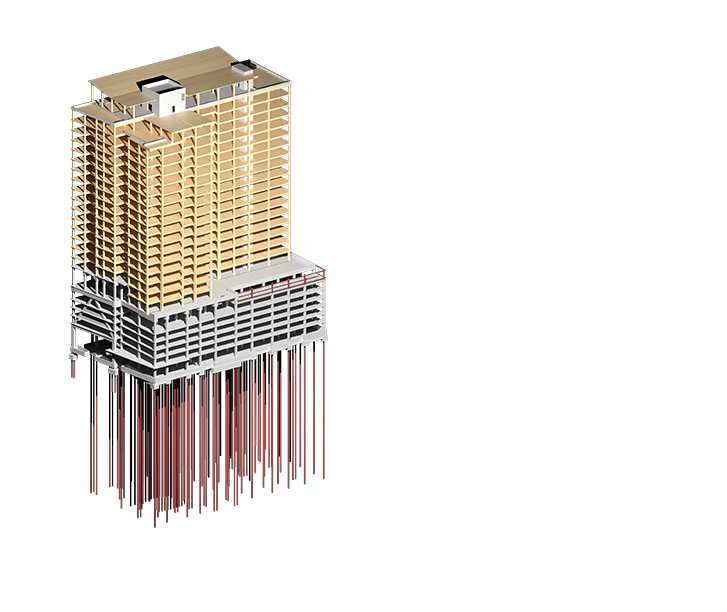

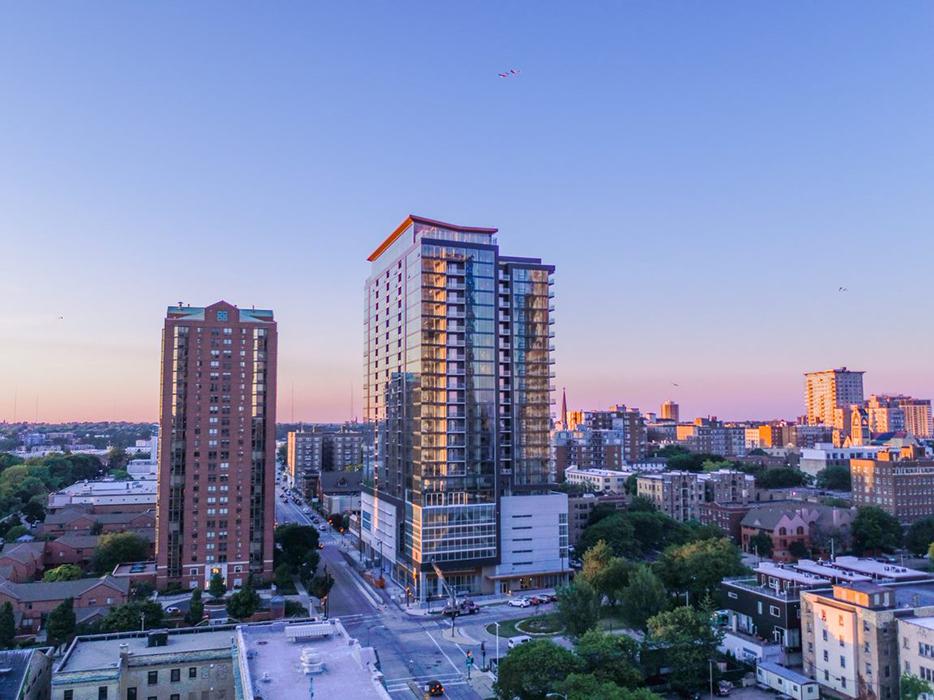
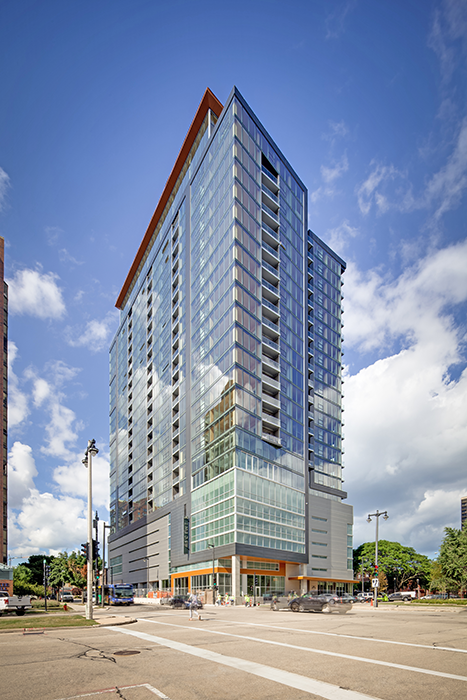
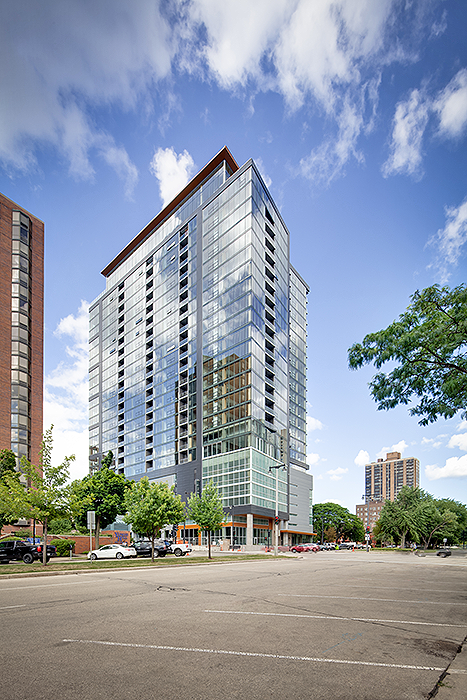
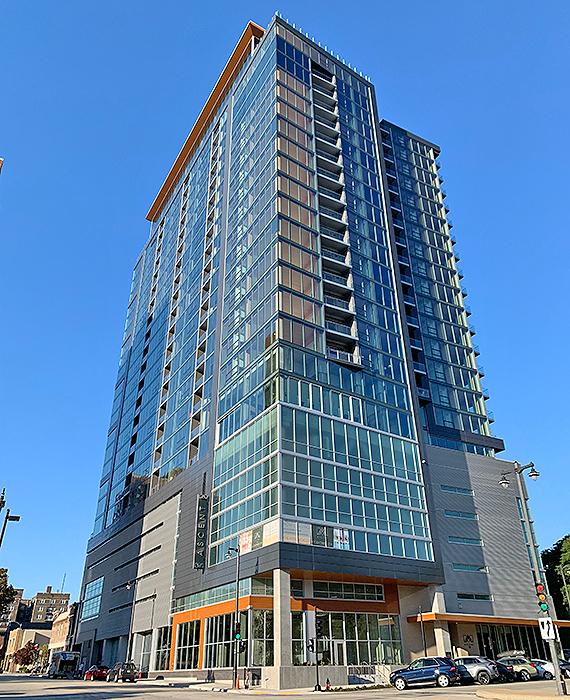
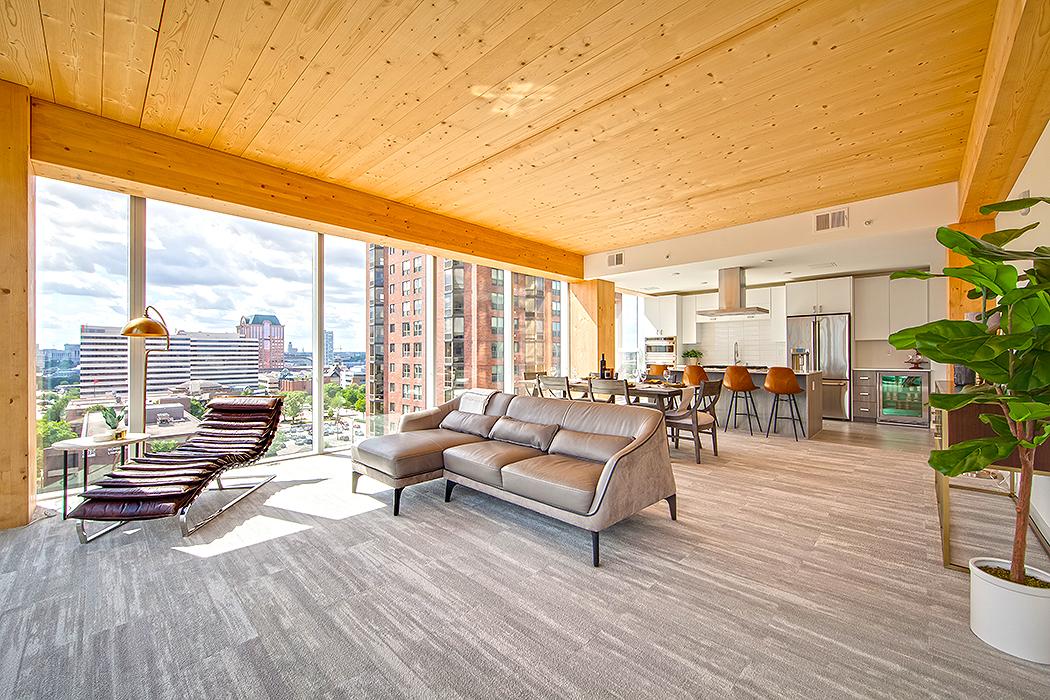
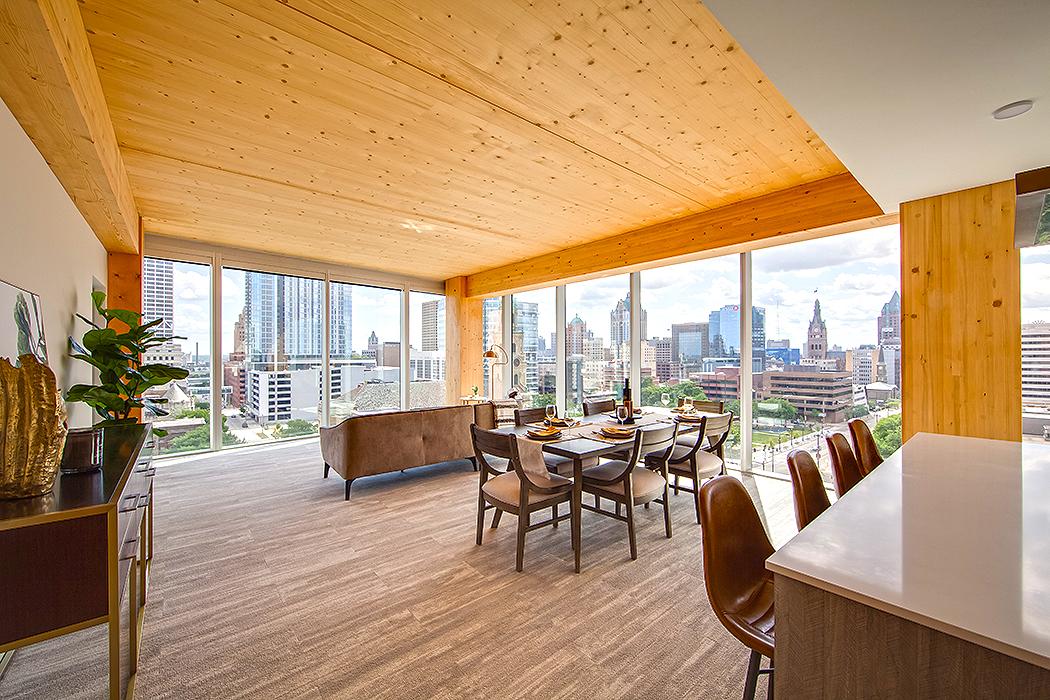
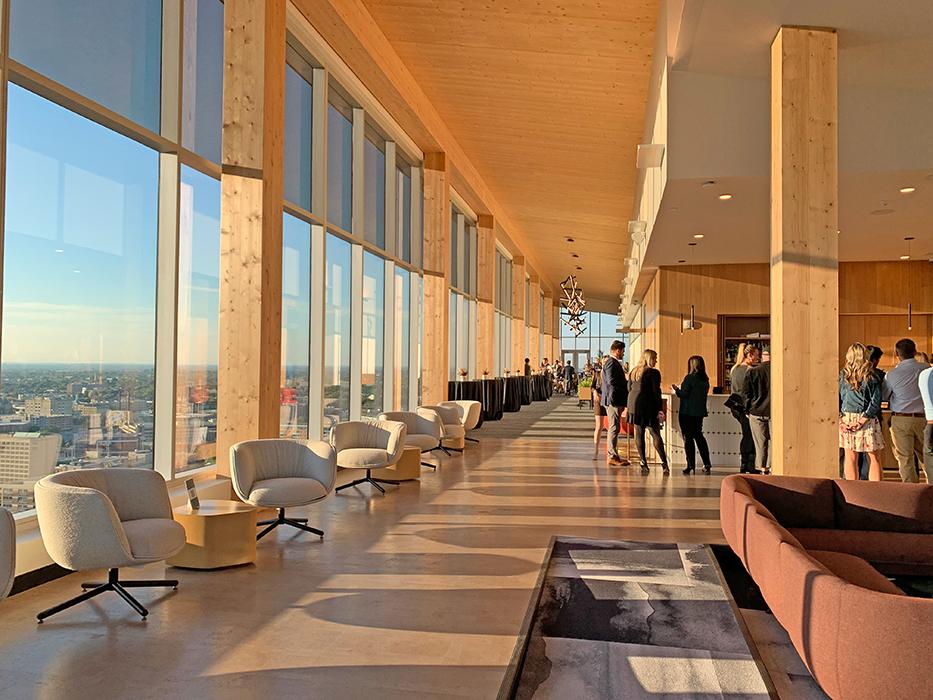
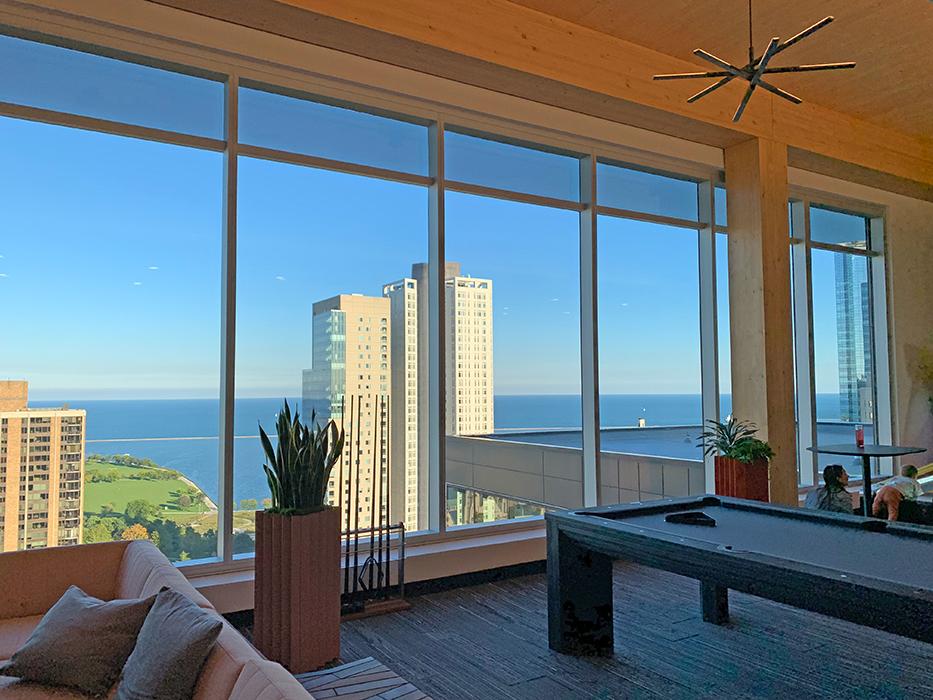
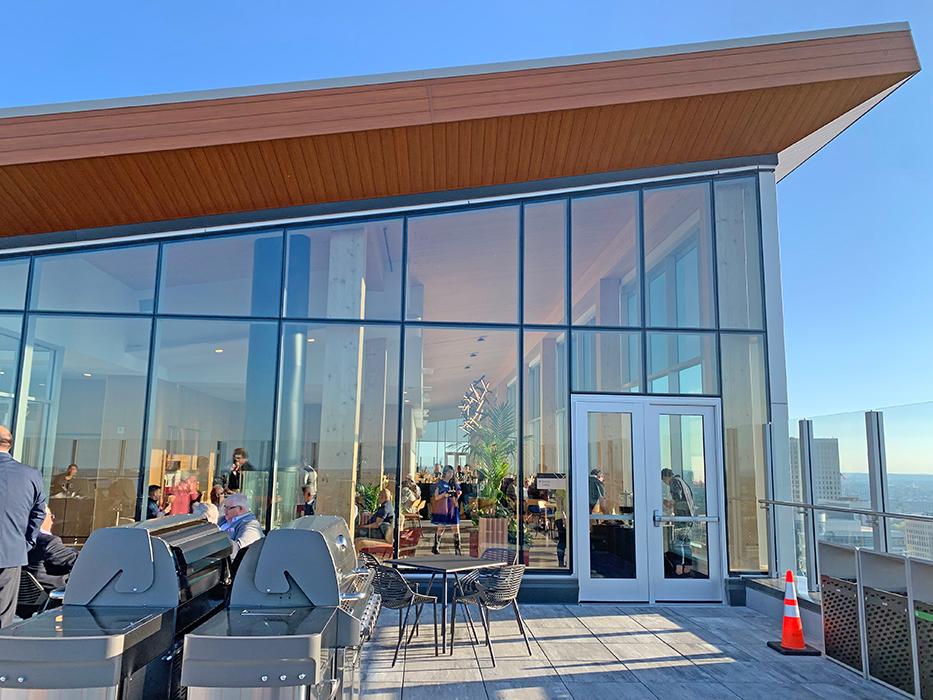
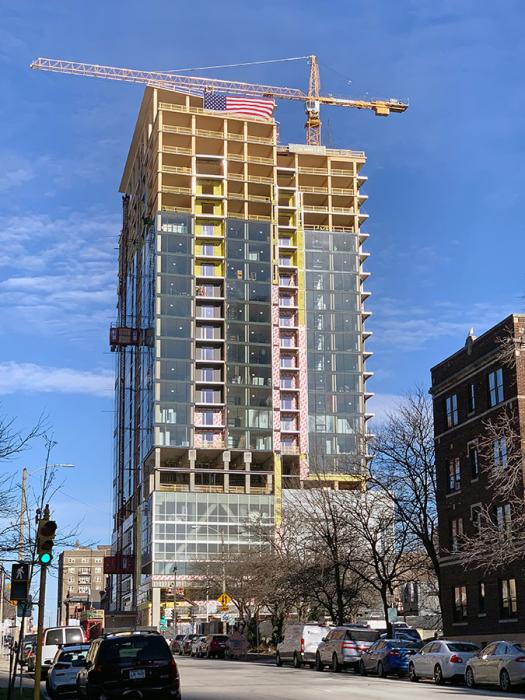
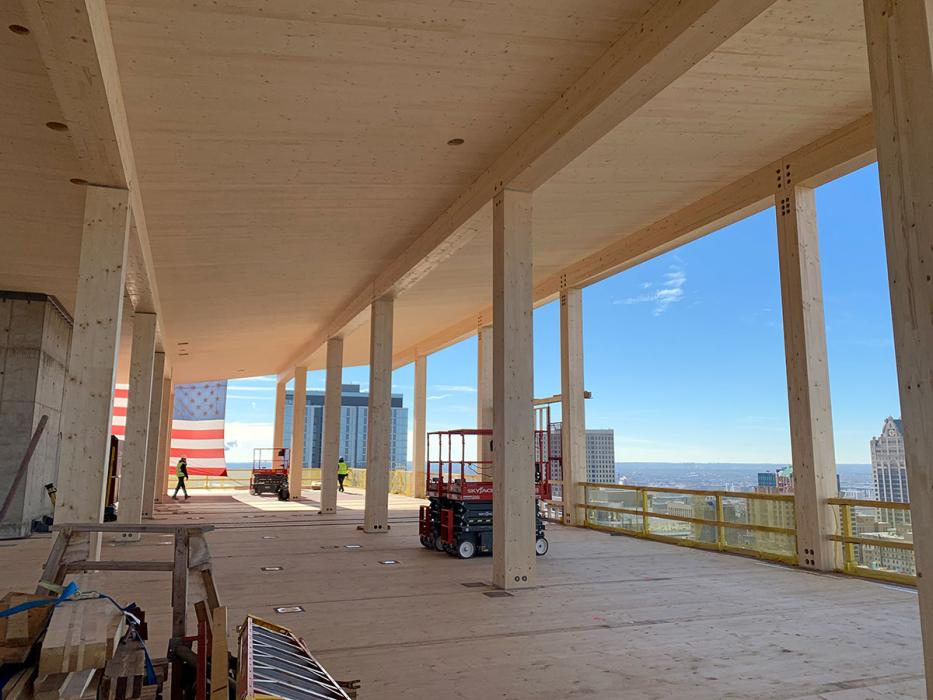
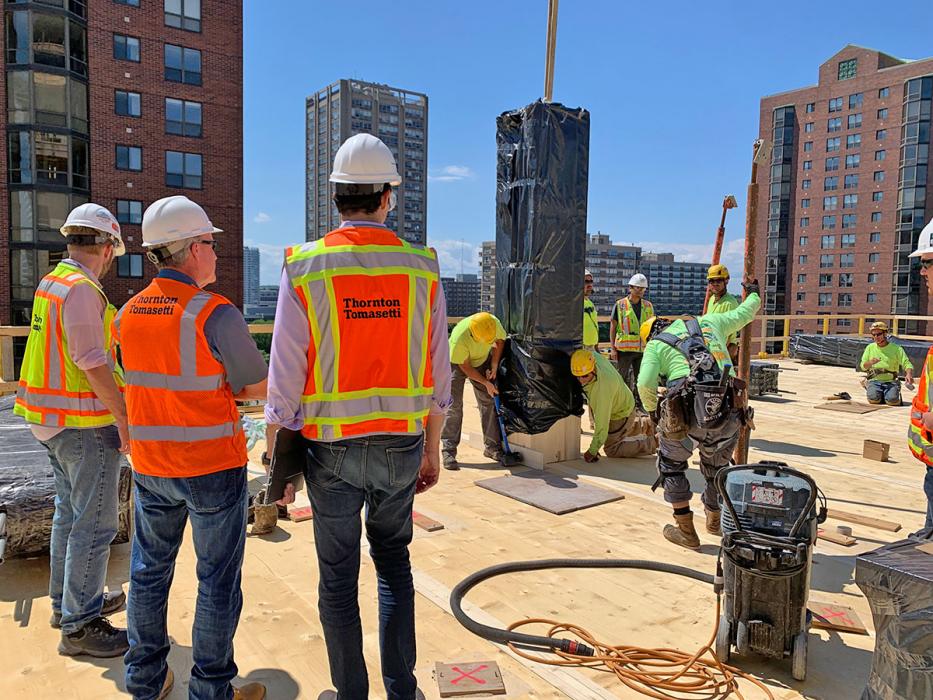
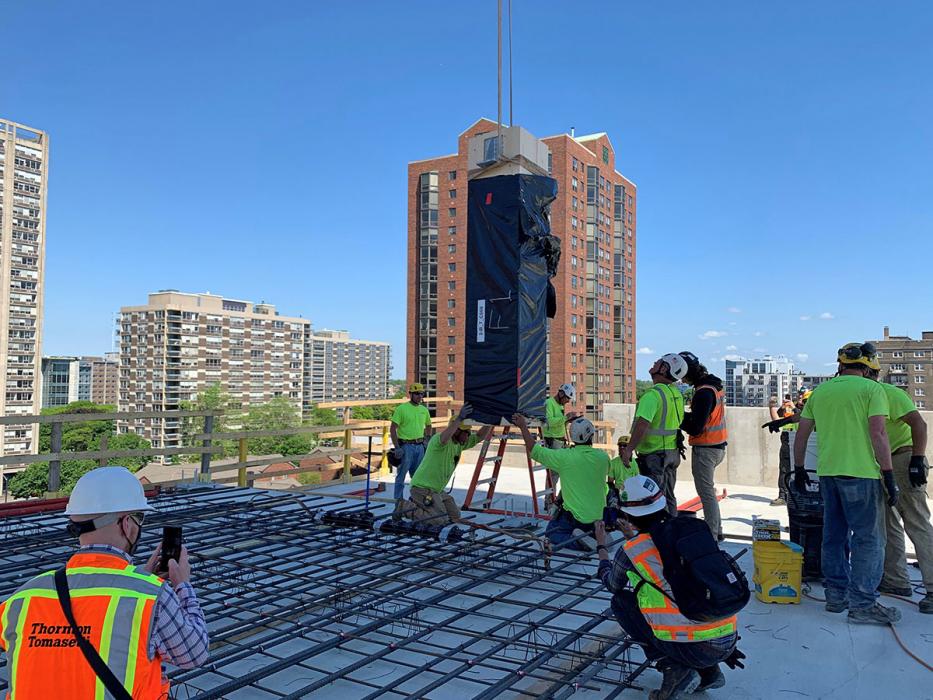
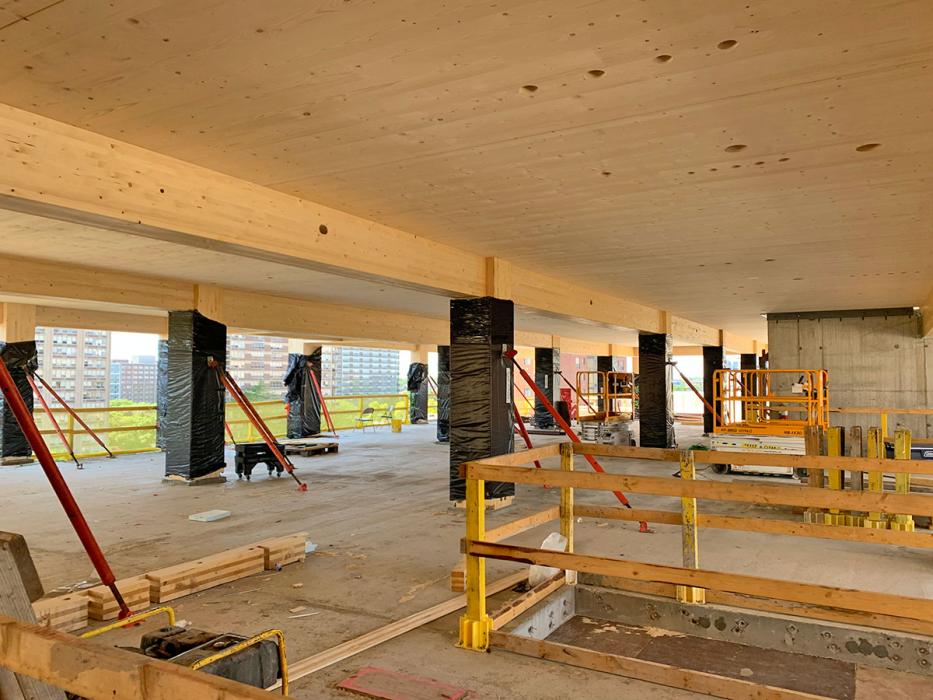
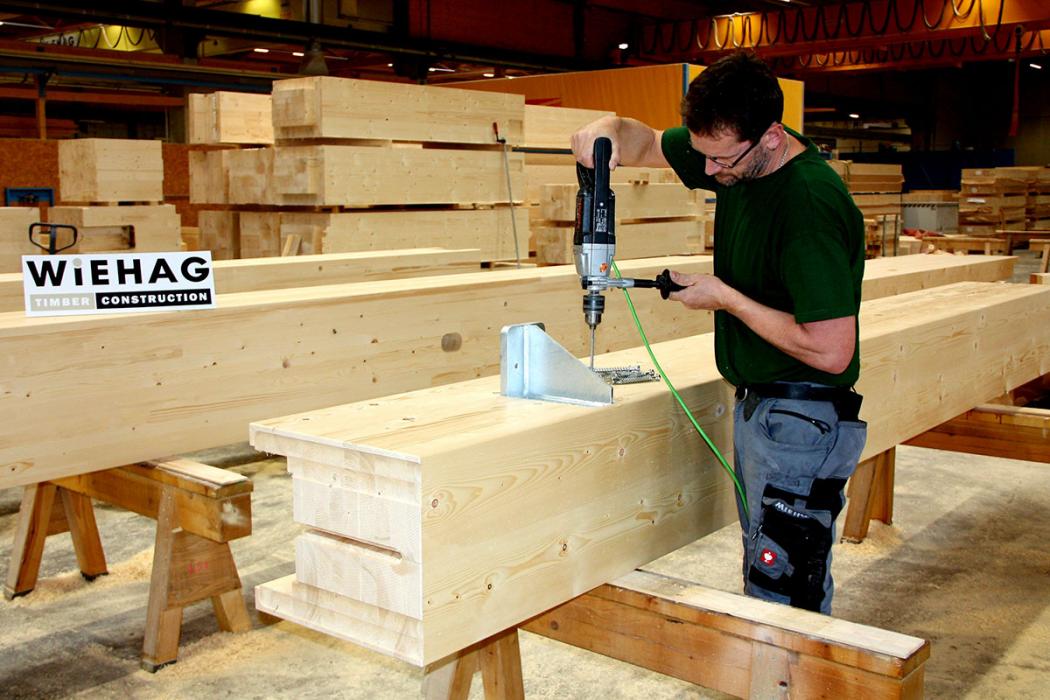
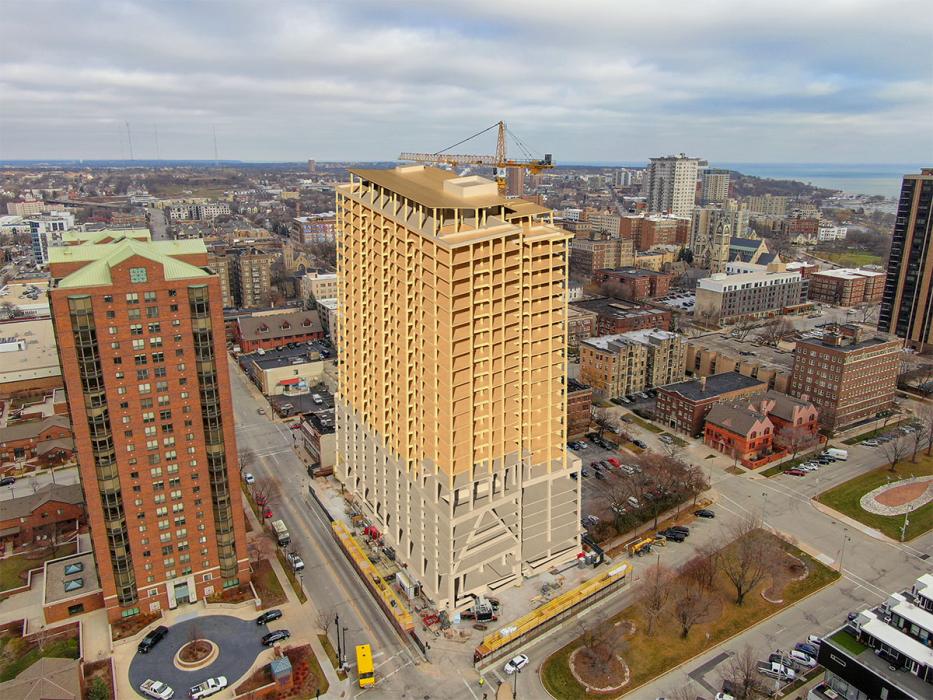
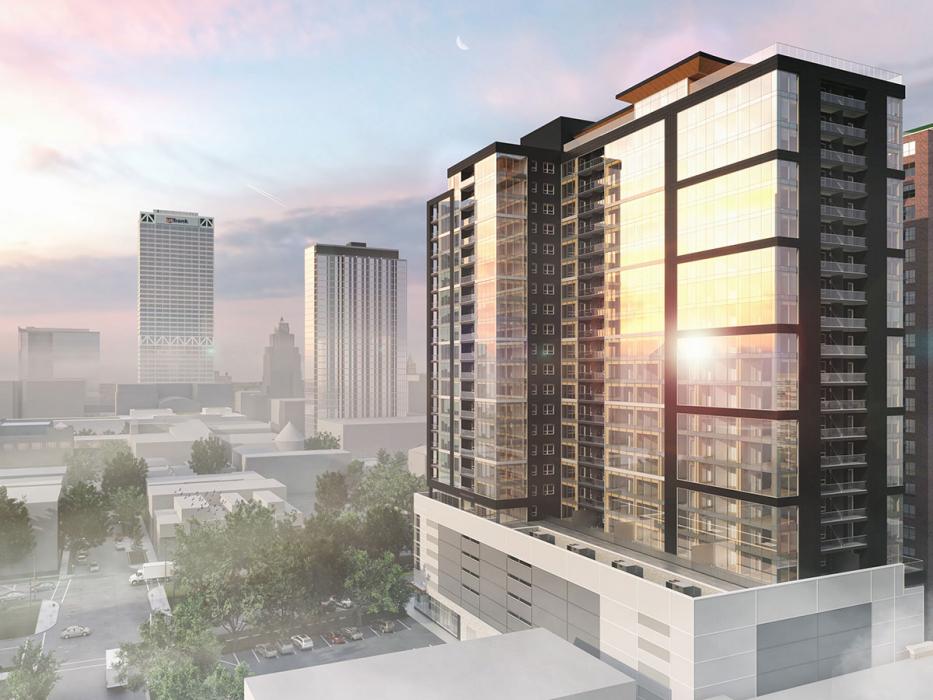
When it was completed in 2022, Ascent MKE, in Milwaukee’s East Town neighborhood, became the tallest mass timber building in the world. The 284-foot (86.6-meter) residential building contains 259 apartments and features a sixth-floor pool and penthouse amenity level.
Owner New Land Enterprises sought to develop a highly sustainable building that advances the mass timber industry. But their vision pushed the boundaries of then-current design codes; permitting procedures; fire protection standards; and design, detailing, and construction methods. Thornton Tomasetti provided structural design, construction engineering, and special inspection services to Korb & Associates Architects, C.D. Smith and New Land Enterprises for the pioneering project.
Listen to our Here's How: Mainstreaming Mass Timber Podcast Series For More Insights
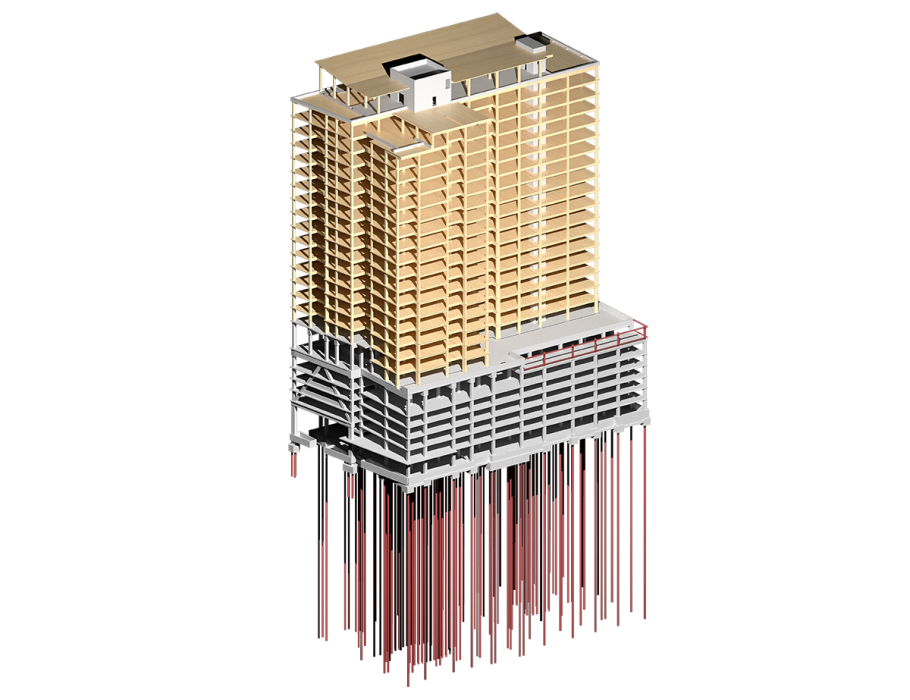
Ascent consists of nineteen mass timber residential levels, supported by a six-level cast-in-situ post-tensioned concrete podium structure, containing parking and retail at the base. A system of glulam beams and columns support one-way spanning cross-laminated timber (CLT) floors (with a gypcrete topping slab), while two reinforced concrete cores provide lateral stability.
An efficient system of post-tensioned concrete transfer beams, utilizing the structural depth provided by the pool structure and mechanical equipment, assists in merging the column grid from the timber residential floors to the concrete garage structure below. The use of post-tensioned concrete in the podium allowed for reduced floor-floor heights while addressing the environmental demands required of a parking structure located in a snowy mid-western city.
The superstructure is supported on a deep foundation system composed of concrete-filled steel pipe piles that were statically load tested, achieving the highest capacity piles in the state of Wisconsin; reducing installation time and minimizing material quantities for substantial schedule and cost savings.
Wisconsin’s commercial building code is based on IBC 2015 and its typically prescriptive design methodology. Utilizing the Alternate Materials provision, our team collaborated with and received a variance from the Authority Having Jurisdiction, allowing for a 25-story exposed mass timber structure (Type IV) showcasing the wood’s beautiful natural qualities, contingent on meeting the fire rating requirements of Type 1A construction.
Extensive fire testing, research, engineering analysis, product certifications, and select member concealment were utilized to prove that the timber structure would meet or exceed code required fire ratings, specifically the glulam beams and connections designed for a two-hour fire rating and columns designed for a three-hour rating. Additional non-structural features, including providing a fully sprinklered building and pressurizing the stairs and corridors to prevent smoke propagation during a fire, were included to enhance the fire performance of the structure.
The code prescribed (NDS) char method was utilized to verify typical performance of the exposed mass timber; however to verify that the design meets or exceeds the fire rating requirements of Type 1A construction, additional testing was performed to confirm the three-hour fire rating for the columns. Working with the USDA's Forest Products Laboratory, located in Madison Wisconsin, the team completed the world's first three-hour column fire test for glue-laminated (glulam) timber columns.
Three species of wood–Douglas Fir, Black Spruce and Austrian Spruce–were evaluated with similar results, confirming the acceptability of the code-based char calculations for timeframes up to 3-hours. The results of the tests have been released as public information to aid in the design of future mass timber projects in North America and throughout the world.
Ascent not only showcases the structural potential for mass timber along with its aesthetic appeal but also sequesters approximately 7,200 metric tons of CO₂ – the equivalent of taking 2,100 cars off the road for a year. The lightweight mass timber construction reduced construction waste, increased construction speed, and supports biophilic principles, with the aesthetic properties of natural wood improving the wellbeing of occupants.
While Ascent may not permanently hold the title of “world’s tallest mass timber structure,” the research, innovation, and collaboration demonstrated on Ascent will have a lasting impact on tall mass timber, both in the United States and worldwide.



Insight
Setting Up Tall Mass Timber for SuccessNews
Ascent Featured on "How Did They Build That?"