Steve Freihon/Related-Oxford
New York, New York
Global experience.
Regional perspective.
Local impact.
New York, New York
Australia

London, United Kingdom
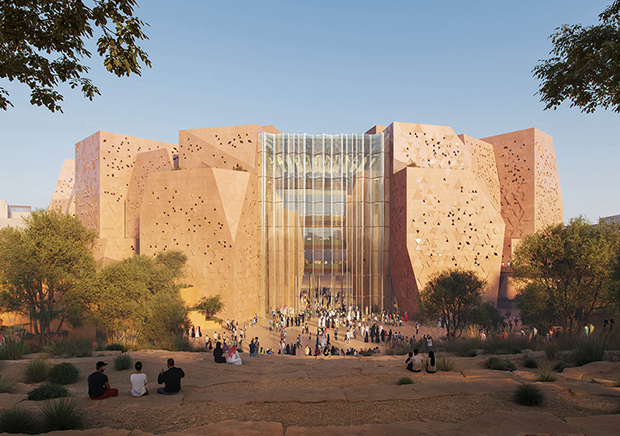
Diriyah, Riyadh, Saudi Arabia

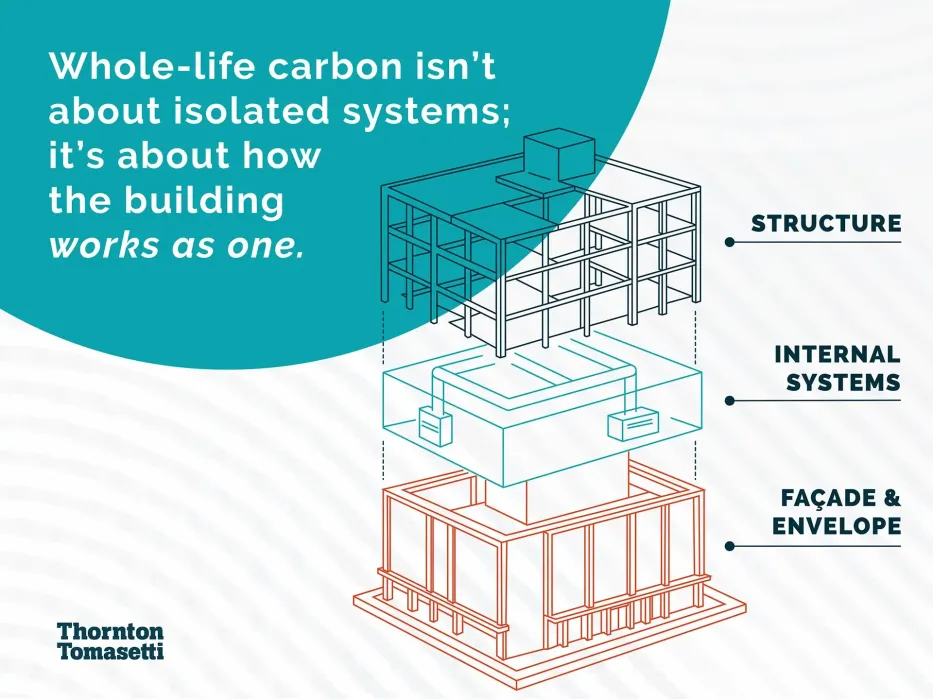
Across London’s built environment, whole life-cycle carbon has made one thing obvious. You cannot optimise structure, façade, and building systems in isolation and expect a credible whole-life result. The carbon outcome is shaped by how those decisions work together, and by the intervention cycles they create across the life of the asset.
That is why the first conversations on a project now look different. Massing, façade intent, programme, and cost are still on the table, but teams are being pushed to commit earlier on the decisions that set the pathway: what stays, what changes, and what level of performance and durability the asset is expected to deliver over decades.
Whole Life-Cycle Carbon Assessments, or WLCAs, sit at the centre of that shift. In London, the WLCA process is now established enough that it is increasingly treated façade, building systems, sustainability, and long-term performance into one decision chain, so the project narrative is not just credible at submission, but consistent with what gets built.
In London, whole life-cycle carbon covers emissions from construction and use across a building’s life, including demolition and disposal. The practical effect is simple. It keeps attention on what is being locked in now, and what the asset will need to absorb later.
That changes the job of the design team. The focus shifts from optimising individual packages to managing the decision chain across the building, where one move in structure, façade, or building services immediately changes the carbon story.
You cannot optimise structure, facade, and building systems in isolation and expect a credible whole-life result.
Whole-life outcomes are rarely decided by a single product swap. They are decided by the logic of the asset, and by whether the key disciplines are pulling in the same direction early enough.
Structure sets the building’s geometry, material intensity, and adaptability. It also sets the conditions the façade has to work within, spans, movement, tolerances, fixing strategy, and the practical access needed for inspection and repair over time.
The façade then does two jobs at once. It establishes the boundary conditions for comfort and energy demand, and it quietly sets the future intervention cycle of the building. Service life, maintainability, and the ability to upgrade in parts often matter as much as day-one performance targets, because they determine whether the building can evolve without being forced into wholesale replacement.
Building systems sit downstream of both. Façade performance and form influence loads, peak demand and overheating risk. Structural constraints influence plant space, routes, and the feasibility of future upgrades. When these decisions are made in isolation, projects tend to pay later through complexity, material inefficiency, and replacement cycles that were never intended.
A whole-life approach brings those interdependencies onto the table early, while there is still room to choose the simpler, more durable path.
A Whole Life Cycle Carbon Assessment measures carbon emissions across a building’s life, including materials, construction, operation, maintenance, replacement, and end-of-life impacts.
Whole life carbon matters in London because major development projects are increasingly expected to show how design decisions reduce embodied and operational carbon across the asset life.
Façade design affects whole life carbon by influencing operational energy demand, overheating risk, material intensity, durability, maintenance, and future replacement cycles.
Structure influences carbon performance through material quantities, span strategy, adaptability, retention potential, fixing conditions, and the ability to support future changes.
A WLCA should begin early in design so that carbon options can inform massing, structural strategy, façade design, building services, and long-term asset planning.
The projects that hold together treat whole life-cycle carbon with the same discipline as cost and programme. A baseline is set early, the big options are tested while the design is still flexible, and the logic is protected as the project moves through design development, procurement and delivery. That is where whole-life credibility is earned in London, not in the final formatting of a report.
In practice, this means keeping the building as a connected system, not a set of separate packages. Structural choices influence material intensity, spans, and adaptability. Façade decisions shape operational demand, comfort risk, and the future intervention cycle. Building systems respond to both, often magnifying the consequences of early assumptions through plant sizing, peak loads, and upgrade flexibility. A whole-life approach makes those dependencies visible early enough to manage them, and then keeps checking them as decisions get value engineered, substituted and built.
This is also where circularity starts to appear in a very practical way. When teams take service life, repair and upgrade pathways seriously, they are already asking the questions that determine whether materials and components retain value over time, whether upgrades can happen in layers, and whether end-of-life is treated as recovery or disposal.
In London, WLCAs are becoming a shared language because they connect structure, façade, and building systems to the long-term carbon and performance of the asset. The value is the clarity they bring early, when decisions are still reversible, and the discipline they support later, when the project has to hold up under procurement, delivery, and the durability and intervention cycles that define its whole-life performance.