

Steve Freihon/Related-Oxford
New York, New York
Global experience.
Regional perspective.
Local impact.
New York, New York
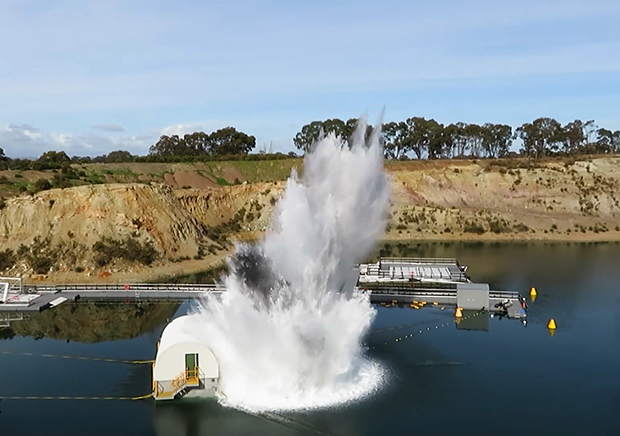
Australia

London, United Kingdom

Diriyah, Riyadh, Saudi Arabia


Electrification has become one of the dominant frameworks in decarbonization. It is an essential part of reducing emissions across buildings, campuses, infrastructure, and industry.
But electrification alone is not enough, and it is not the right answer for every project.
That is one of the central challenges in decarbonization today. Too often, the conversation is reduced to a single pathway, when in reality the problem is much broader and more nuanced. A building may be electrified, but the electricity serving it may still come from carbon-intensive sources. A project may reduce operational emissions while overlooking the carbon embedded in materials like concrete and steel. A campus may set ambitious goals without fully accounting for resilience, infrastructure constraints, or the realities of implementation.
In other words, decarbonization is not a single decision. It is a systems problem.
Practical decarbonization is a systems-based approach that evaluates energy, materials, infrastructure, and operations together to identify the most effective and feasible path to reducing emissions.
A practical approach starts by looking at the full picture: how energy is generated, how it is delivered, how it is used, where emissions occur upstream and downstream, and which parts of that system offer the greatest opportunity for meaningful progress. That means looking at both energy supply and energy demand. It means going beyond operations to include how energy is delivered from the grid, industrial processes that make our materials, and long-term reliability.
That kind of systems thinking is especially important at the campus scale, where energy decisions are rarely isolated. At UT Austin, for example, our team developed a dynamic techno-economic tool to evaluate a Carbon Capture, Utilization, and Storage (CCUS) pathway for the university’s existing energy system. What made the case especially compelling was that the campus’s combustion turbines and gas infrastructure offered greater resilience than the ERCOT grid, while CCUS presented a far more cost-effective path than full electrification and still achieved comparable overall decarbonization. That is what practical decarbonization looks like in action: not defaulting to a single trend, but helping a client understand which strategy makes the most sense for its system, risks and goals.
This is where decarbonization becomes more useful and more honest. Rather than asking what the one answer is, the better question is: what combination of strategies makes the most sense here?
For some organizations, electrification and efficiency may drive significant gains. For others, especially those tied to heavy industry, energy-intensive operations, or reliability-critical environments, the solution set has to be broader. Technologies such as carbon capture, nuclear, microgrids, energy storage, and low-carbon material innovation may all have a role depending on the conditions.
That does not make the path less clear. It makes it more grounded in reality.
Practical decarbonization is not about promoting one technology over another. It is about understanding the problem well enough to identify the most meaningful and feasible path forward. That requires a technology-agnostic mindset, one that is responsive to critical timelines, geography, infrastructure, policy, cost, and operational need.
It also requires confronting some of the sectors that are hardest to decarbonize but most important to address.
Industrial decarbonization is a good example. Cement, steel, and large-scale energy generation are deeply connected to the built environment, yet many of their emissions cannot be solved through electrification alone. Some are tied directly to industrial chemistry and manufacturing processes. If those sectors are left out of the conversation, the emissions challenge is not being addressed at its source.
The same logic applies to energy systems. Electrifying demand without addressing how power is generated only solves part of the equation. Organizations also have to consider grid mix, resilience, supply constraints, and the broader infrastructure needed to support lower-carbon operations over time alongside growing energy demands. In many cases, decarbonization plans implicitly depend on a cleaner, more robust grid arriving fast enough to support them. That is not impossible, but it is neither simple nor immediate. It is a long-term transition with real constraints, and critical decisions cannot rely on optimism alone.
This is why practical decarbonization is ultimately an exercise in prioritization.
The goal is not to hand clients a list of ideal “technically feasible” measures with no regard for the broader context. The goal is to identify where the biggest impacts are, determine what is realistic now, and build a path that can evolve over time. Some actions can move immediately. Others may depend on future investment, policy support, or technology advancement. Progress still matters, even when it is phased.
That kind of thinking is increasingly important because the decarbonization conversation is maturing. The easier wins are better understood and oftentimes already implemented. What comes next requires deeper analysis, stronger integration across disciplines, and a greater willingness to engage with tradeoffs rather than avoid them.
That is where practical decarbonization matters most.
It asks organizations to move beyond simplified answers and focus instead on the decisions that will have the most lasting effect. It connects climate ambition to operational reality. And it recognizes that meaningful progress does not come from a one-size-fits-all formula, but from understanding the full system and acting with clarity based on facility-specific requirements.
Electrification remains essential. But if the goal is real decarbonization, it has to be part of a broader strategy, one that reflects how energy, materials, infrastructure, and industry actually work. That is what practical decarbonization looks like.