R&D and technology play an essential role in our firm. We invest in constant learning, testing and innovation. That uniquely positions us to solve our clients’ most difficult problems.
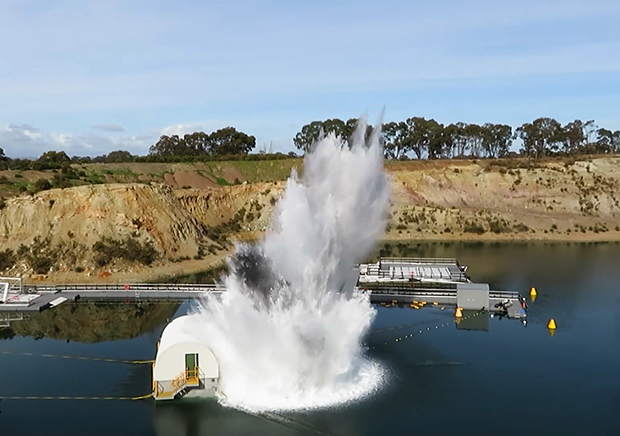
Innovation EngineOur CORE groups manage our research and development efforts, from incremental efficiency improvements to solving some of the most challenging engineering problems of our time.Learn More
Innovation OutputWe believe collaboration amplifies our innovation potential and creates connections that lead to better, more imaginative solutions for our clients.Learn More
A $117 million mixed-use development is underway in Milwaukee’s Deer District, bringing 269 residential units, retail, and a new athletic training facility to the city’s growing urban core. Fieldhouse Flats reflects the increasing demand for integrated housing and community-focused development in downtown environments.
On the evening of August 13, 2011 the Temporary Ground-Supported Structure Used to Cover the Stage Area and Support Equipment in the Production of Outdoor Entertainment Events located over the Grandstand Stage at the Indiana State Fair (the ISF Structure) collapsed while the audience was waiting for the headline act to begin. The incident resulted in the death of seven individuals and a multitude of serious injuries.
The Transbay Transit Center (TTC) will be located in downtown San Francisco, California, and will serve 11 transportation systems including the future High Speed Rail. The proposed structure is 1,500 feet long, and consists of 6 stories, including below-grade trainbox and 5.4 acre rooftop park. Series of two-dimensional seismic soil-structure interaction (SSI) analyses were performed, including fully-coupled direct solution approach as well as substructuring approach. “Scattered” motions, soil springs and dashpots were developed at different locations along the structure.
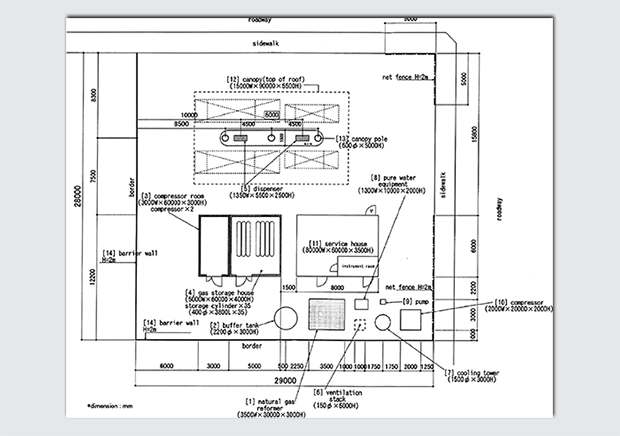
In order for fuel cell vehicles to develop a widespread role in society, it is essential that hydrogen refuelling stations become established. For this to happen, there is a need to demonstrate the safety of the refuelling stations. The work described in this paper was carried out to provide experimental information on hydrogen outflow, dispersion and explosion behaviour. In the first phase, homogeneous hydrogen–air mixtures of a known concentration were introduced into an explosion chamber and the resulting flame speed and overpressures were measured.