
Steve Freihon/Related-Oxford
New York, New York
Global experience.
Regional perspective.
Local impact.
New York, New York
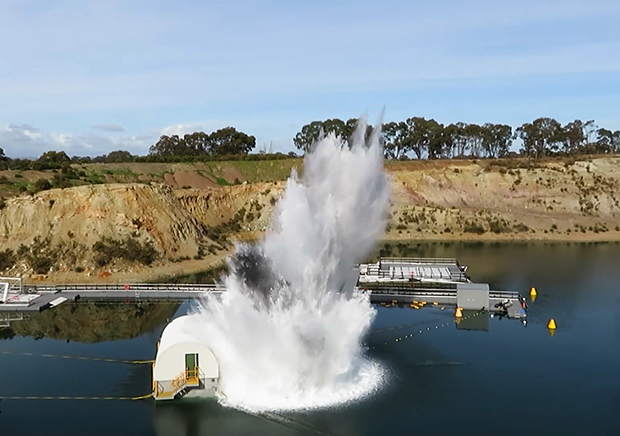
Australia

London, United Kingdom

Diriyah, Riyadh, Saudi Arabia
Our People
Managing Principal & Applied Science Practice Co-Leader
Our People
Managing Principal & Applied Science Practice Co-Leader
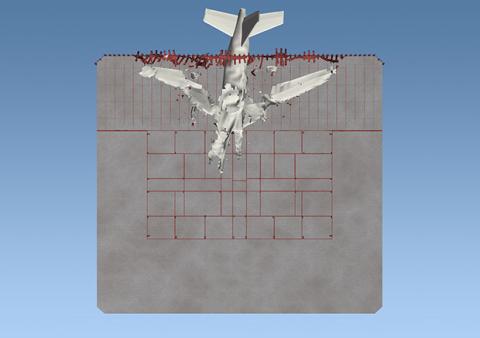
Najib Abboud directs our research and advanced analysis efforts, which range from solving problems related to the safety of military platforms, critical infrastructure, tall buildings, industrial and petrochemical plants to developing scientific software whose applications go beyond the built environment. He oversees critical infrastructure security and resilience projects for major transportation and port authorities, with a specific focus on bridges, tunnels and networks. These efforts rely on both computational simulations of extreme events and physical testing as a basis for designs against blast, fire, impact and other attack modalities. Najib has led or contributed to software development projects in the areas of shock and nonlinear fluid and structure analysis, soil and structure interaction, thermomechanical coupling, structural acoustics and ultrasonics that were driven by the need to understand the physics of a phenomenon in order to engineer better solutions.
Ph.D., Civil Engineering, Stanford University
M.S., Structural Engineering, Stanford University
B.S., Civil Engineering, American University of Beirut